
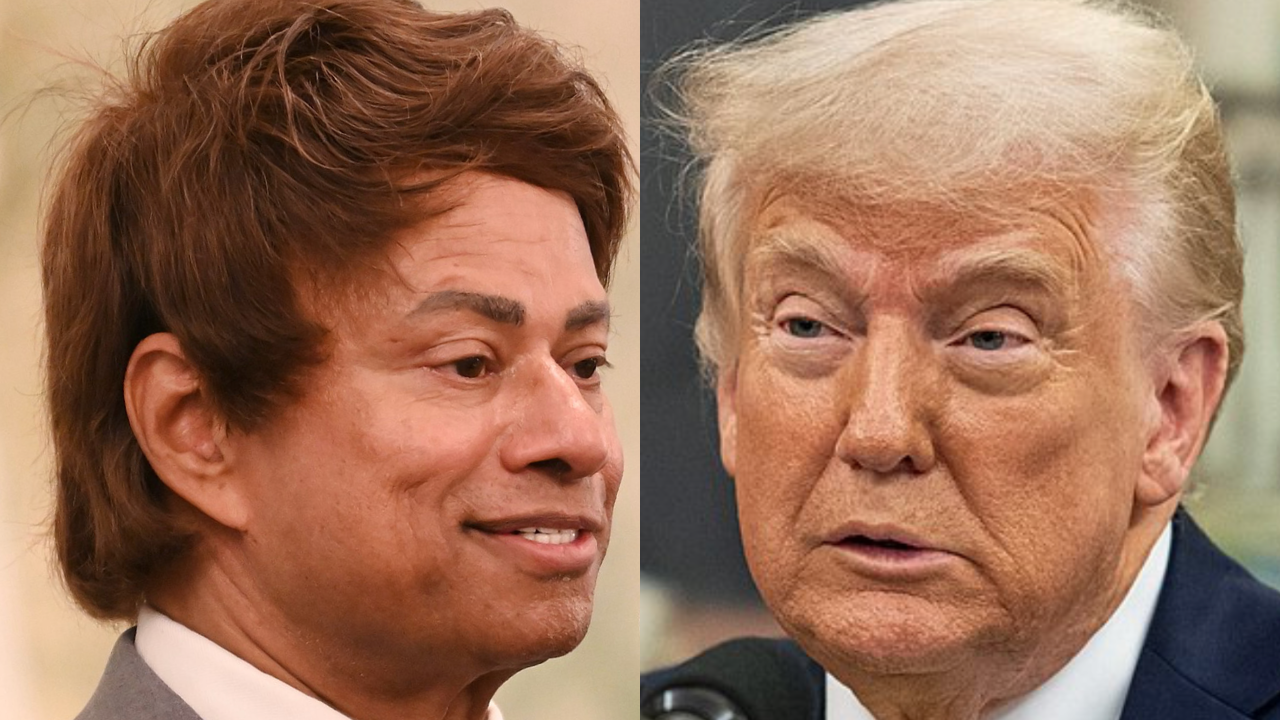
Rep. Shri Thanedar (D-Mich.) accused President Trump of misleading financial markets about the state of the war with Iran on June 27, 2026, after reports emerged of a new round of U.S. strikes in the Strait of Hormuz. “Trump’s constant announcements that the war is over are literally 100% just attempts to deceive the market because Americans are fed up with how much his stupid actions keep driving up prices,” Thanedar wrote on X. “The war is still on, his ‘peace deal’ has failed miserably, and it’s nothing but high prices on the horizon.” Thanedar’s post responded to a report from financial newsletter The Kobeissi Letter, citing Axios, that the U.S. military was conducting a second round of strikes since the memorandum of understanding with Iran was signed.
A Pattern of Suspicious Trading Activity
Thanedar’s accusation that Trump’s announcements have been used to “deceive the market” echoes a documented pattern that has drawn scrutiny from federal investigators throughout the conflict. According to a Reuters report cited by Rep. Ritchie Torres (D-N.Y.) in a formal request for an SEC investigation, traders placed more than $500 million in crude oil futures bets approximately 15 minutes before Trump announced on March 23 that he was postponing planned strikes on Iranian power plants, a development that caused oil prices to fall sharply. The Financial Times separately reported that roughly 6,200 Brent and West Texas Intermediate futures contracts changed hands in the single minute before that announcement, representing a notional value of $580 million, with an unnamed hedge fund trader telling the FT, “My gut from watching markets for the last 25 years is this is really abnormal.”
Additional Suspicious Trades
The pattern recurred multiple times as the war progressed. According to reporting cited by Yedioth Ahronoth’s English-language site, traders bet $960 million on falling oil prices hours before Trump announced a temporary ceasefire on April 7, then bet $760 million 20 minutes before Iran’s foreign minister announced the Strait of Hormuz had reopened on April 17, and bet a further $430 million 15 minutes before Trump announced an extension of the ceasefire on April 21. Reuters reported that the Justice Department and the Commodity Futures Trading Commission were jointly investigating at least four separate transactions in which traders appeared to have anticipated market-moving announcements before they were made public.
Congressional Demands for Investigation
The trading pattern prompted formal calls for investigation from lawmakers in both parties. Torres wrote in his letter to the SEC that the activity “may constitute one of the largest instances of insider trading in history,” and asked the agency to open a formal investigation and coordinate with the CFTC to obtain trading records and beneficial ownership information for the accounts involved. Rep. Sam Liccardo (D-Calif.) sent a similar letter to the SEC, writing that “the timing indicates bets were placed by those with advance knowledge of the President’s action, strongly suggesting illicit trading on insider information, in violation of the Securities and Exchange Act of 1934, the Commodity Exchange Act of 1936, and the Stop Trading on Congressional Knowledge Act of 2012.” Sen. Chris Murphy (D-Conn.) wrote on social media, “This is corruption. Mind-blowing corruption,” after reports that $1.5 billion in S&P 500 futures had been purchased five minutes before one of Trump’s announcements, asking, “Who was it? Trump? A family member? A White House staffer?”
The White House’s Response
The White House has firmly denied any suggestion that administration officials were involved in or responsible for leaks enabling the trades. White House spokesperson Kush Desai told CBS News that “any implication that Administration officials are engaged in such activity without evidence is baseless and irresponsible reporting,” adding that “the White House does not tolerate any administration official illegally profiteering off of insider knowledge.” White House counsel David Warrington said separately, “The President has no involvement in business deals that would implicate his constitutional responsibilities. President Trump performs his constitutional duties in an ethically sound manner and to suggest otherwise is either ill-informed or malicious.” The White House also circulated an internal memo reminding officials they were prohibited from trading on nonpublic government information.
What Prompted Thanedar’s Post
The renewed strikes Thanedar referenced followed an Iranian drone attack on the Panama-flagged oil tanker M/T Kiku near the Strait of Hormuz. According to an official CENTCOM statement, U.S. forces struck Iranian “military surveillance infrastructure, communication systems, air defense sites, drone storage facilities, and minelayer capabilities” in response, marking the second consecutive night of American strikes after a similar exchange following Iran’s attack on the cargo ship M/V Ever Lovely two days earlier.
Markets reacted to the renewed strikes much as they had to earlier moments of escalation throughout the conflict. Analysts told CNBC that oil prices jumped more than 3 percent at points during similar exchanges of strikes in late May, with Brent crude and West Texas Intermediate futures both rising sharply before settling back down, illustrating the kind of volatility Thanedar’s post pointed to as evidence the conflict remained unresolved despite Trump’s repeated statements suggesting otherwise.
The Broader Economic Toll of the War
The war’s effect on global energy markets has been characterized by the International Energy Agency as the “largest supply disruption in the history of the global oil market,” according to a detailed summary of the conflict’s economic impact. Brent crude oil rose from $72.48 a barrel on February 27 to $112.57 a barrel by March 27, an increase of more than 55 percent, before later falling back closer to prewar levels amid recurring rounds of ceasefire negotiations. The Gulf Cooperation Council states, which rely on the strait for the vast majority of their food imports, faced a parallel “grocery supply emergency” during the worst of the disruption, with consumer prices for staple goods spiking by as much as 120 percent in some markets.
The disruption also affected commodity markets well beyond oil itself. Analysts at Morningstar projected that nitrogen fertilizer prices could roughly double from 2024 levels and phosphate prices could rise by approximately 50 percent due to the conflict’s effect on sulfur supply chains running through the strait, with Asian nations, which receive a majority of their urea, sulfur, and ammonia imports from the Middle East, considered especially vulnerable to the resulting price pressure on staple crops including wheat, rice, and corn.
Whether the Conflict Is Actually Over
Thanedar’s claim that “the war is still on” is consistent with the active exchange of strikes between the U.S. and Iran that continued well after the June 17 memorandum of understanding was signed. Despite the formal agreement, both sides have continued trading attacks over alleged ceasefire violations tied to commercial shipping in the Strait of Hormuz, with Iran striking two separate vessels in the span of three days before the latest U.S. response Thanedar’s post was responding to.
Vice President JD Vance had defended the continued strikes as consistent with, rather than contradictory to, the ceasefire, writing on X the day before Thanedar’s post that “Iran signed a ceasefire agreement. We have honored it… But violence will be met with violence.” Whether the cycle of strikes and retaliation constitutes an ongoing war, as Thanedar argued, or a fragile peace process working through periodic violations, as the administration has framed it, remained a central point of disagreement driving market uncertainty.
What Comes Next
Neither the SEC nor the CFTC has publicly announced the conclusion or findings of their reported investigations into the suspicious trading patterns identified by Reuters, the Financial Times, and members of Congress throughout the conflict, and no charges had been filed as of publication. The Justice Department and CFTC’s joint investigation into the trades remained ongoing, according to the most recent reporting on its status.