
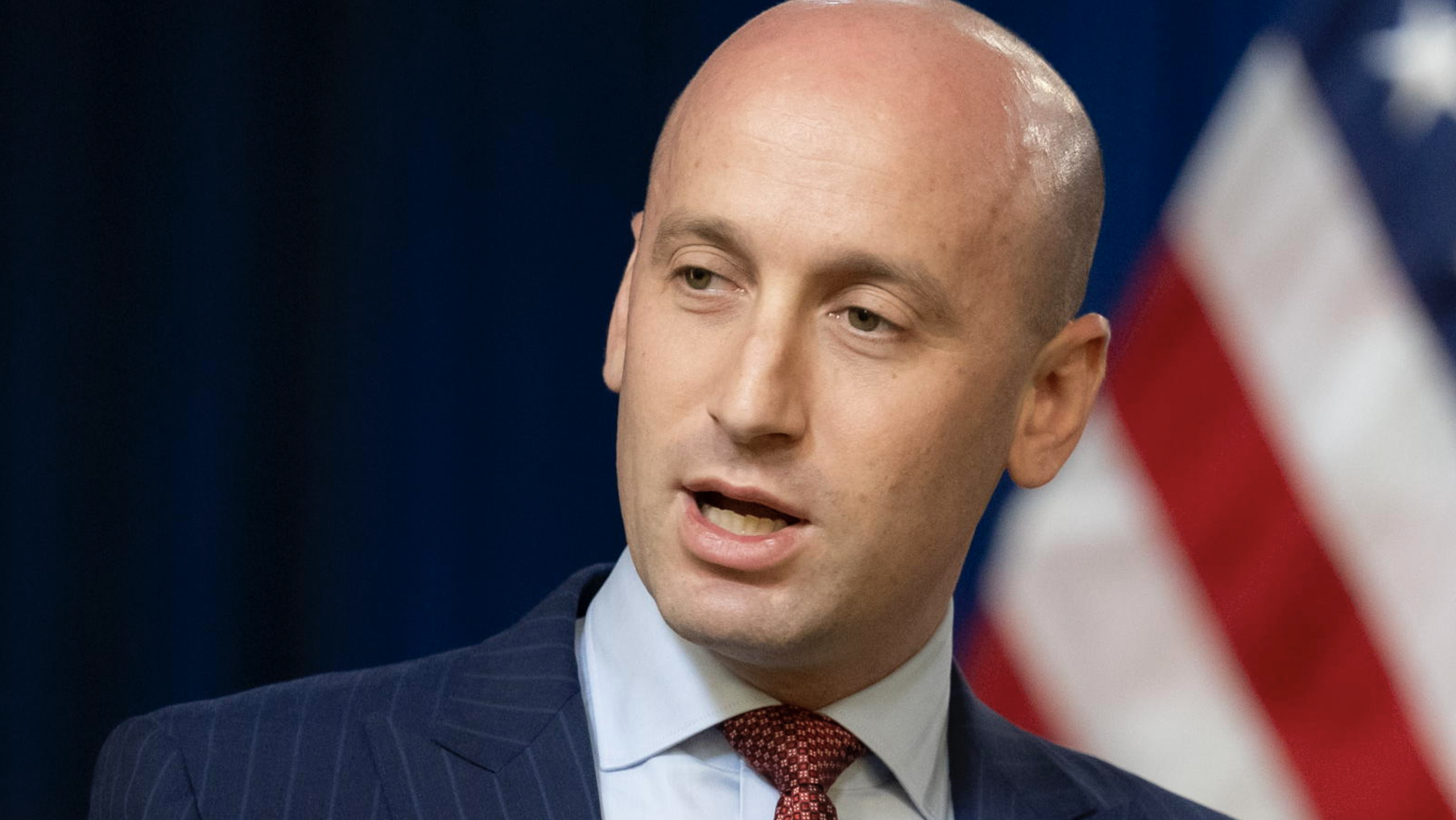
WASHINGTON, June 5, 2026 — White House Deputy Chief of Staff Stephen Miller sparked a sharp exchange over one of America’s most consequential national security authorities Thursday, calling demands that the FBI obtain warrants before searching surveillance databases “madness” and defending the unrestricted use of FISA Section 702 — the legal foundation for signals intelligence collection that underpins U.S. military and intelligence operations worldwide.
“FISA 702 is the authority for surveillance on foreign soil — the core of all US security,” Miller wrote on X. “A libertarian demand to make SecWar get approval from liberal DC judges (the ones who targeted Trump) is madness. No conservative aim is ever served through subservience to leftist DC judges.”
What FISA Section 702 Is — and Why It Matters to the Military
FISA Section 702, enacted as part of the Foreign Intelligence Surveillance Act Amendments Act of 2008, authorizes the NSA to collect the communications of foreign targets located outside the United States without obtaining individual warrants. It is one of the most significant signals intelligence authorities in U.S. law — feeding raw intelligence to the NSA, CIA, FBI, and the Defense Intelligence Agency, and directly informing military targeting, counterterrorism operations, and force protection decisions.
According to the National Security Agency, Section 702 collection is used to acquire foreign intelligence about national security threats including terrorism, weapons proliferation, and hostile state activities. The intelligence collected under 702 is routinely shared with combatant commands, special operations forces, and allied military partners — making it a backbone of the U.S. military’s situational awareness in conflict zones from the Middle East to the Indo-Pacific.
The Warrant Debate
Miller’s post was directed at the growing libertarian-conservative push — championed most vocally by Sen. Rand Paul, R-Ky., and Rep. Thomas Massie, R-Ky. — to require the FBI to obtain a traditional Article III warrant before querying the Section 702 database for American citizens’ communications. Because Americans frequently communicate with foreign targets, their messages are swept up in bulk 702 collection, and the FBI has used “backdoor searches” of that database — accessing Americans’ private communications without a separate warrant — at a rate of millions of queries per year.
The Reforming Intelligence and Securing America Act — the 2024 reauthorization of Section 702 — extended the authority through April 2026 without adding a warrant requirement for U.S. person queries, over the objections of Paul and Massie. Both have since introduced legislation to close what they call the “backdoor search” loophole. Paul’s Fourth Amendment Restoration and Protection Act would require a traditional warrant for any surveillance of American citizens, regardless of the authority used to collect the underlying data.
Miller’s ‘Liberal DC Judges’ Claim — and the Fact-Check
Miller’s argument centered on his characterization of the Foreign Intelligence Surveillance Court as staffed by “liberal DC judges.” That claim drew an immediate community note correction on X, which pointed out that of the 11 FISA Court judges, only 2 are from the D.C. district — and 8 were appointed to their district courts by Republican presidents. FISC judges are selected by the Chief Justice of the Supreme Court from the pool of active federal district court judges and serve seven-year terms, with no more than three from the same circuit at any one time.
Miller’s reference to judges who “targeted Trump” appeared to be an allusion to the controversial 2016-2017 FISA warrant applications targeting Carter Page — a former Trump campaign adviser — which were later found by the Justice Department’s Inspector General to contain significant errors and omissions. That episode has become a central grievance for Trump allies who argue the FISA Court was weaponized against the president.
Massie’s Response
“Most of the FISA judges are federal judges from outside of DC, and we’re talking about warrants for the FBI to search the databases, not the Secretary of War,” Rep. Thomas Massie wrote on X in response to Miller. “Unless the Secretary of War is targeting American citizens — is there something you want to tell us?”
Massie’s retort highlighted a significant factual imprecision in Miller’s framing. The warrant requirement being debated applies specifically to FBI queries of 702-collected data for Americans’ communications — not to the Defense Secretary or military intelligence agencies. Massie’s closing question — asking whether the Secretary of War is targeting American citizens — was a pointed rhetorical jab at the implication embedded in Miller’s framing that military leaders need unchecked access to surveillance of domestic targets.
The Broader Stakes
The exchange reflects a genuine and unresolved tension at the heart of American national security law. Section 702 has been credited by intelligence officials with disrupting terrorist plots, identifying foreign adversary operations, and providing commanders with actionable intelligence in active conflict zones. The Office of the Director of National Intelligence has described it as “one of the most important tools in the Intelligence Community’s collection arsenal.”
At the same time, the Privacy and Civil Liberties Oversight Board has documented millions of annual FBI queries of 702 data for Americans’ communications without individual warrants — a practice that critics across the political spectrum argue is incompatible with the Fourth Amendment’s protection against unreasonable searches. Section 702 is due for reauthorization again in April 2026, making the Miller-Massie exchange a preview of what is likely to be one of the year’s most contentious national security debates on Capitol Hill.