
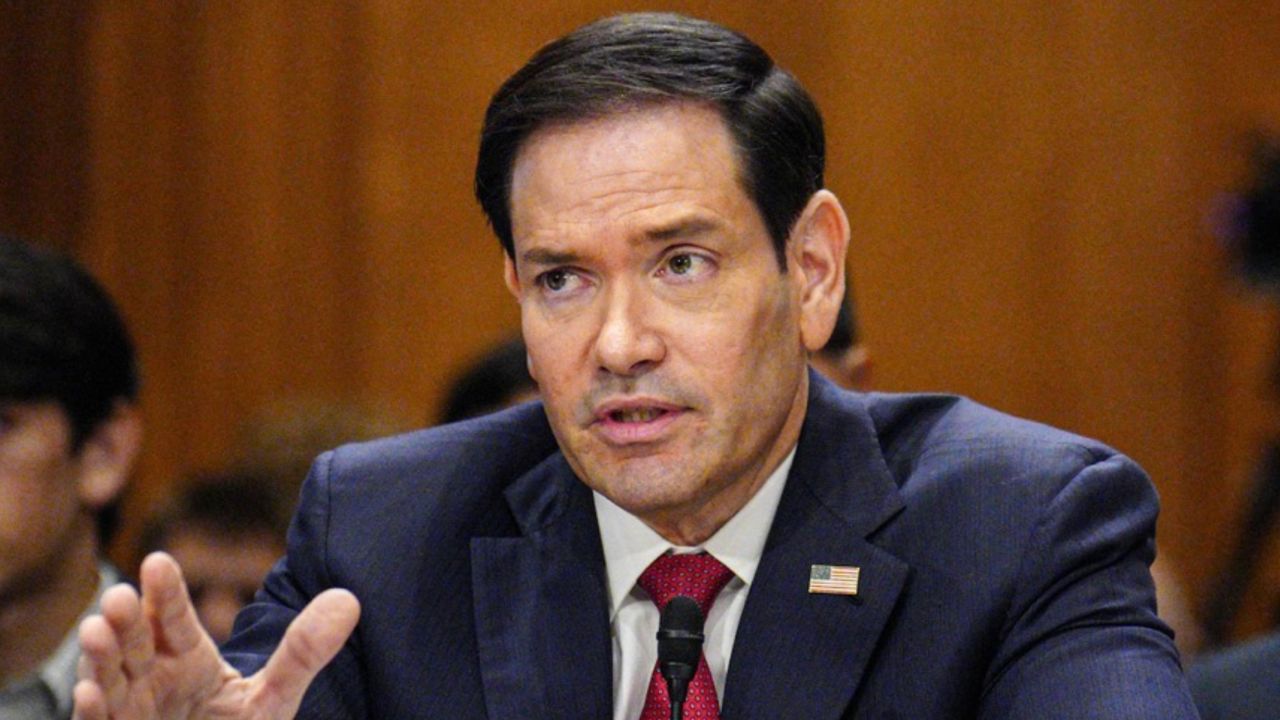
The State Department notified Congress on Tuesday that it will strip $52 million in foreign military financing from Slovakia, North Macedonia, Tunisia and Iraq and redirect the money to Panama, Peru, Ecuador and Colombia, marking one of the clearest signals yet that the Trump administration is willing to pull resources from longstanding partners in Europe and the Middle East to reward newly elected, ideologically aligned governments closer to home. The move formalizes a shift in priorities that Secretary of State Marco Rubio previewed just days earlier during a three-nation swing through South America, and it lands at a moment when the administration has openly framed the Western Hemisphere as the centerpiece of its national security strategy.
The Reprogramming Notice
According to the notification sent to lawmakers, the funds being pulled from Slovakia, North Macedonia, Tunisia and Iraq will not eliminate foreign military financing to those four countries entirely, though the State Department did not immediately specify how much would remain in their accounts. The department said the reallocation reflects the fact that the Western Hemisphere has been “historically neglected” in U.S. military assistance, and that the money would instead go toward efforts to “combat narcoterrorism in our backyard and help continue to secure the Panama Canal.”
In a pointed aside aimed at Beijing’s expanding footprint in Latin America, the department added that the redirected funding would “prevent adversaries from establishing strategic footholds in our hemisphere.” Foreign military financing is a State Department-administered program that provides recipient governments with U.S. taxpayer dollars earmarked specifically for purchasing equipment and services from American defense contractors, making the reprogramming both a security decision and, indirectly, a boost for U.S. arms manufacturers doing business with the four Latin American recipients.
A Trip That Set the Stage
The reprogramming follows directly from Rubio’s September 8-10 tour of Colombia, Ecuador and Peru, his fifth trip to the region since becoming secretary of state and one explicitly billed by the department as an effort “to strengthen key U.S. partnerships” with a new generation of conservative Latin American leaders. In Barranquilla, Colombia, Rubio met with newly inaugurated President Abelardo de la Espriella, whose election ended four years of leftist governance in Bogotá, and told reporters that an unnatural “distance” had opened up between Washington and Colombia under the previous administration.
Rubio also traveled to Quito to meet Ecuadorian President Daniel Noboa and to Lima to meet Peru’s Keiko Fujimori before capping the trip with a broader message about the stakes of U.S. engagement in the region. “Getting involved here is not a favor but essential to our own security,” Rubio said during the visit.
The trip produced tangible commitments well beyond rhetoric. Colombia signed a mining-and-nuclear-energy pact and secured a pledged $1 billion U.S. security package aimed at upgrading anti-drone systems, cyber defenses and special-forces capability, with de la Espriella’s government indicating it wants equipment and shared intelligence rather than American troops deployed directly against cartels. Ecuador picked up a formal “foreign terrorist organization” designation against a local trafficking gang along with a pledge of continued lethal boat strikes, while Peru agreed to formally join Washington’s “Shield of the Americas” anti-cartel coalition.
Two NATO Allies Absorb the Cuts
Both Slovakia and North Macedonia are NATO members, and their inclusion among the countries losing funding underscores a broader pattern that has defined the administration’s approach to European security spending. President Donald Trump has repeatedly criticized NATO allies for what he has characterized as insufficient defense spending, and the reprogramming is the latest in a series of moves that have trimmed either funding or troop deployments earmarked for Europe.
The cuts to Tunisia and Iraq extend that same recalibration into the Middle East, though the State Department’s notification framed the shift primarily around a hemispheric rationale rather than any specific grievance with the four countries losing funds. The department’s language — that the existing distribution of financing does not “align with the administration’s prioritization of” the Western Hemisphere — suggests the decision was driven less by conditions in Bratislava, Skopje, Tunis or Baghdad and more by a top-down reordering of where Washington wants its security dollars concentrated.
The “Donroe Doctrine” Behind the Policy
The reprogramming cannot be separated from the administration’s broader invocation of the 1823 Monroe Doctrine, which Trump has taken to calling the “Donroe Doctrine” in public remarks. Speaking at Mar-a-Lago earlier this year, Trump described the shift in blunt terms: “The Monroe Doctrine is a big deal, but we’ve superseded it by a lot, by a real lot. They now call it the Donroe Doctrine.” He added that “under our new national strategy, American dominance in the Western Hemisphere will never be questioned again.”
That framing was written directly into the administration’s National Security Strategy, which stated that “after years of neglect, the United States will reassert and enforce the Monroe Doctrine to restore American preeminence in the Western Hemisphere, and to protect our homeland and our access to key geographies throughout the region.” Defense Secretary Pete Hegseth has echoed the sentiment, describing the Monroe Doctrine as “back and in full effect.”
Rubio has offered his own gloss on the same idea, telling reporters during weekend television appearances that “this is the Western Hemisphere. This is where we live — and we’re not going to allow the Western Hemisphere to be a base of operation for adversaries, competitors, and rivals of the United States.”
Reading the China Angle
The State Department’s reference to preventing adversaries from gaining “strategic footholds” in the hemisphere is widely understood as a direct reference to China, which has spent the past decade building trade, infrastructure and lending relationships across Latin America even as U.S. attention was focused elsewhere. Analysts have noted that the administration’s approach blends genuine security concerns about narcotrafficking with a more explicitly political project of consolidating ties with ideologically sympathetic governments. Christopher Sabatini, a senior fellow at the London-based think tank Chatham House, has argued that the current push “is also about controlling the U.S.’s backyard, but also endorsing conservative figures beyond the U.S. borders.”
A Pattern of Election-Driven Realignment
The timing of the reprogramming is difficult to separate from the wave of right-leaning electoral victories that swept Colombia, Ecuador and Peru’s leadership in recent months. All three governments Rubio visited took office within a relatively short span of one another, and the administration has moved quickly to convert that political alignment into formal security and economic commitments, from tariff-relief discussions to new terrorist designations for regional criminal organizations.
Brazil and Mexico remain the most significant regional powers still led by leftist governments, and observers have suggested that the administration’s hemispheric strategy is at least partly designed to isolate those governments diplomatically while rewarding the region’s newer conservative administrations with tangible resources.
What Comes Next
The $52 million reprogramming still requires the standard congressional notification period before funds can be formally transferred, a routine step for this type of budget action but one that leaves open a window for lawmakers to raise objections, particularly from members of Congress who have previously pressed the State Department on the wisdom of cutting assistance to treaty allies. Neither Slovakia nor North Macedonia had issued a public response to the funding shift as of Tuesday.
For Panama, Peru, Ecuador and Colombia, the funding adds to a rapidly growing list of commitments extracted from Washington in a matter of days, reinforcing the administration’s wager that concentrating resources in the Western Hemisphere — even at the expense of NATO allies — will yield a more durable set of partnerships in what officials increasingly describe, without much subtlety, as America’s backyard.