
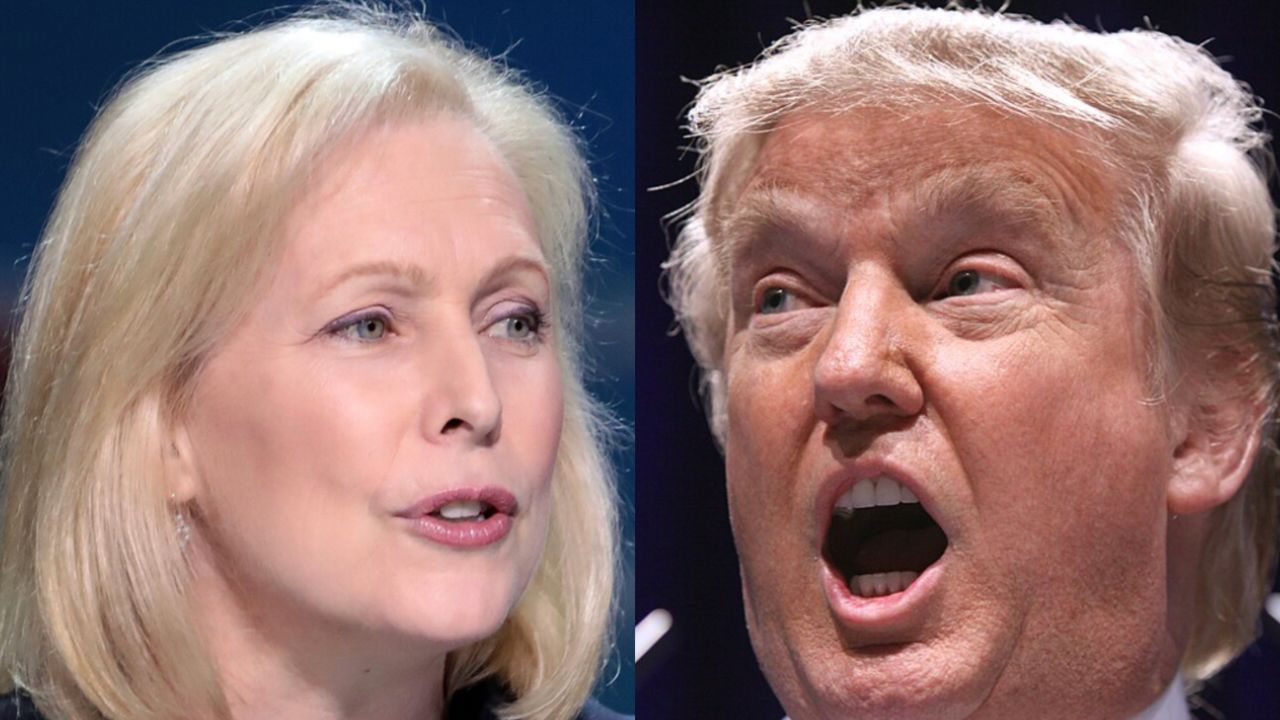
Senator Kirsten Gillibrand (D-NY), the chair of the Democratic Senatorial Campaign Committee, escalated her monthslong attack on President Donald Trump’s spending priorities Tuesday, accusing the administration of pouring money into a White House ballroom project and an ongoing war with Iran while leaving American working families with nothing. In a post on X published at 9:00 a.m. on September 15, 2026, Gillibrand tied that critique directly to her effort to lead Senate Democrats to a majority in the November midterms.
Gillibrand’s full post read:
“Trump has billions for ballrooms and bombs, but nothing for working families.
This November, we’re flipping the Senate BLUE and fighting back against his recklessness.”
A Recurring Line of Attack
Tuesday’s post was not the first time Gillibrand has used the “ballrooms and bombs” framing against the president. On September 4, in a statement responding to record-high diesel prices over Labor Day weekend, Gillibrand said that “all this administration is focused on is bombs, ballrooms, and billionaires.” A day earlier, responding to reports that Defense Secretary Pete Hegseth was extending U.S. troop deployments in the Middle East into 2027, she used nearly identical language, saying the administration “has unlimited money for bombs, ballrooms, and billionaires, but nothing for hardworking families here at home struggling with higher costs on gas.”
The Ballroom at the Center of the Fight
The “ballrooms” reference points to the ongoing construction of a new White House ballroom, a project Trump announced in July 2025 that has since grown dramatically in scope and cost. What began as an addition Trump promised would not “interfere with the current building” resulted in the complete demolition of the White House East Wing, including the 122-year-old Jacqueline Kennedy Garden and magnolia trees planted to commemorate Presidents Warren G. Harding and Franklin D. Roosevelt. The project’s price tag rose from an initial $200 million estimate to $300 million, and the White House has said it will be funded entirely by private donors, including major technology and defense firms such as Apple, Amazon, Meta, Microsoft, Google, Booz Allen Hamilton, Lockheed Martin, and Palantir.
Trump has repeatedly stated that “not one dime of government money” is going into the ballroom itself, though reporting has indicated the military is separately building a security complex beneath the structure. A majority of Americans, 56 percent, told pollsters in an ABC News/Washington Post/Ipsos survey that they opposed the ballroom’s construction, with 45 percent saying they “strongly” opposed it.
The “Bombs” Reference and the War in Iran
Gillibrand’s reference to “bombs” reflects her sustained criticism of the financial and human toll of the ongoing U.S. war with Iran. On September 9, she issued a statement responding to reports that the conflict had again pushed oil prices to $100 a barrel, noting that the war had by then left 18 U.S. service members dead and 820 wounded. “Trump’s reckless war in Iran continues to hit devastating new milestones,” Gillibrand said in that statement. “With oil prices skyrocketing and diesel reaching new record highs every day, Americans are struggling to fill up their gas tanks and put food on their tables.”
Earlier, marking six months since the war’s start, Gillibrand said the conflict “has cost tens of billions of taxpayer dollars, wounded hundreds and killed 18 American servicemembers, depleted our stockpile of long-range missiles, and cost New Yorkers billions at the gas pump.” A member of the Senate Armed Services Committee, she has said in prior statements that she has repeatedly asked the administration for a clear strategy and benchmarks for the war and received no answer.
Tying Military Spending to Domestic Cuts
Gillibrand has also directly linked the administration’s war spending to proposed cuts in domestic programs. Responding to Trump’s budget request calling for a $73 billion cut to domestic programs alongside a major increase in defense spending, Gillibrand, ranking member of the Senate Appropriations Subcommittee on Transportation, Housing and Urban Development, said: “Once again, President Trump is putting endless wars first and working families last. Americans are struggling with the sky-high cost of groceries, gas, electricity, and life-saving prescription drugs.”
Working Families and the Cost-of-Living Fight
The “nothing for working families” portion of Gillibrand’s post draws on a broader campaign she has waged throughout 2026 over the cost of living under the Trump administration. A Joint Economic Committee report she cited in August found that the average New York household had paid more than $5,000 in additional costs for goods and services under Trump since his 2024 campaign promise to “end inflation” and “make America affordable again.” Gillibrand said at the time that the administration had “gutted Medicaid and cut Medicare and health care subsidies to fund tax breaks for billionaires, launched a war that increased gas prices, and supported tariffs to make groceries and essentials more expensive.”
She has also pointed to a sharp decline in federal food assistance enrollment, noting that SNAP enrollment nationwide fell from 42.2 million Americans in May 2025 to 36.6 million in May 2026, and said the administration was “kicking families off food assistance to fund tax cuts for the richest people in the country — and pouring billions into a war overseas while he does it.”
Legislative Response: The Tariff Refunds Bill
Beyond criticism, Gillibrand has introduced legislation aimed at providing direct relief to working families. Her Tariff Refunds for Working Families Act would use revenue generated by Trump’s tariffs to provide tax rebates of $600 to individual filers earning $90,000 or less. “Working families are struggling amid higher prices and substantial job losses due to President Trump’s reckless tariffs,” Gillibrand said in introducing the bill. She has also joined a bipartisan group of 39 senators pressing the Department of Health and Human Services to release roughly $400 million in remaining Low Income Home Energy Assistance Program funding, warning that families were being forced to choose between heating their homes and buying food.
The Push to “Flip the Senate Blue”
The second half of Gillibrand’s post — her vow to flip the Senate — reflects her role leading the Democratic Senatorial Campaign Committee for the 2026 election cycle, a position Senate Democratic Leader Chuck Schumer appointed her to in October 2025. Republicans currently hold a 53-47 majority in the chamber, meaning Democrats need a net gain of four seats to reclaim control. Thirty-five Senate seats are up for election on November 3, 2026, including special elections in Ohio and Florida, with 22 of the contested seats currently held by Republicans.
In August, the DSCC under Gillibrand’s leadership announced a $40 million investment in a “Win the Senate” organizing program spanning ten battleground states. “Across the country, hardworking Americans are paying the price for Republicans’ harmful agenda — from higher costs to less health care — and voters are ready for change,” Gillibrand and Schumer said in a joint statement announcing the investment. Speaking to reporters 100 days before Election Day, Gillibrand said Democrats were “well-positioned to win the majority, with multiple paths to get there,” citing what she described as an “affordability crisis that Republicans created.”
Conclusion
Tuesday’s post consolidates themes Gillibrand has pressed for months — the cost of the Iran war, the optics of the White House ballroom project, and the squeeze on working-class Americans from tariffs and price increases — into a direct campaign message ahead of the November midterms. With control of the Senate hanging on a handful of competitive races in states including North Carolina, Maine, Ohio, and Alaska, Gillibrand’s framing signals how Democrats intend to make the administration’s spending priorities, both foreign and domestic, a central argument in their bid to retake the chamber.