
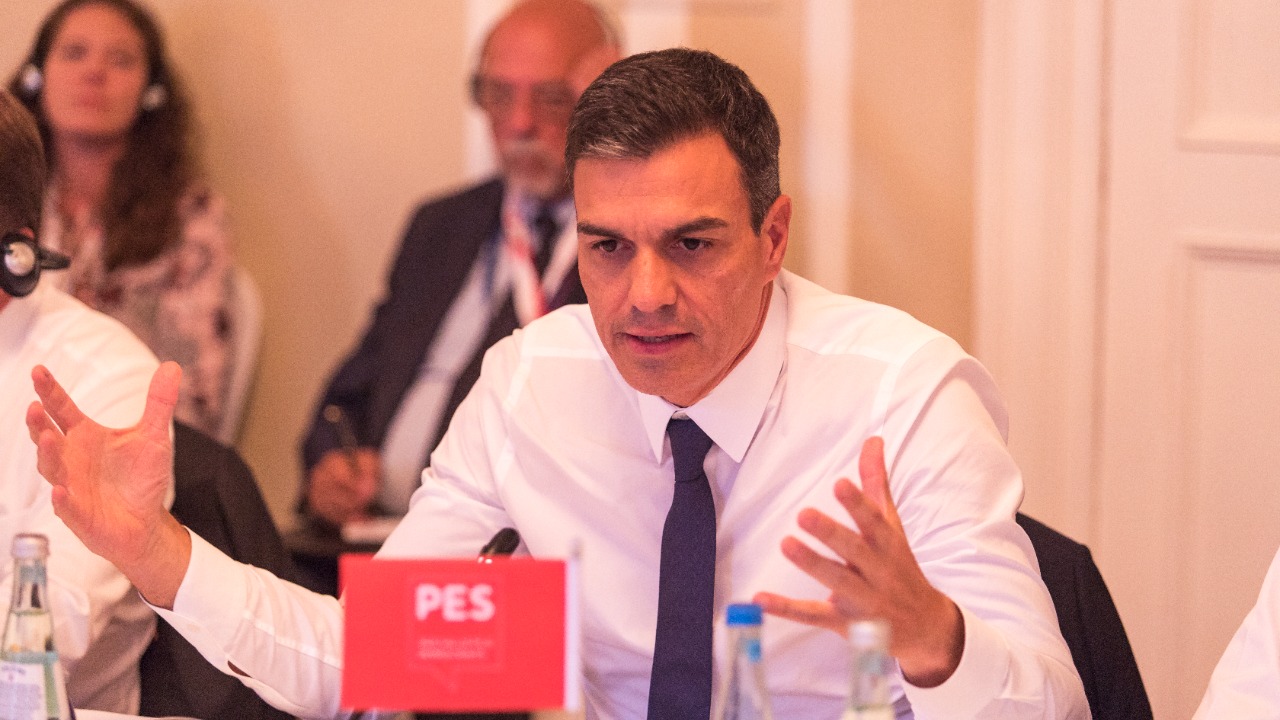
Spain’s decision to summon Iran’s ambassador has pushed Madrid to the forefront of European outrage over the lethal repression of protests in Iran. By publicly condemning the crackdown and demanding that the violence stop, Prime Minister Pedro Sánchez has tied Spain’s foreign policy to a clear human rights message and raised the diplomatic cost for Tehran.
I see this as more than a routine protest note. It is a calculated move that aligns Spain with other Western governments, amplifies pressure on Iranian authorities, and signals that the deaths of thousands of demonstrators will not be treated as an internal matter.
Spain’s sharp rebuke to Tehran
Spain has chosen a pointed diplomatic tool, the formal summons of an ambassador, to convey its anger at the repression in Iran. On Tuesday, Spain called in the Iranian envoy to Madrid to protest the handling of protesters and to insist that the crackdown must come to an end, a step that Spanish officials framed as a direct response to reports of mass casualties and arrests across the country, including in Tehran and other major cities, as the security forces confront a broad uprising. The move, described as Spain Summons Iranian Ambassador to Condemn Tehran’s Handling of Protesters, underscores how far the Sánchez government is willing to go in public to confront a foreign power over human rights, rather than relying on quiet démarches or low profile statements that could be ignored in Tehran, and it reflects a calculation that the cost of silence would be higher than the risk of a diplomatic chill with Iran.
In Madrid, the decision to summon the ambassador was not treated as a symbolic gesture but as a deliberate escalation in tone and visibility. Spanish officials stressed that they were reacting to a pattern of lethal force against demonstrators, not a single incident, and that the message to Tehran was unambiguous: the repression must stop and the rights of protesters must be respected. By choosing this path, Spain has placed itself among the European capitals most willing to confront Iran over its internal conduct, and it has done so in a way that leaves little doubt about where responsibility lies for the bloodshed in the streets.
Inside Madrid’s diplomatic pressure campaign
From my perspective, the most striking element of Spain’s response is how coordinated and layered it has been. In Madrid, officials have used the ambassador’s summons to press Tehran on specific abuses, including the nationwide internet blackout that has cut off Iranians from the outside world and from one another. Spanish diplomats have made clear that they expect the blackout to be lifted and that they are watching closely how the authorities treat detainees and injured protesters, a stance reflected in Madrid’s effort to press Tehran to restore connectivity and pay close attention to the rights of those in custody, as reported from OVIEDO by Alyssa in a detailed account of how Madrid intends to keep the pressure on Tehran.
The Spanish démarche has also been highly personalized. On Tuesday, Spain summoned Iranian Ambassador Reza Zabib to the Foreign Ministry, where Foreign Minister Jose Manuel Albares delivered the message face to face and left no doubt that the crackdown on protests was unacceptable to the Sánchez government. The account of how Spain Calls Iranian Ambassador Over Crackdown on Protests makes clear that this was not a routine courtesy meeting but a formal dressing down, with Albares using the encounter to convey Spain’s demand that lethal force end and that Iran respect its international obligations toward peaceful demonstrators, a demand that has now been placed squarely on the record in Madrid and in Tehran through the presence of Reza Zabib at the meeting On Tuesday, Spain.
Mounting human toll and global reactions
Spain’s stance gains weight because it is grounded in a grim and growing body count. Human rights representatives now denounce the deaths of nearly 2,600 people in Iran due to repression, a figure that conveys the scale of the uprising and the ferocity of the response by security forces. Those representatives, speaking in the context of Politics and Human rights, describe a landscape of mass arrests, thousands of injuries, and a climate of fear in which families struggle even to learn the fate of missing relatives, and it is against this backdrop that Spain’s demand for an end to the violence acquires its urgency and moral clarity.
The international response has not been limited to Europe. President Donald Trump has also weighed in, telling Iranians that “help is on its way” and announcing that he has cancelled all meetings with Iranian officials amid the brutal crackdown, a message that signals a hardening of Washington’s posture and a willingness to link broader regional policy to the fate of the protesters. In a live account of the crisis, Trump’s comments are framed as a potential game changer for Iran and the region, with the United States positioning itself as a vocal supporter of the demonstrators and a critic of the regime’s tactics, a stance that adds another layer of pressure on Tehran and reinforces the message coming from European capitals President Donald Trump.
A coordinated European front and what comes next
Spain is not acting in isolation, and I see that as crucial to understanding the potential impact of this diplomatic push. Reports from Madrid describe how Spain has summoned the Iranian ambassador over the protest crackdown and used the occasion to insist that the only way out of the crisis is through dialogue and a return to the negotiating table, rather than through bullets and mass detentions. In that account, Spanish officials emphasize that they are aligning with partners who share their concern about the violence and that they intend to keep Iran’s conduct on the agenda in European forums, a stance captured in the description of how Spain summons the envoy and frames the crackdown as incompatible with any serious negotiation. That same determination is visible in the way Spain and the Netherlands have jointly summoned Iranian ambassadors to protest the violent suppression of demonstrations in Iran, a coordinated step that signals a shared European resolve to hold those responsible to account and to keep the focus on the rights of Iranian citizens rather than on narrow geopolitical calculations Spain and the.