

Close quarters is where shotguns stop being polite and start being effective, turning tight hallways and cramped living rooms into their natural habitat. While rifle trends come and go, a handful of scatterguns keep proving that when the distance shrinks and the stakes spike, they are still the tools you want in your hands. I want to walk through the models and designs that continue to rule that space, and why their mix of reliability, speed, and sheer intimidation keeps them at the top of the close-range food chain.
Why shotguns still rule the hallway
At defensive distances, a good shotgun solves problems with ruthless efficiency, which is exactly why elite units still lean on them when doors need to open and threats are measured in feet, not yards. Shotguns deliver massive energy transfer, flexible ammunition choices, and the kind of psychological effect that tends to make arguments end early. That is not nostalgia talking, it is the same logic that keeps the Benelli M4 Super 90, the Mossberg 590, and the Remington 870 in regular use for hard entries and close work, with the Benelli M4 Super 90 specifically highlighted for those critical encounters where failure is not an option.
Those choices are not accidental. The Benelli M4 Super 90 is described as a key tool for rapid entry operations, and the same platform appears again when the Navy lists the Benelli M4 Super 90 alongside the Mossberg 590 and the Remington 870 as standard combat shotguns, with the 90, 590, and 870 designations spelled out as part of that short list. When units that can pick almost anything still reach for these models, it is a strong hint that for close-range defense, the shotgun is not a relic, it is the reigning champion that keeps getting refined rather than replaced.
Pump guns that refuse to retire
For all the talk about new technology, the humble pump shotgun keeps showing up like the veteran coworker who never calls in sick and always knows where the spare batteries are. The basic appeal is simple: a pump will run almost anything, from full-power buckshot to specialty loads that would choke a fussier design, and it will do it with a manual rhythm that is easy to learn under stress. That is why descriptions of the Mossberg 590A1 emphasize that pump-action shotguns like the Mossberg 590A1 can function with less-lethal rubber buckshot, rubber slugs, and other nonstandard rounds that will not cycle in a semi-auto, giving one platform a wide menu of options for both home defense and professional use.
The Mossberg family in particular has become a kind of default answer for defensive pumps. The Mossberg 590 is explicitly called a top home defense firearm, with its shorter barrel and compact format praised for indoor maneuvering, and the same line notes how the Mossberg (Mossberg 500) 590 Shockwave builds on that reputation. Elsewhere, the Mossberg 590A1 SPX is described as a reliable and durable 12-gauge pump action built for home defense and tactical roles, with features like heavy-duty construction and even a bayonet for close-quarters combat, while broader guidance on Pump action shotguns stresses that Pump models are highly recommended for home defense because of their reliability, ease of use, and powerful stopping capacity. When a design keeps getting reissued in slightly different outfits for decades, it is usually because it keeps doing the job.
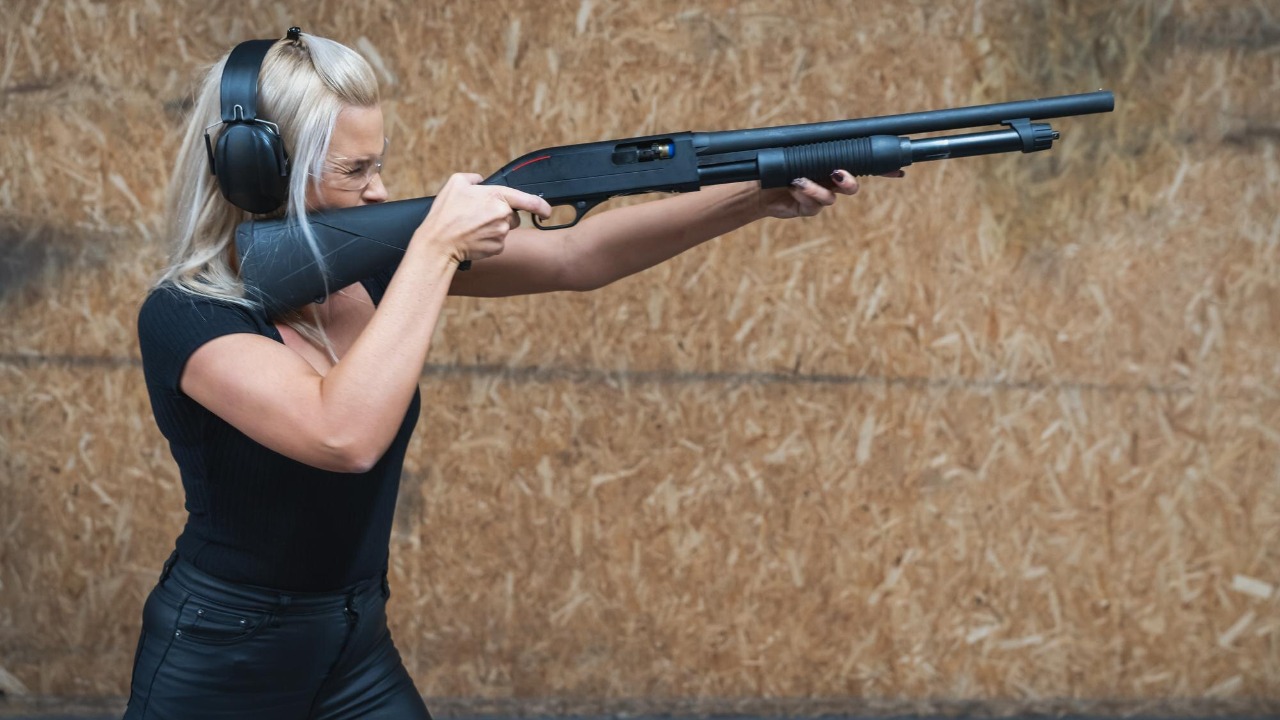
Modern semi-autos that changed the game
For a long time, semi-automatic shotguns had a reputation as the finicky sports cars of the gun world, fun when tuned, temperamental when dirty. That narrative is starting to look as dated as dial-up internet. Modern designs have turned the semi-auto into a serious defensive contender, combining speed with reliability in a way that makes the old pump-versus-auto debate a lot less one-sided. One detailed look at the Savage Renegauge Security even opens by arguing that Nothing in the arguments against a semi-automatic shotgun stands up to daylight and follows up by noting that Not today and Most of the old complaints have been overtaken by better engineering and more forgiving gas systems.
The practical advantages are hard to ignore. Semi-Automatic Shotguns are described as offering rapid follow-up shots through advanced operating systems that automatically cycle the action, which is exactly what you want when you are trying to solve more than one problem in a dark hallway. Another breakdown of Semi Automatic Shotguns Semi explains that these guns use the energy from each shot to automatically cycle, which reduces the time between shots and makes them suitable for quick target reacquisition and engagement. On top of that, guidance on repeaters notes that Regarding repeaters of the semi-automatic variety, their actions significantly reduce felt recoil compared to break-action and pump shotguns, which means faster, more accurate strings of fire for people who are not training every weekend. Even long-time pump defenders now concede that While pump-action shotguns have a reputation for reliability, modern semi-automatic shotguns have improved significantly and can offer comparable reliability with proper maintenance and ammunition selection.
Beretta 1301 and Savage Renegauge: the new close-range royalty
Among the new generation of semi-autos, a couple of names keep popping up whenever serious shooters talk about defensive shotguns that actually earn their keep. The Beretta 1301 series is singled out as top dog in today’s tactical shotgun market, with Key Features that focus on its fast cycling, smart controls, and build quality that is meant for hard use rather than weekend clays. That same family shows up again when the Beretta 1301 Mod. 2 Tactical The is highlighted as a standout close-quarters defensive firearm, reinforcing the idea that this line is not just a competition darling but a purpose-built tool for tight spaces and fast decisions.
The Savage Renegauge line is carving out its own niche as a semi-auto that shrugs off the usual complaints. A recent rundown of the 5 Best Shotguns for Self-Defense 2025 lists the Savage Renegauge 57786 12 Gauge with a price of $164, and while that number looks suspiciously truncated, the key point is that the Savage Renegauge 12 Gauge is being evaluated specifically in a self-defense context rather than just as a hunting gun. Another deep dive into the Savage Renegauge Security argues that semi-auto ascendancy is real, with the platform presented as a reliable, soft-shooting option that challenges the old assumption that pumps are the only safe bet for defensive work. When one line is widely described as top dog and another is held up as proof that the semi-auto era has arrived, it is clear that close-range dominance is no longer a pump-only club.
Bullpups, compact pumps, and the space-saving bruisers
Not everyone has the luxury of a sprawling hallway or a barn-sized living room, and that is where compact defensive shotguns start to shine. Bullpup designs, which tuck the action behind the trigger, cram full-length barrels into much shorter overall packages, turning what used to be a hallway wrestling match into something closer to a firm handshake. A detailed Best Bullpup Shotgun Comparison lays this out with a table that breaks down Make, Model, Available Gauges, and Choke options, and it highlights how these compact layouts still deliver full-power performance while being easier to maneuver around corners, furniture, and the occasional badly placed coffee table.
On the pump side, manufacturers have been quietly building their own space-saving bruisers. The Icons of Tactical Pump Action Shotguns from KelTec, for example, emphasize that models like the KS7 GEN2 use a Single Tube 12ga Bullpu configuration that is downward-ejecting and completely ambidextrous, which is a polite way of saying they work whether you are left-handed, right-handed, or just trying not to smack a wall with the stock. Pair that with the already compact Mossberg 590 and Mossberg 500 family, which are repeatedly praised for shorter barrels and home-defense-friendly handling, and you get a category of guns that are purpose-built for tight interiors rather than adapted from the duck blind. In a world where many of us live in apartments, townhouses, or modest suburban boxes, that kind of compact control is not a gimmick, it is a practical advantage.