
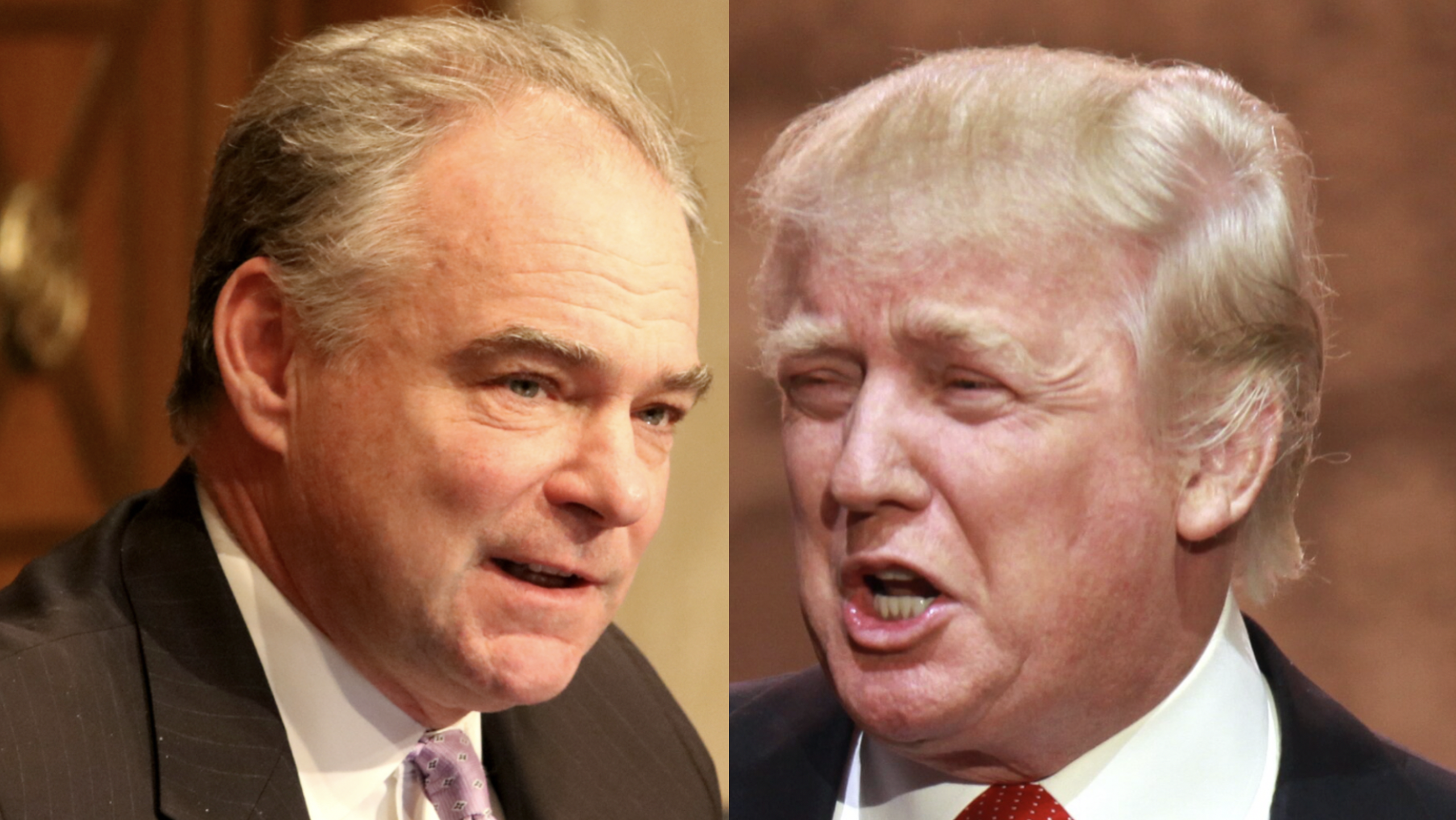
Sen. Tim Kaine (D-VA) renewed his criticism of the Trump-Vance administration’s handling of the war with Iran on Monday, citing a new economic estimate that places the financial toll of the conflict on American households at roughly $1,000 over the past four months.
In a post on X published at 3:55 p.m. on June 29, 2026, Kaine wrote in full: “The Trump-Vance Administration’s foolish and disastrous war with Iran has been a nightmare for Americans’ wallets—costing the average household about $1,000 over the last four months.”
Kaine’s post was a direct response to a CBS News report published earlier Monday afternoon detailing an estimate from Moody’s Analytics chief economist Mark Zandi, who calculated that the war has cost Americans approximately $1,000 per household in higher fuel, food, and other expenses since fighting began on February 28. According to the CBS report, Zandi’s analysis comes as government data shows inflation in May reached its highest level in three years, with the United States and Iran still working to finalize a lasting peace agreement after the two countries exchanged military strikes over the weekend, straining an already fragile ceasefire.
Zandi’s breakdown, as reported by CBS, found that the single largest war-related expense for American households has been gasoline, which peaked at $4.56 a gallon on May 21 before falling back below $4 a gallon earlier this month. Since the war began, Americans have spent an additional $300 on average filling their tanks, a figure that accounts only for the higher cost of regular gasoline. Elevated diesel prices have also driven up the cost of transporting goods from farms, factories, and seaports, pushing retail prices higher; Zandi estimated that the typical household has paid an extra $200 on groceries as a result.
The CBS report outlined several additional categories of war-related costs identified by Zandi. Higher interest rates have added an estimated $150 per household, as the inflation spike tied to the war has prevented the Federal Reserve from cutting its benchmark rate as many investors had expected entering the year, with some forecasters now even projecting a rate hike later in 2026. Surging jet fuel costs have added an estimated $100 per household in higher airfare, as airlines have passed along a portion of their increased fuel expenses to travelers. And taxpayer-funded military operations have added an estimated $250 per household, with Zandi calculating that the United States is spending an additional $50 million per day to conduct the war. CBS noted that a separate estimate from U.S. officials in April put the total American price tag for the conflict at $50 billion, while a Pentagon official that same month estimated the cost of the Defense Department’s Operation Epic Fury at roughly $25 billion, a figure that did not fully account for damaged or destroyed equipment and installations.
“My estimate that the Iran war has cost the typical American household $1,000 and counting is, if anything, conservative,” Zandi wrote, according to CBS. “The true cost is likely higher—meaningfully higher.”
Other researchers cited in the CBS report have produced their own estimates of the war’s financial toll. Brown University researchers calculated that U.S. consumers have spent an additional $64 billion in total, or $486.41 per household, on gas and diesel alone since the war began. The Institute on Tax and Economic Policy, a nonpartisan think tank, put the higher fuel costs at $427.50 per household. CBS also reported that motorists have seen some recent relief, with the national average for a gallon of gas at $3.86 on Monday, down from $4.39 a month earlier but still well above the $2.98 average recorded before the war started, according to AAA data. Patrick De Haan, a petroleum analyst at GasBuddy, told CBS he believes gas prices could fall below $3 by year-end or early next year if the U.S. and Iran succeed in ending the war. A June Gallup poll referenced in the report found that two-thirds of Americans said they had experienced financial hardship due to recent fuel price increases.
Monday’s X post is the latest in a string of public statements Kaine has made challenging the administration’s conduct of the war since it began in late February. A member of the Senate Armed Services and Foreign Relations Committees, Kaine has used official Senate statements, floor speeches, and social media to argue that President Trump initiated the conflict without congressional authorization, a clear strategic rationale, or the support of allies.
On the day the war began, Kaine released a statement asking, “Has President Trump learned nothing from decades of U.S. meddling in Iran and forever wars in the Middle East?” He went on to lead three separate War Powers Resolution votes in the Senate over the following months aimed at forcing an end to the conflict absent congressional approval.
More than a month into the war, Kaine responded to a Trump administration update by saying the president “started this war on his own—without a clear rationale, without a well-considered plan, without the support of allies, and without the constitutionally-required authorization from Congress,” adding that mounting U.S. casualties, rising costs, and regional instability had followed.
In May, after the administration informed Congress that hostilities had “terminated,” Kaine pushed back, pointing to the U.S. Navy’s continued blockade of Iranian ports and its seizure of an Iranian-flagged vessel after the supposed ceasefire date. “If any other country did all of this to the U.S., we would consider it an act of war,” Kaine said at the time. “The Trump-Vance Administration isn’t fooling anyone, and the American people are smart enough to see through the lies and chaos.”
When the Senate passed a resolution to terminate the war, Kaine joined Senate Democratic Leader Chuck Schumer and several colleagues in a joint statement declaring that “Americans are not interested in a war that has raised gas prices, killed Americans, and hurt the global economy.” Kaine added that the conflict had cost 13 American servicemembers their lives and tens of billions of taxpayer dollars while delivering, in his words, “no strategy, no endgame, no authorization from Congress, and no support from allies.”
Most recently, after the administration announced a memorandum of understanding with Iran, Kaine took to the Senate floor to compare the new agreement unfavorably to the 2015 nuclear deal Trump withdrew from during his first term. “Many of us in the Senate said ‘if you tear up this deal and make diplomacy impossible, you will make war inevitable. American troops are likely to die if you destroy diplomacy,'” Kaine said. “And that has now proven to be true.”
Taken together, Monday’s post fits a consistent pattern in Kaine’s public response to the conflict: tying the human and financial costs of the war directly to what he has repeatedly characterized as a reckless and unauthorized decision by President Trump, Vice President Vance, and Defense Secretary Pete Hegseth to pursue military action over diplomacy. As talks between the U.S. and Iran are set to continue in Qatar on Tuesday, the new household cost estimate gives Kaine fresh ammunition to argue that, regardless of how the conflict ultimately resolves, American families have already paid a steep price for it.