
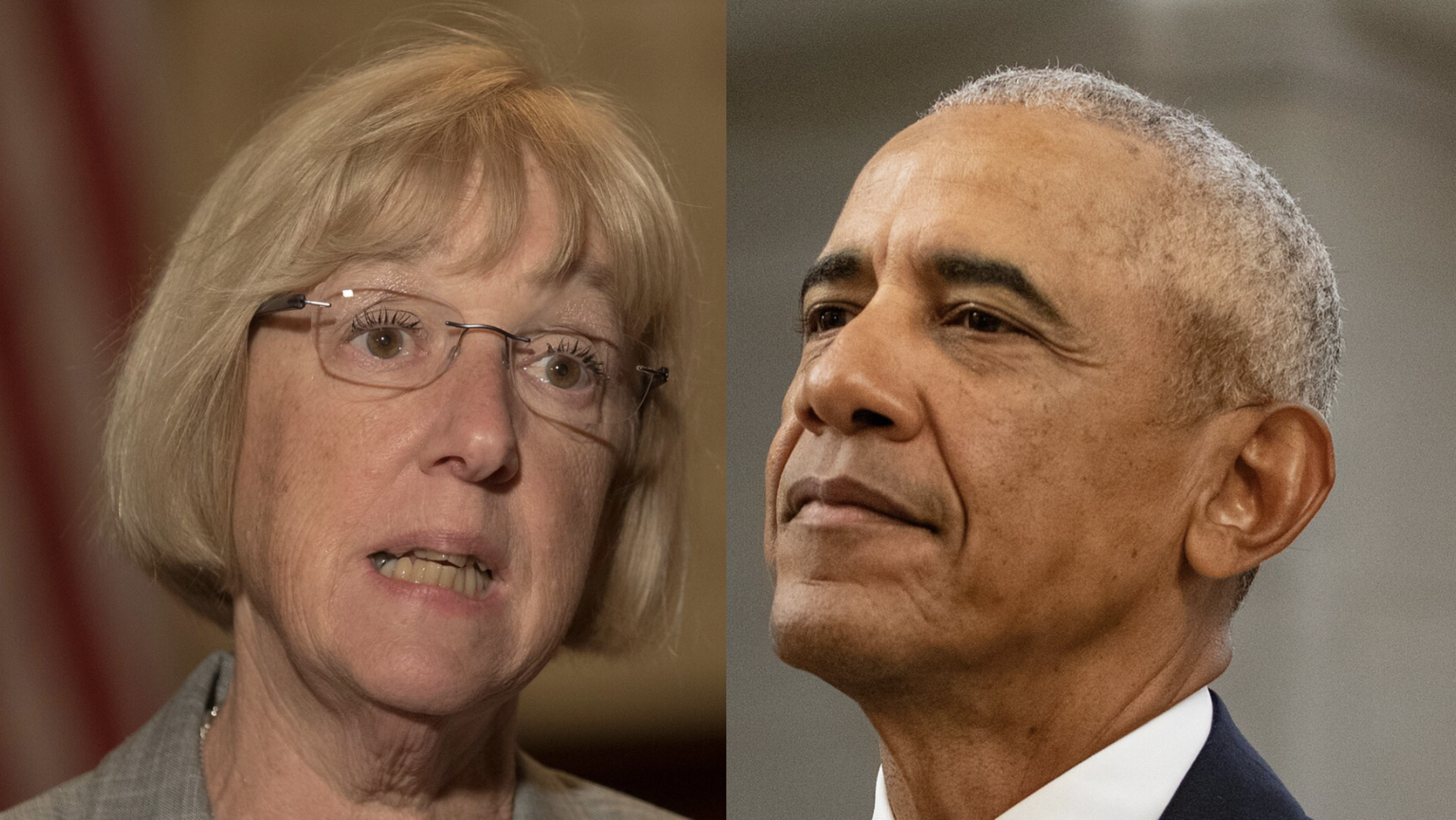
As President Trump celebrated a preliminary U.S.-Iran ceasefire framework on Sunday, U.S. Senator Patty Murray (D-WA) offered a pointed rejoinder on Monday, June 15, 2026 — invoking the Obama-era nuclear agreement as the standard by which the new deal should be measured, and finding it wanting.
“Trump is cheering on a bad deal to end a war he should have NEVER started,” Murray wrote on X at 11:35 a.m. “American servicemembers killed and injured. Thousands of civilians killed. Billions of taxpayer dollars lit on fire. All for a worse deal than what Obama negotiated without dropping a single bomb.”
The reference to the Obama administration’s diplomatic record was not a passing remark. It reflected a position Murray has held and publicly defended for more than a decade — a conviction that the 2015 Joint Comprehensive Plan of Action represented the right way to address the Iranian nuclear threat, and that abandoning it set the United States on the path to the war now grinding toward an uncertain end.
A Vote Murray Has Never Walked Back
In August 2015, Murray announced her support for the international agreement to prevent Iran from developing nuclear weapons, saying she had spent weeks studying the details, talking to experts, and listening to constituents on all sides. “Guided by these principles, I will be voting to support the agreement to prevent Iran from developing a nuclear weapon,” she said, adding that she would vote against the resolution of disapproval and, if needed, against overriding President Obama’s veto.
Murray credited President Obama, Secretary Kerry, and others inside and outside the administration for their work on the agreement. She described the decision as one of the most momentous facing a U.S. Senator — “those involving war, peace, and the safety and security of our families, our servicemembers, our allies, and our nation” — and said she had approached it the same way she had approached her decisions on Afghanistan and Iraq.
What the JCPOA Achieved
The agreement Murray voted to support — formally known as the Joint Comprehensive Plan of Action — was reached in July 2015 by the United States, Iran, and five other world powers. Under the deal, Iran shipped out 98 percent of its enriched uranium, dismantled two-thirds of its centrifuges, filled its plutonium production reactor with concrete, and agreed to the most intrusive inspection and verification program ever negotiated for a nuclear program. The International Atomic Energy Agency confirmed Iran was complying with its commitments, and Iran’s breakout time to a nuclear weapon was extended significantly.
President Obama described the JCPOA as demonstrating “what can be achieved by principled diplomacy and a sustained commitment to stopping the spread of nuclear weapons,” and noted that all of Iran’s pathways to a nuclear weapon remained closed under the agreement. No military force was used to achieve it.
The Road From Diplomacy to War
The JCPOA did not survive the change in administration. In 2018, President Trump withdrew the United States from the agreement — a decision that JCPOA supporters, including Murray, warned would have severe consequences. In the years since, the debate over whether the deal represented the best achievable outcome continued as background noise to every development in U.S.-Iran relations, until Trump launched Operation Epic Fury in late February 2026.
When strikes began, Murray stated that while no one disputed that Iran should never possess a nuclear weapon, the American people did not want war and the president did not have the unilateral authority to start one. She called the initial strikes “unconstitutional” and said Congress had not been presented with any evidence that required military action.
A “Worse Deal” by Comparison
The preliminary ceasefire framework now emerging stands in sharp contrast to the comprehensive, verified agreement Murray supported in 2015. The full text of the new agreement has not been published, and emerging details suggest that the most difficult issues — including the future of Iran’s nuclear program — have been deferred to future negotiations. The framework commits the United States to dismantling its naval blockade while Iran reopens the Strait of Hormuz, effectively returning the situation to where it stood before the war began.
Iran’s deputy foreign minister confirmed that “nuclear matters” would be addressed only in the next round of negotiations, and that sanctions relief was similarly deferred. Under the JCPOA that Murray voted for in 2015, those core nuclear constraints were already in place and verified — achieved without a single American casualty.
The Human Cost of the Alternative
According to U.S. Central Command, 13 American service members were killed and 381 were wounded in the first 40 days of Operation Epic Fury alone. The Pentagon’s own estimate put the war’s cost to taxpayers at $29 billion — a figure Murray publicly characterized as “suspiciously low” when she pressed Pentagon officials at a May hearing.
Murray had said in 2015 that she was hopeful the JCPOA would be implemented and would move the United States closer to preventing Iran from developing a nuclear weapon, while pledging to monitor it closely and move quickly on other options if Iran chose “an unacceptable path.” On Monday, in a single post, she argued that the path ultimately chosen — war — had produced worse results than the diplomacy she championed, at a far higher cost in lives, treasure, and regional stability.