
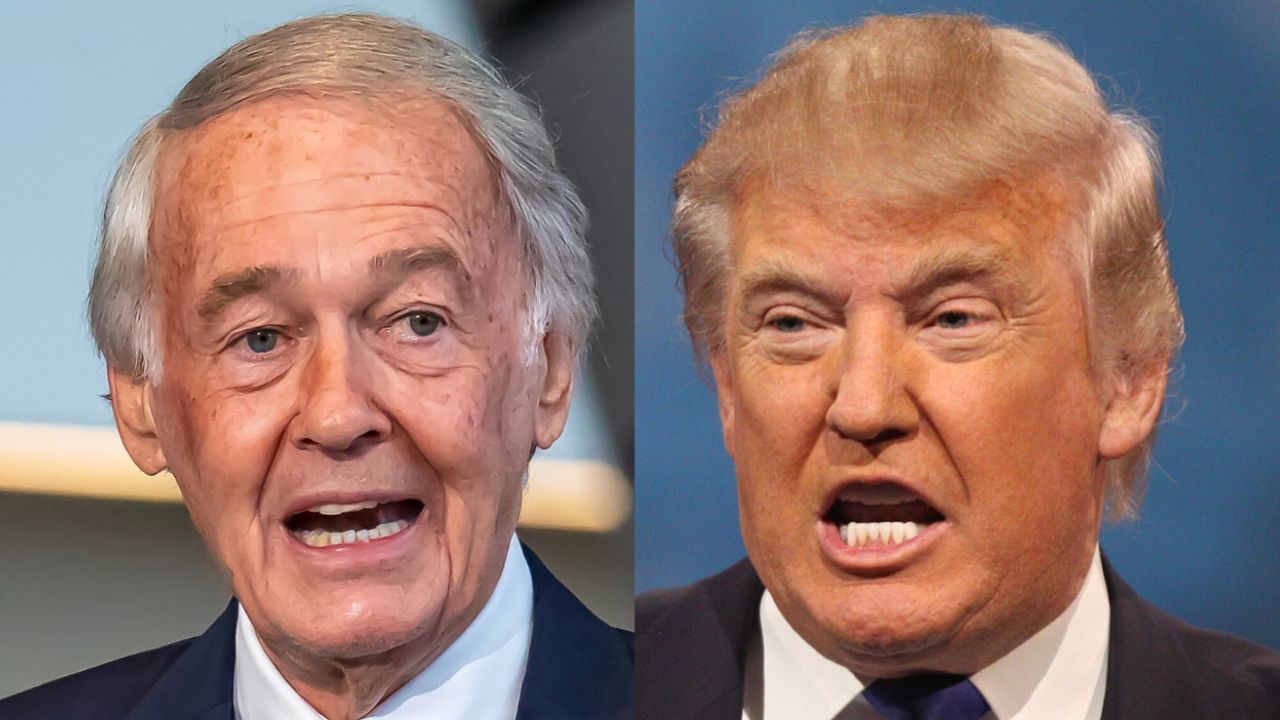
U.S. Sen. Ed Markey (D-Mass.) accused President Donald Trump on Monday of selling nuclear technology to Saudi Arabia despite reported U.S. intelligence that the kingdom still wants a nuclear weapon. Markey also alleged that the Trump family has taken billions of dollars from the Saudis. The senator, a longtime nuclear nonproliferation advocate, called on Congress and the administration to halt the agreement outright.
The Post
Markey made the remarks in a post on X at 3:01 p.m. on September 28, 2026. The post reads in full:
“Trump is selling nuclear tech to Saudi Arabia despite reported US intelligence that the Saudis still want a bomb—while the Trumps have taken billions in bribes from the Saudis. This is Trump corruption at the expense of US national security. Stop the deal.”
The Intelligence Assessment Behind the Post
Markey attached a New York Times report published September 25. It said a classified intelligence assessment given to Congress asserted that Saudi Arabia has left open the option of developing a nuclear weapon, according to American officials. The assessment went to lawmakers reviewing the Trump administration’s agreement to help the kingdom develop civilian nuclear power. The Washington Post reported the assessment earlier.
What Officials Said
The officials who described the assessment spoke on condition of anonymity because they were not authorized to discuss classified material. They stressed that Saudi Arabia has not decided to pursue a nuclear weapon. The Times noted the assessment is not entirely new, since American officials have long judged that Riyadh remains interested in such weapons, and the kingdom has threatened to build them if Iran did. The C.I.A. referred questions to the Office of the Director of National Intelligence, which did not immediately respond. An administration official, also anonymous, said the agreement would advance regional security and uphold nonproliferation standards.
What the Deal Does
The 30-year agreement gives U.S. companies a central role in building Saudi Arabia’s civilian nuclear infrastructure and largely shuts out foreign competitors, the Times reported. Under its terms, the kingdom can enrich uranium to nearly 20 percent, far below weapons grade. The Times noted that a country holding uranium at that level would need only a short time to reach weapons grade. Energy Secretary Chris Wright and Saudi Energy Minister Prince Abdulaziz bin Salman signed the deal on July 22, and the administration sent it to Congress in late August, according to The Hill.
A Limited Window for Congress
Section 123 of the Atomic Energy Act requires a congressional review, and Congress is now in the middle of a 90-day period. Unlike a treaty, the agreement does not need two-thirds approval in the Senate. Unless Congress passes a joint resolution of rejection during the window, the accord can take effect without an affirmative vote by either chamber. The Senate Foreign Relations Committee and House Foreign Affairs Committee examine the deal during that time.
Long Odds in Both Chambers
House Democrats led by Rep. Gregory W. Meeks of New York have introduced a resolution of disapproval, arguing the deal falls short of longstanding nonproliferation standards. Procedural rules make it hard for the minority to force a floor vote over Republican objections, and the House is recessed until after the midterm elections. The Senate stays in session about another week before its own pre-election recess. Its rules could let a single senator force consideration, but the Times reported that none had moved to do so.
The Letter to Rubio
Three days before the post, on September 25, Markey and Sen. Jeff Merkley (D-Ore.) sent Secretary of State Marco Rubio a letter demanding the administration abandon the deal. The two co-chair the bicameral Nuclear Weapons and Arms Control Working Group. They argued the agreement fails the “Gold Standard” nonproliferation test by giving up two conditions. One is the strictest IAEA inspection standard, the Additional Protocol. The other is denying Saudi Arabia the means to produce weapons-grade material through enrichment or reprocessing. Sens. Tim Kaine, Chris Van Hollen, Peter Welch, and Ron Wyden also signed.
Markey’s Message to Rubio
In an August 26 statement, Markey said Rubio, as a senator, once understood that giving Saudi Arabia the technology to produce nuclear weapons was a terrible idea. Markey said Rubio, as secretary of state, was now doing exactly that. The statement came after the administration sent the agreement to Congress, and Markey urged lawmakers to use their power to block it.
“Starting Gun” for an Arms Race
Markey called the deal “the starting gun for a Middle East nuclear arms race.” He argued that if the administration wanted to stop a Saudi bomb, it would require the Gold Standard, which bans enrichment and reprocessing and mandates Additional Protocol safeguards. He said a Riyadh that did not want a bomb would accept those terms. He also pointed to Saudi ruler Mohammed bin Salman, who he said has repeatedly stated he wants a nuclear weapon.
Abraham Accords Condition
Administration officials told reporters that Trump will let the pact advance only if Saudi Arabia agrees to a condition imposed after negotiations began: joining the Abraham Accords, the first-term initiative that normalized relations between Israel and several countries. Wright said the nuclear agreement and the Abraham Accords talks would be “worked in parallel.” A Saudi official told CNN that Saudi-U.S. relations are ever-evolving.
The Side Letters
On September 16, Markey and Merkley led a bipartisan group of senators in asking the administration to release two side letters that accompany the agreement. The agreement text and safeguards agreement are public, but the side letters are classified at the lowest possible level, which the senators called unprecedented. The senators wrote that Congress and the public cannot judge the commitments on both sides without seeing them.
A Years-Long Campaign
Markey’s opposition predates the current deal. In 2019, he and Merkley urged the first Trump administration to halt civil nuclear talks with Riyadh, and Markey introduced legislation that year with then-Sen. Rubio to block Saudi nuclear weapons ambitions. In 2021 he reintroduced the SAUDI WMD Act, which would terminate U.S. arms exports to the kingdom if it builds an enrichment or reprocessing facility or refuses the Additional Protocol. In March 2026, he and Merkley reintroduced the No Nuclear Weapons for Saudi Arabia Act, which would require an affirmative congressional vote for any such agreement to take effect.
The Bribery Allegation
Markey’s post is the sharpest of his recent statements because it ties the deal to what he described as billions in bribes the Trumps have taken from the Saudis. The post gave no documentation for the figure. The New York Times report he attached does not address it, and the White House response to the specific allegation was not included in the material reviewed for this article.
What Comes Next
With the House out until after the midterms and the Senate set to leave within about a week, time to build a majority against the deal is short. Whether any senator will use the chamber’s rules to force consideration remains unclear. Markey’s post makes plain he intends to keep pressing, and the review period is still running.