
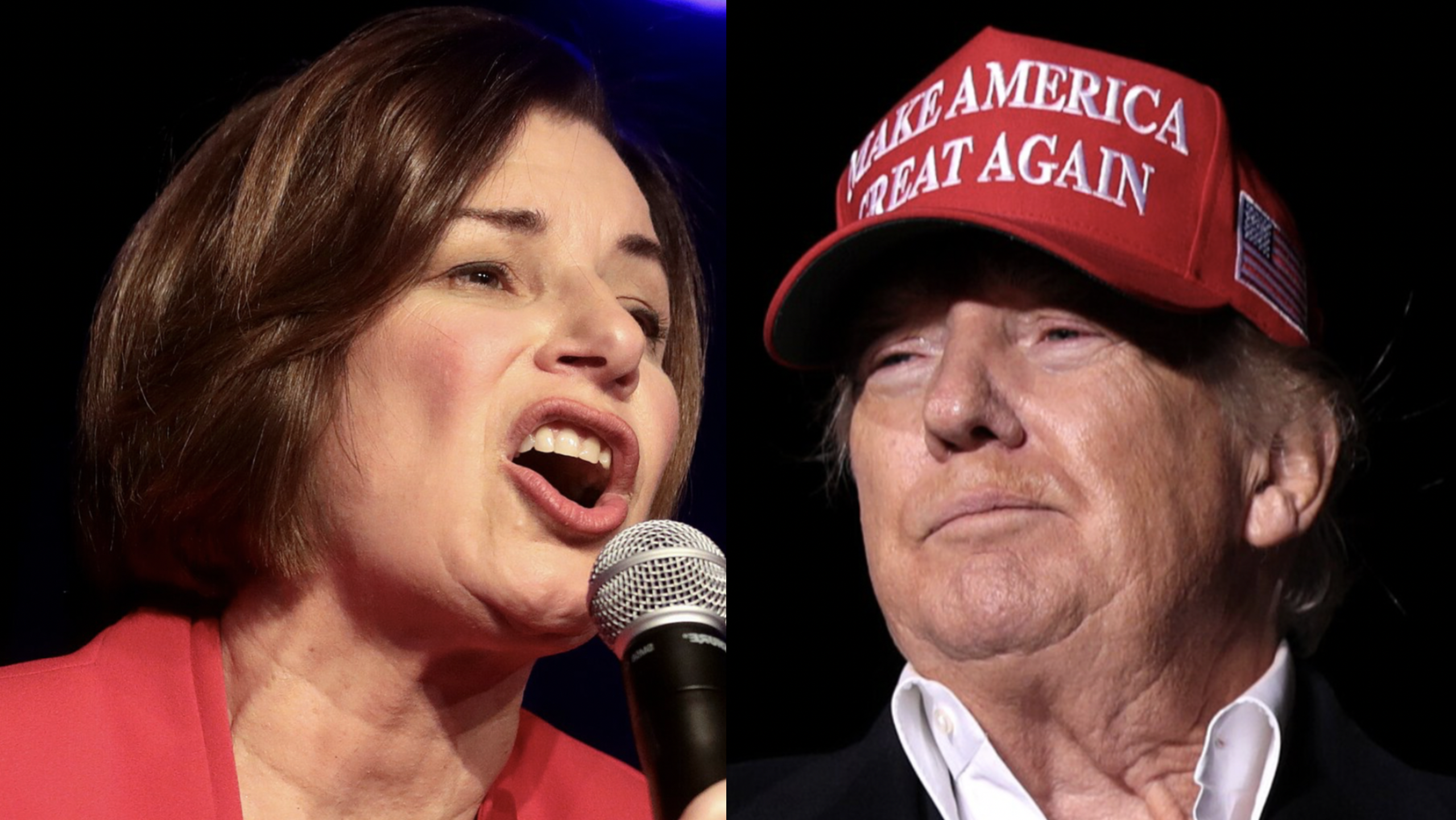
U.S. Senator Amy Klobuchar (D-MN) unleashed a pointed accusation against President Donald Trump on Thursday, charging that he is now continuing a war with Iran that he started without ever seeking the approval of Congress — and that ordinary American families are the ones paying the price. The statement, posted to X at 12:16 PM on July 9, 2026, came just hours after Trump publicly declared the ceasefire between the United States and Iran to be over, throwing what remained of a fragile diplomatic process into full collapse.
“The President says the ceasefire between Iran and the U.S. is over,” Klobuchar wrote. “A war he started and is now continuing with no consultation or authorization from Congress. A war that has skyrocketed costs for American families.”
The three-sentence post was brief but pointed, hitting three distinct targets at once: the legitimacy of the war’s origins, the administration’s continued disregard for Congress’s constitutional role, and the economic fallout now rippling through American households. For Klobuchar, it was the latest in a long line of challenges she has leveled at the Trump administration since U.S. strikes on Iran first began on February 28, 2026.
A Charge That Dates Back to Day One
Klobuchar’s criticism of the war’s legal foundation is not new — it has been the backbone of her position since the conflict’s opening hours. When the initial strikes were launched in late February, she put out a formal statement through her Senate office that pulled no punches on the constitutional question.
“The President — with no authorization from Congress — has gone to war with Iran,” she wrote at the time. “Under the U.S. Constitution it is Congress — and not the President — who has the power to declare war.” She added that while she had long supported sanctions against Iran and believed the country must never be allowed to develop a nuclear weapon, the manner in which the military campaign was launched was indefensible. “This military campaign, however, puts American troops at serious risk and has begun without a clear justification of any imminent need for war. Such a consequential decision requires debate and authorization from Congress. This war has not been justified to the American people.”
Voting to Rein In the President
Klobuchar did not stop at words. In early March, when the Senate voted on a resolution aimed at limiting the president’s war powers, she cast her ballot in favor of it and made clear why. “Today I voted to pass the resolution to rein in the President,” she wrote on X on March 4, 2026. “He unilaterally launched a war in the Middle East with no imminent harm to the U.S. when he did it. Iran should never have a nuclear weapon, but the Administration has no strategic path forward.”
The resolution reflected a broader Democratic effort to invoke the War Powers Resolution as a check on a conflict that, in their view, had never been lawfully authorized. That effort extended into June, when Senate Democratic Leader Chuck Schumer, along with Senators Adam Schiff and Tim Kaine, led 35 Senate Democrats — Klobuchar among them — in sending a letter to Trump demanding he release the Office of Legal Counsel opinion used to justify the administration’s claim that hostilities in Iran had “terminated.” The senators argued that ongoing naval operations, bombings, blockades, and strike campaigns made any such claim legally untenable. “The United States and Iran, and their associated partners and proxies, have continued to use lethal force in contravention of the ceasefire, which also constitute hostilities,” the letter stated.
“He’s Asking Taxpayers to Shell Out $200 Billion”
Beyond the constitutional argument, Klobuchar has made the economic consequences of the war a central part of her case against it. In an interview that aired on WCCO Radio in April, she put the cost in harsh dollar terms. “He’s asking taxpayers to shell out $200 billion for a war he promised he wouldn’t start,” she said. “And that $200 billion could go toward bringing down our debt. It could go toward extending the tax credits to help people pay for their health insurance for seven years.”
Her concern also extended beyond the federal balance sheet. She pointed to the impact on Minnesota farmers and small businesses caught in the crossfire of the war and the tariff policies that accompanied it, calling on the administration to “reexamine” its trade posture. The war, she noted, had jolted global markets and upended supply chains in ways that small businesses and agricultural communities had little ability to absorb.
The Ceasefire That Wasn’t
Thursday’s X post landed against the backdrop of one of the most dramatic reversals of the conflict thus far. Just weeks earlier, the Trump administration had celebrated a 14-point Memorandum of Understanding with Iran, signed on June 17, as a significant diplomatic achievement. The agreement called for a 60-day ceasefire, a reopening of the Strait of Hormuz, and the lifting of U.S. sanctions on Iranian oil. Trump had declared at the time that the deal “achieves everything we set out to accomplish, everything and much more.”
But by Wednesday, July 8 — one day before Klobuchar’s post — Trump’s tone had reversed entirely. Speaking at the NATO summit in Ankara, Turkey, he described Iranian leaders as “scum” and “sick people” and declared the ceasefire finished. “As far as I’m concerned, it’s over,” he told reporters. The remarks drew a sharp response from Iranian Foreign Minister Abbas Araghchi, who said his country does not “answer vulgarity with vulgarity, but with action: fearlessly and with great valor.”
A Pattern of Escalation, Not Resolution
What made Klobuchar’s Thursday post particularly notable was its timing. With the ceasefire now formally discarded, the war — which she had described from its earliest days as unauthorized and unjustified — had entered what appeared to be a new and potentially more dangerous phase. Trump’s public reversal on the diplomatic track he himself championed, combined with the NATO summit backdrop and the resurgence of hostilities in the Strait of Hormuz, represented exactly the kind of open-ended escalation she had warned about since February.
In a post on X back in June 2025, months before the strikes even began, Klobuchar had been unambiguous about where she stood. “He must not, and under our Constitution cannot, take these actions without congressional authorization and a full debate in Congress over the goals, risks, and implications,” she wrote at the time, responding to the president’s threats of a wider U.S. military campaign against Iran. “For the moment, our first priority must be to protect our troops and other Americans in the region whose safety may now be in jeopardy.”
The Wider Democratic Critique
Klobuchar’s position has placed her squarely within the mainstream of Democratic opposition to the conflict, but her consistency on the issue — from the first strikes in February through Thursday’s ceasefire collapse — gives her criticism particular weight. The argument she has returned to again and again is not simply that the war is bad policy, but that it was launched in a manner that bypassed the constitutional structures the United States relies upon to make decisions of this magnitude.
As of Thursday afternoon, neither the White House nor the Pentagon had responded to Klobuchar’s post. The senator has not indicated whether she plans to take any new legislative action in response to the ceasefire’s collapse, but her statement left little ambiguity about her view of what has unfolded: a president who started a war without authorization is now continuing that same war without authorization — and the American public, not Iran’s government, may bear the longest-lasting costs.