
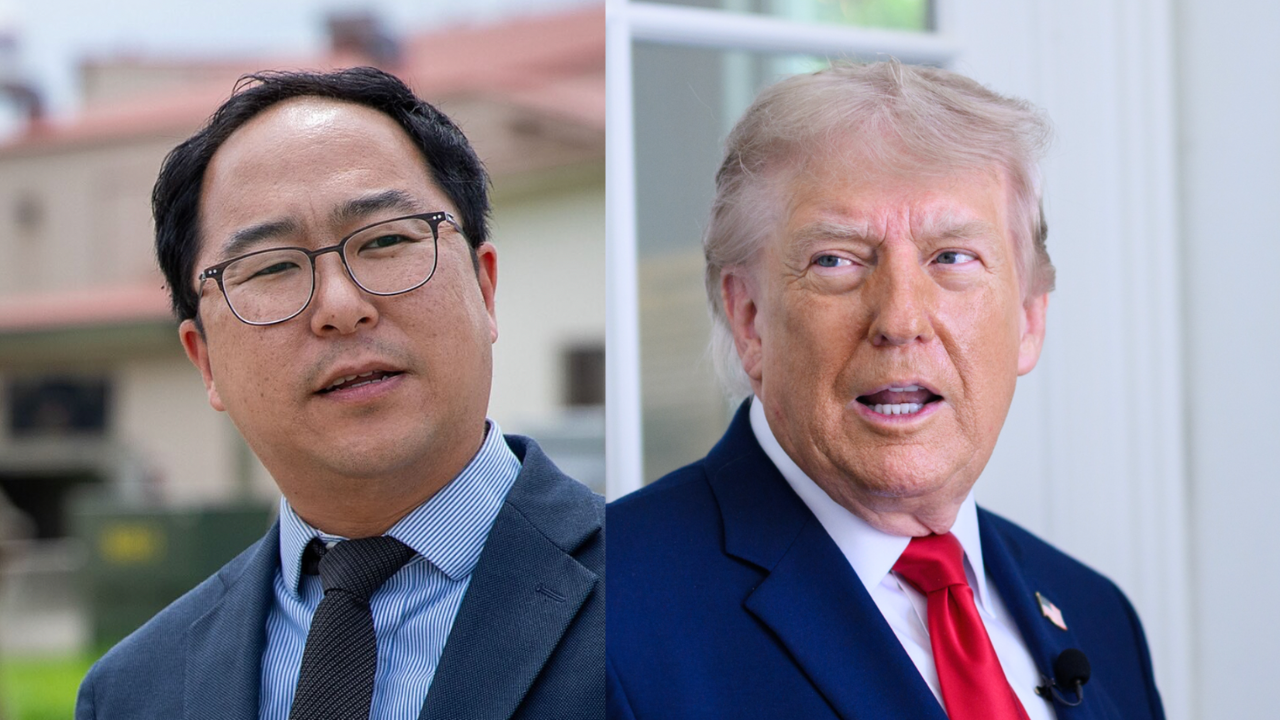
U.S. Senator Andy Kim (D-N.J.) on Tuesday accused President Donald Trump of squandering America’s military readiness through his ongoing war with Iran, declaring that the conflict “has cost Americans billions and has made us strategically vulnerable for years to come.” Kim’s statement, posted to X at 3:27 p.m. on August 4, 2026, came hours after Reuters reported that the U.S. Army has used up “virtually all” of its long-range precision missile stockpile during the five-month war.
The senator’s post read in full: “This war has cost Americans billions and has made us strategically vulnerable for years to come. We’ve depleted our missile stockpiles and Trump continues to threaten new rounds of massive strikes. This is a failure of Trump’s own making and the Senate should unite to end this war.”
Reuters Report Triggers the Statement
Kim’s remarks were a direct response to a Reuters investigation published earlier Tuesday, in which three sources familiar with internal military data said the Army had exhausted nearly all of its Army Tactical Missile Systems (ATACMS) and Precision Strike Missiles (PrSM), the surface-to-surface weapons that form a core part of the military’s long-range strike capability. The outlet reported that the extent of the shortfall had not been previously disclosed, and that the munitions — which cost more than $1 million apiece — allow the military to strike targets accurately from a safe distance. Two of Reuters’ sources said the drawdown reflects the Trump administration’s preference for missile strikes over riskier piloted bombing runs, a strategy that becomes harder to sustain as the arsenal thins.
According to the report, three people familiar with the matter said they were increasingly concerned that the falling missile supplies could limit the United States’ ability to deter other adversaries, including Russia and China, should a future conflict emerge while forces remain committed to the Middle East. A fourth source pushed back on the alarm, telling Reuters that U.S. Central Command has been able to reload from military supplies stationed around the world despite the high rate of use.
White House and Pentagon Push Back
The White House disputed the severity of the shortfall in a statement attributed to Trump, who said the United States had “far more munitions than anyone in the world” and “far more than we need.” Trump added that domestic defense manufacturers are producing munitions “at this moment” at record levels while expanding plants and equipment.
Chief Pentagon spokesperson Sean Parnell also responded to Reuters, saying the U.S. military “has everything it needs to execute at the time and place of the President’s choosing” and that the force has carried out “multiple successful operations across combatant commands” while maintaining a “deep arsenal of capabilities.” Lockheed Martin, which manufactures the ATACMS and PrSM systems along with the THAAD missile-defense system, and Raytheon, maker of the Tomahawk cruise missile and Patriot interceptor, did not immediately respond to Reuters’ requests for comment.
Broader Stockpile Concerns Extend Beyond Offensive Missiles
Reuters reported that the shortage is not confined to offensive weapons. A March report from the Center for Strategic and International Studies found PrSM stockpiles were low from the outset because the system is relatively new, though the Army has ordered large quantities for delivery in 2027 as ATACMS are phased out. A more recent CSIS report, published last week, estimated that roughly 65% of the country’s Patriot interceptors had been expended since February and that THAAD interceptor stockpiles were at least 38% below pre-war levels. Two of Reuters’ sources said those figures align with internal Pentagon data. One source separately told Reuters the U.S. has burned through just under half of its global Tomahawk cruise missile supply since the war began, a figure Reuters said it could not independently verify.
The report also noted that Raytheon, a unit of RTX, has reached a tentative multi-year agreement with the Pentagon to boost Tomahawk production alongside other munitions as the Defense Department works to rebuild depleted stockpiles.
Trump’s War Powers Authority Remains Contested
Reuters noted that the war has intensified an ongoing dispute in Washington over Trump’s authority to continue military operations against Iran without congressional authorization, pointing out that no request for a declaration of war or an authorization for use of military force has been submitted to Congress since Trump and Israel launched the campaign in February.
Kim’s Long-Running Warnings on the War’s Costs
Tuesday’s post is the latest in a series of public statements Kim has issued criticizing the administration’s handling of the conflict since its outset. In June, when reports emerged of a Memorandum of Understanding between the United States and Iran, Kim said Trump had sent the country “into a reckless war of choice with Iran only to put us in a worse position than before,” adding that the war had already cost 13 American lives, burned through munitions stockpiles, diverted attention from the Indo-Pacific, and cost Americans nearly $60 billion in elevated gas prices.
Kim, who serves on the Senate Foreign Relations Committee and previously worked on Iran policy within the Obama administration, has separately argued that Trump’s justifications for the war have shifted over time — at various points citing Iran’s missile program, claims of an imminent Iranian attack, and the goal of toppling the Iranian government. He has said the pattern of shifting rationale echoes the lead-up to the 2003 Iraq War, and has said that U.S. allies in the Middle East have told him privately that they now view American foreign policy as a source of instability rather than deterrence.
Congressional Democrats Have Repeatedly Sought to Curtail the War
Kim’s Tuesday statement adds to a broader pattern of Senate Democrats invoking the War Powers Resolution to try to force an end to hostilities. Senator Kirsten Gillibrand (D-N.Y.) argued on the Senate floor last week that Congress retains constitutional authority to end the war, asking colleagues “how many more servicemembers will we lose, how many more billions of dollars must families pay at the pump” before the chamber acts. That resolution, led in earlier form by Senators Tim Kaine (D-Va.) and Rand Paul (R-Ky.), was blocked by the Republican majority, as was a related effort led by Kaine seeking to reaffirm Congress’s constitutional role in authorizing the use of military force.
Military Leadership Has Sought Emergency Funding to Rebuild Stockpiles
The stockpile concerns have also driven a fight over emergency defense spending. Defense Secretary Pete Hegseth and Joint Chiefs Chairman Gen. Dan Caine appeared before the Senate to request roughly $80 billion in emergency funding to replenish weapons stocks depleted during the war, alongside other administration priorities such as the “Golden Dome” missile defense system. Senate Democrats voiced skepticism about the request, questioning why taxpayers should continue funding a war they say they do not support, particularly given unspent funds still available from the previous year’s budget legislation.
Iran Retains Significant Capability Despite Losses
Even as U.S. stockpiles have thinned, U.S. intelligence assessments reported separately have found that Iran retains roughly 70% of its prewar missile stockpile and mobile launcher capacity, and has restored operational access to approximately 90% of its underground missile storage and launch facilities — findings that stand in tension with earlier public statements from Trump and Hegseth describing Iran’s military as “decimated.”
Senate Faces Renewed Pressure as War Enters Its Sixth Month
As the conflict, now in its sixth month, shows no clear sign of resolution, Kim’s Tuesday statement signals that Senate Democrats intend to keep pressing for a formal end to U.S. involvement, framing the depleted missile stockpiles as concrete evidence of the war’s toll on national readiness rather than an abstract policy dispute. Kim’s office has not indicated whether he plans to co-sponsor a new War Powers Resolution in the wake of the Reuters report, but his statement Tuesday makes clear he views the missile shortage as adding urgency to that effort.