
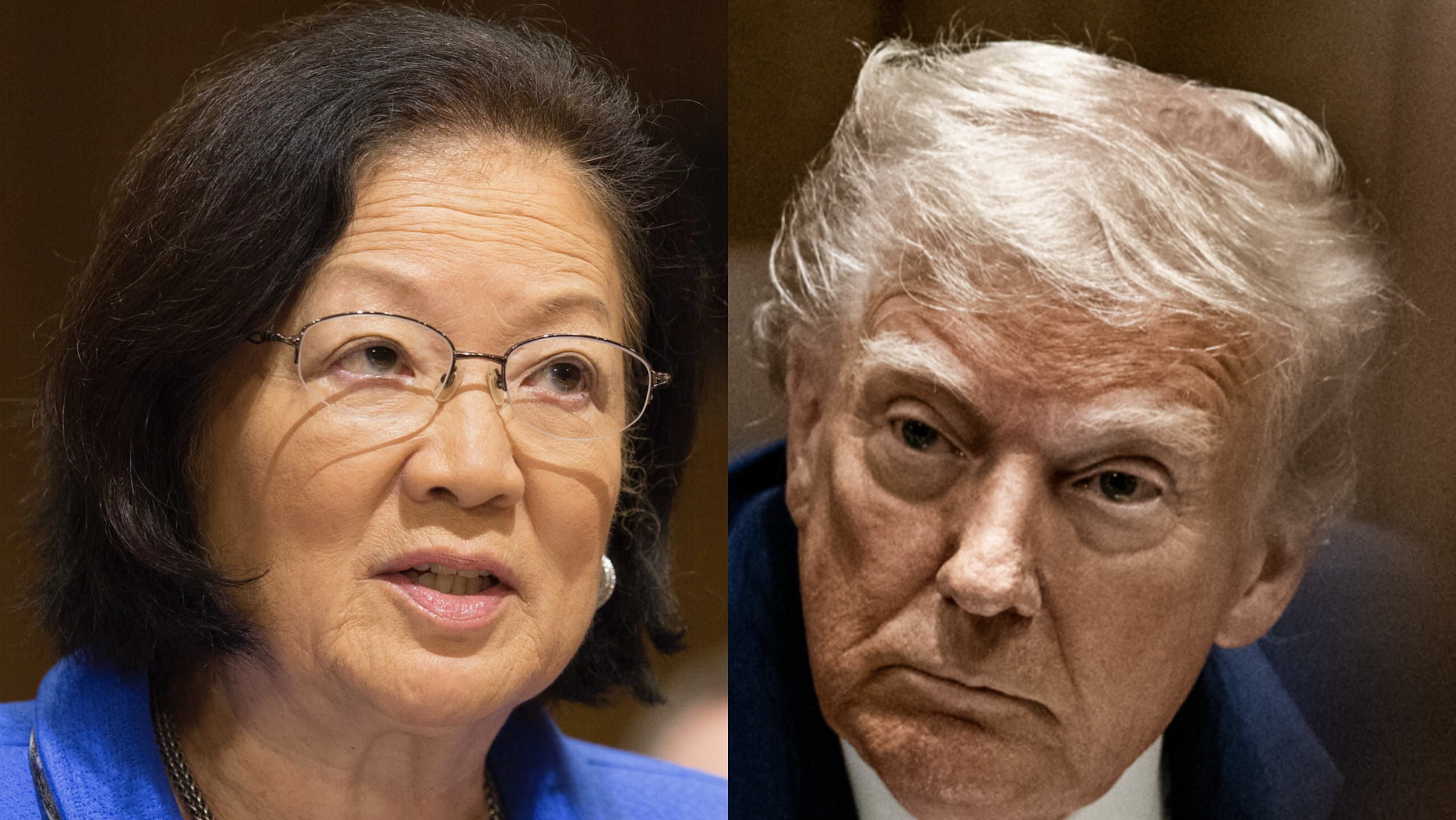
U.S. Senator Mazie Hirono (D-HI) did not hold back on Thursday when the White House finally transmitted the text of its Iran ceasefire agreement to Congress. Within hours of lawmakers receiving the 14-point Memorandum of Understanding, the Hawaii Democrat posted a blistering assessment on X, calling President Trump a poor dealmaker and charging that the conflict — which she has consistently called illegal since its first day — left the United States worse off in every measurable way than before a single bomb was dropped.
“All I can say after looking at Trump’s so-called Iran ‘deal’ is that he’s a bad negotiator,” Hirono wrote Thursday at 5:12 p.m. “This ‘deal’ puts our country back to where we were BEFORE this illegal war. Except now we’ve lost the lives of servicemembers, weakened military readiness, and cost taxpayers BILLIONS.”
The Deal Congress Finally Received
The Islamabad Memorandum of Understanding, the official name for the agreement between Washington and Tehran, was disclosed to reporters by a senior U.S. official speaking on condition of anonymity under White House ground rules, then formally transmitted to Congress on Thursday. The document lays out 14 points covering an immediate and permanent end to military operations, mutual respect for sovereignty, a 30-day timeline for removing the U.S. naval blockade, and restoration of commercial vessel traffic through the Strait of Hormuz.
Under the terms of the MOU, the United States commits to leading a reconstruction and economic development plan for Iran worth at least $300 billion, while also undertaking to terminate all sanctions against the Islamic Republic — including United Nations Security Council resolutions and all unilateral U.S. measures — on a schedule to be finalized within 60 days. Iran, for its part, reaffirms it will not develop nuclear weapons, and agrees to maintain the current status quo of its nuclear program pending a final deal. The two sides have 60 days, extendable by mutual consent, to negotiate that permanent agreement, which is to be endorsed by a binding UN Security Council resolution.
“Back to Where We Were Before”
Hirono’s core charge on Thursday was stark: after nearly four months of military conflict, the deal returns the United States to roughly the same strategic position it occupied in late February, before U.S. and Israeli airstrikes began. The senator’s argument centers on what she views as an enormous and irreversible cost — American servicemembers killed in action, defense resources stretched and depleted, and billions in taxpayer money spent — with nothing to show beyond an agreement that could have been reached without war.
Her criticism lands against the backdrop of the MOU’s own terms. The agreement commits the U.S. to lifting the very naval blockade it imposed and removing forces from the region within 30 days of a final deal — provisions that, in Hirono’s framing, amount to undoing the actions of the war itself while absorbing all the casualties and costs that came with it.
Hirono’s Stance From Day One
The senator’s Thursday post was the sharpest entry yet in a long record of opposition to the conflict that, in her view, was unconstitutional from the moment it began. On February 28, 2026, the day U.S. strikes commenced, Hirono issued a statement calling the president’s decision “a clear violation of the Constitution, which gives Congress, not the President, the sole power to declare war,” adding that Trump had “not articulated a clear strategy for what comes next” and warning that he was “recklessly putting the lives of our servicemembers and personnel in the region at risk.”
In that same statement, Hirono called on Congress to immediately vote on Senator Tim Kaine’s War Powers Resolution to “reassert our constitutional authority and prevent further escalation.” Days later, she followed through. On March 4, after voting to advance Kaine’s resolution — which would have blocked Trump from using further military force against Iran — Hirono said: “Just days after Trump dragged our country into a reckless war with Iran, chaos has spread throughout the region and the lives of six American servicemembers have been tragically lost, with no end in sight to this escalation. We have the strongest military in the world, but the capacity of U.S. forces is not infinite.”
Readiness Concerns Raised Under Oath
Hirono took her concerns beyond the Senate floor and into official congressional oversight. On March 5, in her capacity as Ranking Member of the Senate Armed Services Subcommittee on Readiness and Management Support, she questioned the vice chiefs of all five military services about the war’s impact on force readiness. “President Trump chose to launch airstrikes without so much as consulting with Congress,” she said in her opening remarks. “What’s worse, he denies we are engaged in regime change, while taking out the current regime without articulating any plan for what comes next.”
During that hearing, Hirono pressed witnesses directly: “How are you supposed to determine impact on readiness if you don’t know the extent of this war, what it is going to take?” The witnesses each responded that it was too early to determine the conflict’s full impact on readiness, but committed at Hirono’s urging to providing classified readiness assessments once available. Hirono also used the hearing to flag the cost of depleting precision-guided munitions that take years to replenish — resources she argued would be unavailable for future contingencies, particularly in the Indo-Pacific.
The War Powers Fight
The constitutional dispute over presidential authority sat at the center of Hirono’s opposition throughout the conflict. Under the War Powers Resolution of 1973, Congress must declare war or authorize the use of force within 60 days — a deadline the Trump administration sought to sidestep by arguing that hostilities had “terminated” following a ceasefire announced April 7, 2026. Trump himself told reporters he considers seeking congressional authorization under the War Powers Act “unconstitutional.”
Senate Democrats pushed back forcefully. Senator Chuck Schumer, along with Senators Adam Schiff and Tim Kaine, led 35 Senate Democrats — including Hirono — in a letter to the president disputing his claim that hostilities had terminated. “The already unconstitutional war in Iran has violated its statutory deadline set by the War Powers Act,” the senators wrote, arguing that ongoing naval operations, bombings, blockades, and strike campaigns continuing since February 28 still constituted hostilities under the law.
The legislative pressure eventually produced results in the House, where a bipartisan majority voted 215 to 208 to end the war with Iran, with four Republicans joining Democrats — described as the clearest congressional rebuke yet of Trump’s handling of the conflict.
Civilian Casualties and Accountability
Hirono also placed her name on efforts demanding accountability for the human cost of the war. She joined Senators Chuck Schumer, Jack Reed, Jeanne Shaheen, Richard Blumenthal, Kirsten Gillibrand, Michael Bennet, and others in pressing the Trump administration for answers on civilian casualties in Iran, including the circumstances surrounding a strike on a girls’ elementary school in Minab, Iran on the war’s opening day. As of March 10, 2026, over 1,245 civilians had been killed and more than 12,000 injured in the conflict.
What the MOU Requires Going Forward
The agreement transmitted to Congress Thursday leaves major questions unresolved by design. Iran has 30 days to complete demining operations in the Strait of Hormuz and arrange safe passage for commercial vessels, while the United States has 30 days to fully lift its naval blockade. Nuclear matters, including the disposition of enriched material stockpiles and Iran’s future enrichment capacity, are deferred to the 60-day final deal negotiation — a window that can be extended. The MOU also establishes an executive monitoring mechanism to verify compliance.
For Hirono and other Democrats who opposed the war from the outset, the framework crystallizes a central argument: the lives lost, the damage to military readiness, the billions spent, and the constitutional lines crossed were the price of arriving at a diplomatic arrangement they contend could have been reached without firing a single shot. As the senator put it Thursday afternoon in terms that left little ambiguity about where she stands: it is a deal struck by a bad negotiator at a cost the country did not need to pay.