
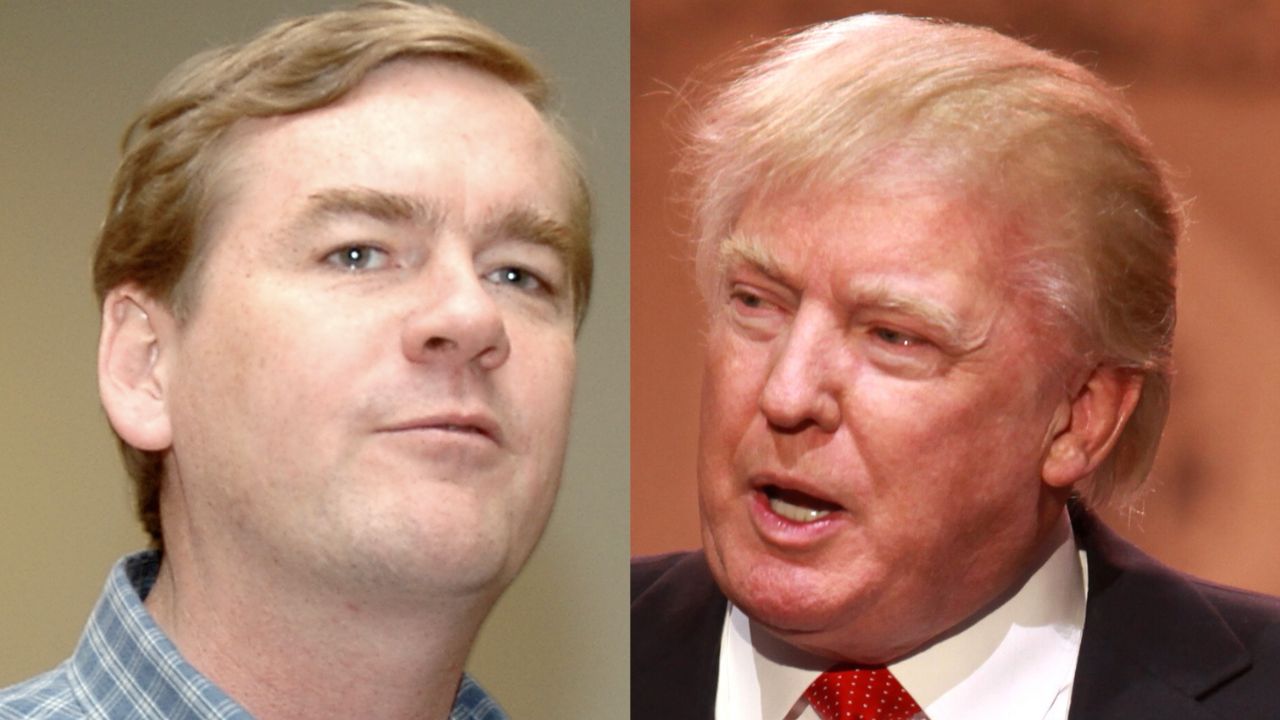
Colorado Sen. Michael Bennet, a member of the Senate Intelligence and Finance committees, accused President Donald Trump on Saturday of driving up costs for American families through a war in Iran and then turning to Russian President Vladimir Putin for fuel. He said Trump was easing sanctions designed to cut off Moscow’s funding for its war in Ukraine. The Democrat’s remarks, posted on X, came a day after the Treasury Department authorized imports of Russian diesel and Trump announced a supply deal with Putin.
The Post
Bennet published the statement at 11:03 a.m. on October 10, 2026. His full post reads:
“Trump’s war of choice in Iran is driving up costs for Colorado families. Instead of ending it, he’s turning to Putin for diesel and easing sanctions that were designed to cut off funding for Russia’s war in Ukraine.
Coloradans pay the price. Putin gets the payday.”
The post lands in the middle of a political fight over fuel prices, three weeks before congressional elections that will decide control of the House and Senate. It links two conflicts that Bennet has criticized for months: the US-Israeli war with Iran and Russia’s invasion of Ukraine.
The Diesel Deal Behind the Post
Trump said on Friday that Russia had agreed to supply diesel to global markets to lower fuel prices, and that his administration had temporarily lifted US sanctions on Russian fuel. Trump described a “highly successful” discussion with Putin in which the two agreed Russia would immediately supply more than 300,000 metric tons of diesel to US and global markets, roughly 2.25 million barrels. Trump said another 500,000 tons would follow in November and a further 1 million tons “immediately thereafter.”
The legal mechanism is General License No. 135, issued October 9 by the Treasury Department’s Office of Foreign Assets Control and signed by Director Bradley T. Smith. It authorizes transactions otherwise barred under two sets of sanctions regulations, 31 CFR part 587 and 31 CFR part 589, “related to the sale, delivery, offloading, or importation, including importation into the United States, of diesel fuel of Russian Federation Origin.” The authorization runs through 12:01 a.m. eastern daylight time on April 7, 2027. It does not authorize any debit to accounts of the Central Bank of the Russian Federation, the National Wealth Fund or the Ministry of Finance.
The sanctions being eased were imposed in October 2025 on Russian oil companies over the war Moscow began in 2022. Reuters reported that the diesel exports could provide Russia with billions of dollars in revenue that could help Putin continue the war. Ukrainian President Volodymyr Zelenskiy called the arrangement a “weak decision on the part of strong partners” and said on X that “Gifts to Putin will not bring peace or any benefit to the civilized world.” Republican Rep. Don Bacon also criticized the deal, saying “Now is the time to use those sanctions to squeeze Putin’s war machine, not reward a dictator by putting more money in his hands while he continues targeting and killing Ukrainian civilians.”
The Price Pressure
Diesel prices have risen about 70% since the US and Israel launched the war with Iran on February 28. Average US diesel reached $6.28 a gallon on Thursday, and prices have stayed high despite two earlier Trump moves: pressing allies to release emergency reserves and widening access to tax-exempt red-dyed diesel. Diesel futures fell almost 5% after the announcement, but analysts cautioned that the deal is unlikely to bring sustained relief. One oil market researcher called it a “nothing burger,” noting Russia typically exports far more diesel than the volumes in the agreement when its refineries are not under attack.
Trump framed the deal as a matter of affordability. “Lower prices for Americans, especially our Great Farmers, Ranchers, and Truckers, is my Greatest Priority,” he said. Diesel is used in agriculture, home heating and trucking, and Reuters described the high prices as a risk for Republicans ahead of the November 3 elections.
Bennet’s Record on the Iran War
Bennet’s criticism of the Iran war dates to its first day. On February 28, after Trump launched strikes, he said the administration “launched the United States into a war with Iran with no authorization from Congress.” He added: “Only Congress has the power to declare war, not the President.” As an Intelligence Committee member, he said he had “seen no new intelligence or information suggesting that Iran’s pursuit of a nuclear weapon had become more imminent, as the Administration suggested.”
On March 4, Bennet voted for S.J.Res.104, a War Powers Resolution that would have required Trump to remove US troops from hostilities in or against Iran without explicit congressional authority. He said the vote was about the Constitution, not about the Iranian government. “No American President should allow the United States to be pushed into war on any ally’s timetable or rationale,” he said, adding that he would keep “fighting against this reckless President’s adventurism.”
On April 15, Bennet and Colorado Rep. Jason Crow, who sits on the House Intelligence Committee, jointly urged both chambers to pass a War Powers Resolution to end what they called a “reckless, costly war.” They wrote that “The American people overwhelmingly do not support this war, but the President has ignored them.” They also urged Republicans to join them in passing upcoming resolutions.
Bennet’s June 23 statement, after the Senate joined the House in passing H.Con.Res.86 under the War Powers Resolution of 1973, previewed the argument in Saturday’s post. “Americans are still footing the bill for Trump’s war of choice, with gas prices through the roof,” he said. He said the war had “wasted billions of taxpayer dollars, cost servicemembers’ lives, drained our weapons stockpiles, allowed Russia to profit from high oil prices, and showed China that he will fold under pressure.” He concluded: “His war is a generational blunder.”
Bennet’s Record on Russia and Ukraine
Bennet has repeatedly tied the Iran war to Russia’s finances. On March 30, he joined a bipartisan bill to sanction Russia’s energy sector and “shadow fleet” of reflagged oil tankers. “Congress must make Russia pay a further price for its aggression – particularly as Russia stands to benefit from spiking oil and gas prices caused by President Trump’s unauthorized war with Iran,” he said. In May, he led 14 Senate colleagues in urging Treasury Secretary Scott Bessent to fully resume sanctions on Russian oil.
In July, Bennet joined more than 60 colleagues in introducing the Graham Sanctioning Russia Act of 2026, which would sanction Putin’s inner circle and the Russian shadow fleet, and would authorize tariffs on countries that buy the majority of Russia’s oil and gas. After voting to advance it on July 29, he said that “Backing Ukraine today will be our best deterrence against authoritarian ambitions tomorrow.” On August 7, he voted for the Senate’s passage of the Graham Sanctioning Russia and Iran Act of 2026, saying it would “impose greater pressure on Putin to end his unprovoked war by denying him key oil and gas revenue.”
His Ukraine stance predates this year’s fights. In August 2025, he warned it would be “a dangerous mistake” for Ukraine and its partners to accept a peace deal grounded in Putin’s “personal historical grievances,” and said American resolve required “not caving to Putin’s flattery.” He visited Lviv, Ukraine, with Senate Democratic Leader Chuck Schumer in early 2024 and has led provisions on drone and intelligence cooperation with Ukraine in the Senate defense and intelligence bills.
What Comes Next
The White House is also weighing further steps on fuel. Three industry sources said Trump will soon direct department heads to find ways to control diesel prices, possibly through a presidential memo that would push officials to bypass state and local regulations blocking energy production and use the Cold War-era Defense Production Act to boost output. With the Treasury license running into April 2027, Bennet’s post frames the diesel deal as a political liability for the administration: fuel costs tied to the Iran war on one side, and relief from Russian sanctions on the other. As he wrote, “Coloradans pay the price. Putin gets the payday.”