
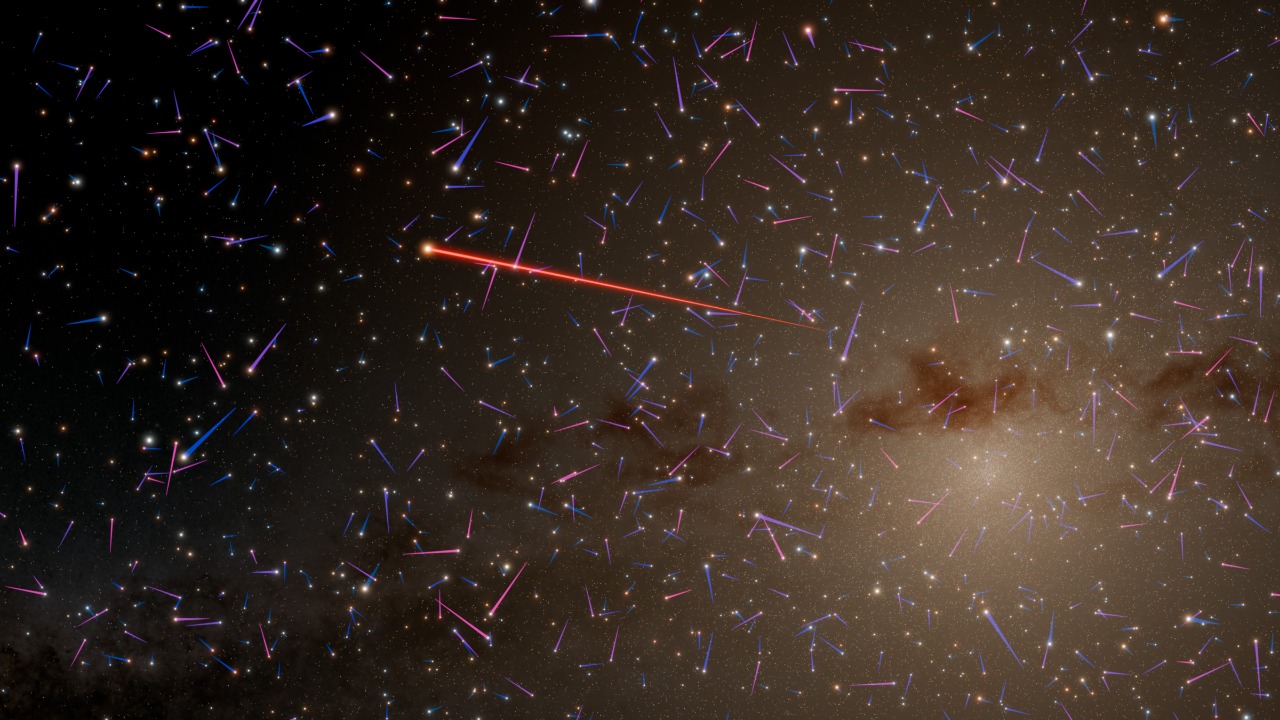
Cosmologists are increasingly entertaining a radical possibility: that the cosmos might be structured like a vast hall of mirrors, repeating patterns of space and time in ways that bend intuition. Instead of a single, one-way story from a lone Big Bang to a cold, empty future, several new models suggest the universe could have a twin, a reflection, or even a future that loops back on itself. Together, these ideas hint that reality may be far more symmetrical and cyclical than everyday experience suggests.
At the heart of this shift is a simple but unsettling question about shape and symmetry. If the universe is finite yet unbounded, its geometry could cause light, galaxies, and even entire histories to recur, as if the cosmos were reflecting itself on unimaginable scales. From mirror universes running backward in time to a possible “big crunch” that resets everything, scientists are using these speculative frameworks to probe some of the deepest puzzles in physics.
Why some physicists think the cosmos could be a hall of mirrors
Modern cosmology usually pictures space as expanding smoothly in all directions, but that picture leaves open a crucial detail: the global shape of the universe. Some researchers argue that the cosmos might be multiply connected, meaning that if someone could travel far enough in one direction, they might eventually return to their starting point, much like walking around Earth. In such a topology, light could wrap around and reenter our telescopes from different paths, creating repeated patterns in the sky that resemble a cosmic hall of mirrors, an idea explored in recent work highlighted by Spaced Out and other analyses of the universe’s large scale structure.
These mirrorlike models are difficult to rule out because they depend on subtle signatures in the cosmic microwave background and galaxy distributions that are hard to distinguish from noise. As Spaced Out notes, the main focus of current debate is not whether such exotic shapes are mathematically possible, but whether observations are precise enough to confirm or exclude them. The fact that these geometries remain viable keeps the door open to a universe where what appears distant and unrelated could actually be another view of the same region of space, seen along a different path of light.
The mirror universe that runs backward in time
Beyond geometric reflections, some physicists are proposing a more literal mirror: a twin universe that is the time-reversed counterpart of our own. In this scenario, the Big Bang is not a unique beginning from nothing, but a kind of temporal pivot from which two universes emerge, each evolving in opposite time directions. One recent discussion, shared by Jan, describes a team of researchers who argue that another universe may have existed “before” the Big Bang, with its time arrow pointing the other way relative to ours, so that what looks like our origin is also their far future.
This mirror cosmos would not be a separate bubble disconnected from our reality, but part of a single, larger structure that respects deep symmetries of physics. A related theory, Published in the Annals of Physics and highlighted in a Dec report, suggests that instead of beginning from nothing, our cosmos and its twin arise together from a more symmetric state. In that picture, each side experiences its own forward flow of time, yet from a global perspective the two halves form a balanced whole, with one universe’s particles corresponding to the other’s mirror partners as time runs in reverse.
CPT symmetry and Neil Turok’s time-reflected cosmos

One of the most developed versions of this idea is the CPT-symmetric universe proposed by Neil Turok and collaborators. In this model, the cosmos is built to respect a specific symmetry that combines charge (C), parity (P), and time reversal (T), a principle that is already central to particle physics. As explained in a Nov overview of Turok’s work, a CPT-respecting universe would naturally contain a mirror counterpart to our own, with opposite charges, flipped spatial orientation, and reversed time, all emerging from a single, highly symmetric Big Bang event.
Turok, who is affiliated with the University of Edinburgh, has argued that this framework can simplify some of the thorniest problems in cosmology, including the nature of dark matter and the puzzling properties of light neutrinos. A detailed discussion of CPT-symmetric cosmology, introduced by Lamb in a recent presentation, emphasizes that this approach does not just bolt a second universe onto the first. Instead, it treats the pair as two halves of one mathematically consistent solution, where the mirror side helps explain why our universe looks the way it does. Coverage shared by Jan and others notes that, so far, this remains a mathematical theory without direct observational proof, but it is attractive because it unites quantum mechanics and cosmology under a single symmetry principle.
A viral theory, and what evidence would actually look like
The notion of a time-reversed twin universe has recently spilled out of specialist circles and into popular culture, where it has been shared widely as a mind bending explanation for the Big Bang. A Jan report on the theory’s viral spread stresses that, despite the excitement, there is no direct evidence yet for a mirror cosmos. The idea remains a mathematical construct, grounded in symmetries like CPT and in attempts to make sense of cosmic initial conditions, but still awaiting the kind of concrete observational test that would elevate it from elegant speculation to established physics.
Scientists who work on these models are careful to distinguish between what the equations allow and what telescopes have actually seen. The News24 analysis quoting Neil underscores that, at present, the mirror universe concept is being used as a tool to address specific puzzles, such as why the universe appears so uniform on large scales and why certain particles have the masses they do. To move beyond theory, researchers would need to identify distinctive signatures, perhaps in the cosmic microwave background or in the behavior of neutrinos, that could not be explained by more conventional models. Until then, the mirror universe remains a compelling story that organizes known physics in a new way, rather than a confirmed description of reality.
From big crunch cycles to a truly repeating universe
While mirror universe theories focus on symmetry around the Big Bang, other researchers are revisiting the far future and asking whether cosmic history might eventually loop back on itself. A Cornell physicist has used new data to argue that the universe is approaching the midpoint of its 33-billion-year lifespan, suggesting that cosmic expansion could eventually reverse. According to this work, summarized in an Oct report, the cosmos would stop expanding and begin to contract, ultimately collapsing into a “big crunch” where all matter and energy are compressed back into a single point at the end.
If such a big crunch occurs, it raises the possibility of a truly cyclic universe, in which each collapse seeds a new expansion that may resemble the previous one. The Cornell analysis does not claim to prove that history will repeat in detail, but it does reopen the door to models where the universe’s life story is not a one way march toward heat death. Combined with the hall of mirrors topology discussed by Spaced Out and the CPT-symmetric frameworks advanced by Neil Turok and others, the big crunch scenario contributes to a broader picture in which cosmic time could be far more structured, and perhaps more repetitive, than the simple narrative of a single beginning and an endless fade into darkness.