
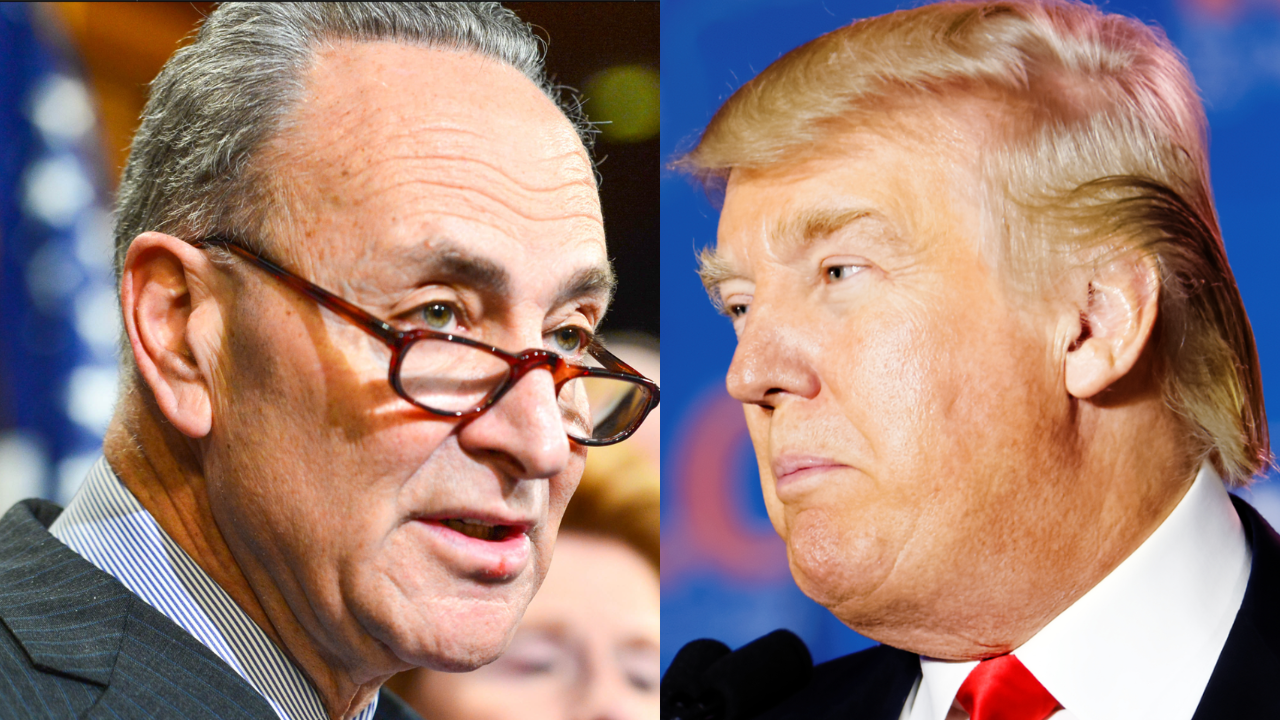
Senate Minority Leader Chuck Schumer said President Trump’s war with Iran has left the country less secure, pointing to combat casualties, rising prices and a wave of cyberattacks on U.S. water systems that officials suspect Iran carried out in retaliation.
“Trump is making Americans less safe with his war in Iran,” Schumer wrote on X. “Hundreds of servicemembers injured, 18 dead, skyrocketing prices, now cyberattacks on the Homeland. The GOP needs to stand up to this lunacy and work with us to end this dangerous and unnecessary war.”
Schumer linked a New York Times report on the widening cyberattacks, which found that water and wastewater utilities in at least seven states had suffered intrusions, with intelligence officials increasingly suspecting Iran was responsible.
The FBI and Environmental Protection Agency confirmed the scope of the campaign in a joint public service announcement issued July 30. “Since 27 July 2026, Water and Wastewater Sector utility companies in at least seven states have reported incidents to the FBI, and some of that activity degraded water operations,” the agencies said, identifying the targeted equipment as Rockwell Automation/Allen-Bradley MicroLogix 1100 and 1400 series programmable logic controllers, industrial computers that manage pumps, valves and pressure monitoring. The FBI said attackers remotely accessed internet-facing devices, then changed IP addresses and passwords to lock operators out, with effects including loss of water pressure and flooding.
The Cybersecurity and Infrastructure Security Agency issued its own advisory the same day, warning it was “currently observing a significant increase in cyber threat actors targeting programmable logic controllers” in the water sector and urging operators to disconnect exposed devices from the internet immediately. CISA said the activity “has resulted in boil water notices and sustained manual operations” at affected utilities.
Minnesota was the first state to publicly report the intrusions, saying hackers had targeted roughly three dozen municipalities, before Michigan confirmed nine of its municipal water systems had reported similar issues. A Michigan state spokesman, Dale George, said all affected systems continued operating safely with “no known impacts that posed a public health concern.” Wisconsin also detected malicious activity at its water facilities around the same time, according to a state Department of Natural Resources memo obtained by CNN, directing utilities to take “immediate action to prevent potentially serious impacts.”
Nate George, the mayor of Braham, Minnesota, a small city north of Minneapolis affected by the attacks, said local officials had little doubt about the source. “We’re getting bits and pieces of information from the state of Minnesota and the F.B.I.,” he told the Times. “They are pretty sure it’s Iranian actors, but are reluctant to say so publicly.”
Trump publicly rejected Iran’s involvement when asked about the Times’ earlier reporting. “I think Minnesota is behind it,” Trump said. “I don’t think there was an Iranian cyberattack.” Minnesota Gov. Tim Walz rejected the accusation, saying in a statement that the Trump administration had “took an axe to” the Cybersecurity and Infrastructure Security Agency and “left the US exposed to cyber attacks,” adding, “Trump knows exactly who is responsible for this attack, and knows that other states were hit too. This is what modern warfare looks like.” CISA’s workforce has been reduced by roughly a third under the Trump administration through cuts, layoffs and reassignments, and the agency has operated without a Senate-confirmed permanent director since Trump returned to office.
Federal officials told the Times that despite Trump’s public comments, Iran remained the leading suspect in the intelligence community’s assessment, though the investigation remained preliminary and had not reached definitive forensic conclusions, a common feature of complex cyber-investigations that can take months to resolve.
The suspected campaign has precedent. In December 2023, the FBI, NSA, CISA and EPA jointly warned that CyberAv3ngers, a hacking group affiliated with Iran’s Islamic Revolutionary Guard Corps, had compromised water facility control systems across multiple states using similar tactics against a different brand of programmable logic controller.
Alex Orleans, a former U.S. government cybersecurity contractor who now serves as chief of threat intelligence at Sublime Security, told the Times the latest intrusions marked an escalation. “What’s unprecedented here is that we’re seeing direct, tangible effects to live industrial control systems inside U.S. critical infrastructure,” Orleans said, adding that Iran was likely engaged in opportunistic scanning for vulnerable systems rather than targeting specific cities.
Neither the White House nor CISA has issued a formal public attribution of the attacks to Iran as of Schumer’s statement.