
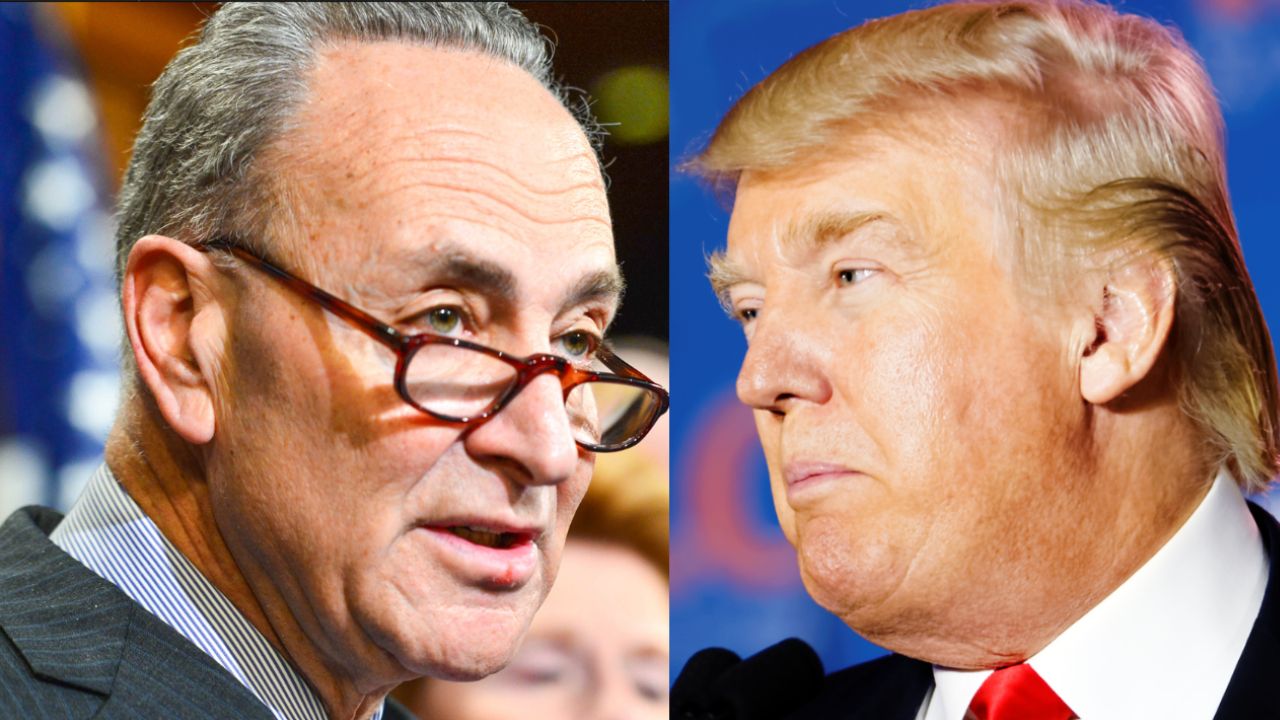
Senate Democratic Leader Chuck Schumer accused President Donald Trump on Friday of striking “a deal with the devil” with Russian President Vladimir Putin. He said the arrangement is meant to rescue Trump’s political standing from record diesel prices that Schumer attributed to the president’s own war with Iran. The New York Democrat posted his statement on X at 3:39 p.m., hours after Trump announced that Putin would release diesel onto the global market and the Treasury Department eased sanctions on Russian fuel.
The Post in Full
Schumer’s post, published to his official account, read in its entirety:
“Trump is doing a deal with the devil to try to help his flailing political fortunes from the shockingly high diesel prices caused by his own reckless, illegal war in the Middle East.
This filthy deal will only aid and abet the same Putin who is helping the Iranians to target and try to kill American troops in the Middle East and who illegally and viciously invaded our ally Ukraine.”
What Trump Announced
Trump said on Truth Social that Putin would “immediately” release hundreds of thousands of tons of diesel fuel and that the move would help bring prices down. Putin said in a separate statement that he had told Trump of Russia’s “readiness to supply oil and petroleum products to the US and global markets.” He gave no timeline and no volume. Russian Deputy Prime Minister Alexander Novak told state news agency TASS that Russia would immediately begin lifting its diesel export ban in response to the agreement.
The Treasury License
To clear the way, the Treasury Department’s Office of Foreign Assets Control issued General License No. 135 on Friday. It authorizes transactions otherwise barred under two sets of Russia sanctions regulations that relate to “the sale, delivery, offloading, or importation, including importation into the United States, of diesel fuel of Russian Federation origin.” The authorization runs through 12:01 a.m. eastern daylight time on April 7, 2027. The license does not authorize debits to accounts of the Central Bank of the Russian Federation, the National Wealth Fund, or the Ministry of Finance at U.S. financial institutions. It is signed by OFAC Director Bradley T. Smith.
A Fuel Crisis Tied to Two Wars
Diesel prices have climbed almost 70% since the Iran war began in February, and economists have warned of wide inflationary effects. Prices set repeated all-time records in recent weeks as the Russia-Ukraine war escalated. The Kremlin imposed a diesel export ban in July after Ukrainian strikes on Russian energy assets, and it has since been extended through the end of October. Trump has publicly urged Ukrainian President Volodymyr Zelenskyy to stop hitting Russian diesel refineries, saying “That’s what’s driving it up.” Zelenskyy has denied agreeing to stop targeting Russian energy assets unless Russia does the same.
Zelenskyy and Markets React
Hours before Trump’s announcement, Zelenskyy had welcomed a delegation of U.S. senators in Kyiv. He later described the easing of diesel sanctions as “an obvious weakness” that “plays into Russia’s hands.” Markets barely moved: diesel futures fell 4% but remain up more than 110% since the start of the year, and Brent crude held near $104 a barrel, down 0.3%. Ukrainian negotiators were departing for new talks in the United States, and it was unclear late Friday whether special envoy Steve Witkoff and Jared Kushner would proceed as expected.
Schumer and the Iran War
Schumer has led the Senate Democratic push to end the Iran war. After the Senate voted in May to advance a war powers resolution, he said that “for more than 80 days, Trump has dragged America into a costly, chaotic conflict with no plan, no objective, and no legal authority.” On June 23, after the Senate passed a House-passed version, he said that “Congress stood up to Donald Trump and voted to end his costly, unnecessary, and devastating war with Iran,” adding that the resolution “has passed both chambers of Congress and does not require the President’s signature.”
Votes Continue as Costs Rise
Fighting continued, and Schumer kept forcing votes. Ahead of the thirteenth war powers vote on July 30, he said Trump had claimed the war would last a week, “but American [servicemembers] are still getting killed five months later.” As the conflict entered its eighth month, he said it would end “whenever Senate Republicans find the courage to listen to the American people instead of the hysteria from the president.”
Fuel Prices and the Ukraine Blame
Schumer has repeatedly tied fuel prices to the war. On March 31, he called on Trump to tap the Strategic Petroleum Reserve. In later floor remarks, he said regular gas was up nearly 50 percent since the war began and cited a $38 billion cost estimate. After Trump blamed Ukraine’s strikes for diesel prices, Schumer said: “Does Trump really think anyone will believe his lie that somehow Ukraine is responsible for diesel prices just hitting a record high?” He also pointed to Trump’s own comment that gas prices would fall once the war ends.
Earlier Sanctions Relief Drew the Same Criticism
Friday’s license is not the first Russian sanctions relief of the Iran war. In April, Schumer joined Sens. Jeanne Shaheen and Elizabeth Warren in condemning the extension of General License 134, which removed sanctions risk for purchases of Russian oil loaded on vessels as of March 12. They wrote that “Putin has been one of the biggest beneficiaries of President Trump’s war against Iran, as Russia saw oil revenues nearly double in March,” and urged Trump to “stop letting Putin play him for a fool.” NBC News reported that those spring waivers expired and largely did not change the course of oil and gas prices.
Schumer’s Record on Russia Sanctions and Ukraine
Schumer has pushed for tougher measures on Moscow. After the Senate passed a bipartisan Russia sanctions package on August 7, he said that “while President Trump has pandered to Vladimir Putin, the Ukrainian people have continued to innovate, persevere, and fight with extraordinary resolve to turn the tide of this war.” In July floor remarks urging passage of the bill, he said: “That’s how you make a bully like Putin listen – by putting real pressure on him to end this devastating war.”
The Joint Democratic Statement
In a joint statement with Shaheen and Warren released after the announcement, Schumer called the plan “a total betrayal of Ukraine, our European allies, and American national security.” The senators said the president was “resorting to desperate ‘deals’ with a murderous dictator to attempt to clean up his own mess.” They also accused the administration of failing to follow “the bipartisan will of Congress,” which they said had weeks earlier passed legislation meant to cut off revenue for Russia’s war machine, and said that “the President must end his war with Iran instead of funding Russia’s war machine.”
What Comes Next
The fight lands weeks before the November midterm elections, with fuel costs a central political issue and the Iran war in its eighth month. The license expires in April 2027, and the Treasury Department has not said whether it intends to extend it. Whether Russia follows through on its diesel pledge, and whether the Ukraine talks proceed as planned, remained unclear late Friday. Schumer has said Democrats will keep forcing votes on the Iran war until it ends.