
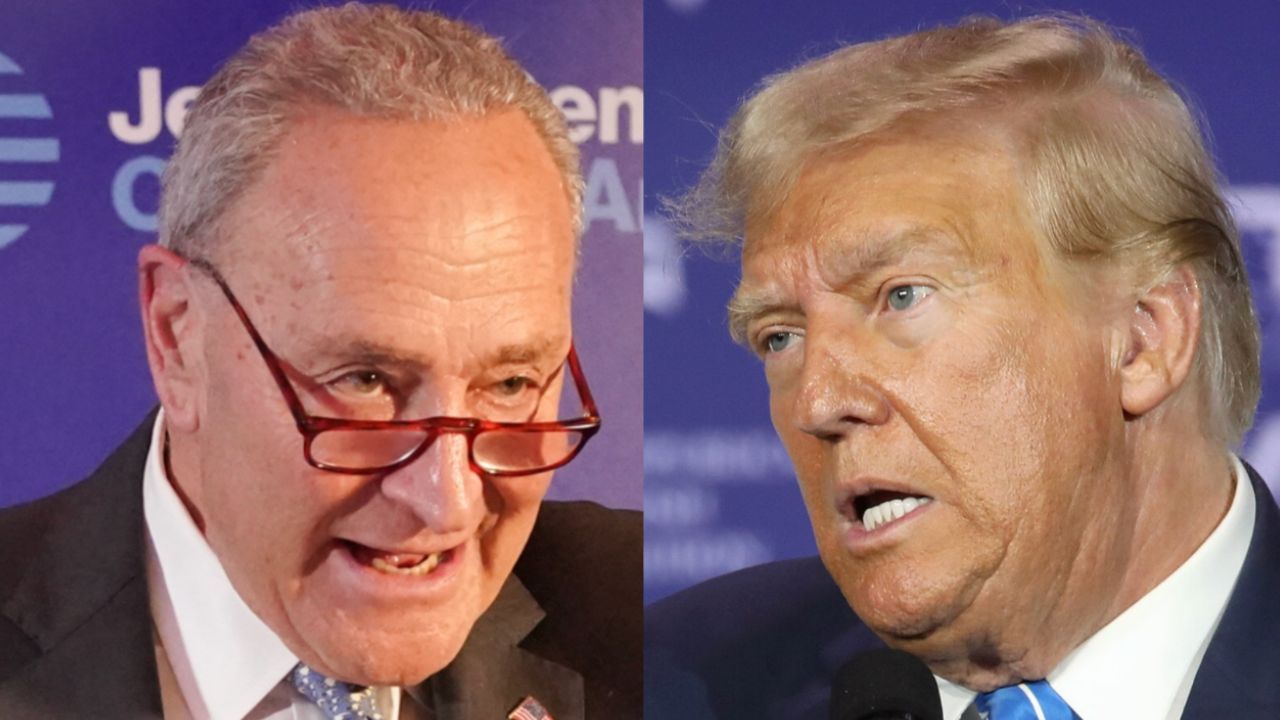
Senate Democratic Leader Chuck Schumer accused President Donald Trump on Saturday of “gleefully eviscerating” federal programs that support working families while simultaneously letting gas and grocery prices climb, escalating a fight over nearly $1 billion in spending the White House is attempting to cancel without congressional approval. The New York Democrat’s post on X came roughly twelve hours after the administration confirmed it would move forward with a second “pocket rescission” in as many years, a maneuver that has drawn condemnation from lawmakers in both parties.
The Full Statement
Schumer’s post, published to his official X account at 7:17 AM on September 26, 2026, read in its entirety:
“Trump is gleefully eviscerating programs and protections that help hardworking American families live a safe and healthy life, all while he continues to punish them with skyrocketing gas and grocery prices.
With this rescissions package, the Trump administration is illegally stripping nearly $1 billion in critical funding that supports kids, K-12 students, small businesses, and health and clean air research.
Americans are crying out for relief. Instead of ending his Iran war and tariff chaos that are driving up costs, Trump is rolling out the red carpet for our adversaries while stealing funds meant to help American families.
Senate Democrats will challenge Trump’s illegal cuts at every turn and continue the fight to help American families, lower health care costs and secure our communities.”
What Triggered the Post
Schumer’s statement was a direct response to reporting that broke Thursday evening confirming the Trump administration’s plan to cancel $810 million in previously appropriated federal spending before the fiscal year closes on September 30. The announcement came from the White House late Friday, giving Congress little practical opportunity to intervene before the funds lapse.
Roughly half of the targeted cuts, $567 million, would come from the Department of Health and Human Services, clawing back a portion of the funding for the agency’s Office of Refugee Resettlement programs. The remainder would be pulled from the Departments of Commerce, Education, Homeland Security, Housing and Urban Development, and Justice, along with international assistance accounts, with many of the affected programs tied to immigrant services.
Bipartisan Pushback
The move drew swift criticism from lawmakers on both sides of the aisle who characterized it as an attempt to bypass Congress’s constitutional authority over federal spending. Senate Appropriations Committee Chair Susan Collins, a Republican from Maine, said her committee received no advance notice of the package, calling any rescission of appropriated funds without congressional sign-off “a clear violation of the law.” Collins pledged to work with colleagues to challenge the administration’s approach.
Despite the bipartisan objections, a spokesperson for the White House Office of Management and Budget indicated the administration intends to proceed with the rescission regardless of whether Congress formally approves the request before the fiscal year ends.
A Narrow Window for Congress
The timing of OMB Director Russell Vought’s transmission of the rescission request effectively eliminates any realistic chance for lawmakers to block it. The Senate is scheduled to be in session for only three days before the September 30 deadline, while the House remains on recess until November, leaving Democrats with few procedural tools to intervene before the funds are clawed back.
Representative Brendan Boyle of Pennsylvania, the ranking Democrat on the House Budget Committee, argued the administration was deliberately sidestepping the legislative process. “Donald Trump knows he can’t get these cuts through Congress, so he is illegally making them through the back door,” Boyle said.
A Pattern of Unilateral Cuts
This is not the administration’s first attempt to unilaterally cancel congressionally approved funding. Last year, the White House used the same pocket rescission tactic to cancel $4.9 billion in foreign aid and international assistance funding, marking the first use of the maneuver since the Carter administration in 1977. The Government Accountability Office subsequently determined that pocket rescissions of this kind violate the Impoundment Control Act of 1974, a finding Democrats have repeatedly cited in their objections to the practice.
Separately, Republicans in Congress passed a $9 billion partisan rescissions package last year targeting foreign aid and the Corporation for Public Broadcasting, a bill Schumer condemned from the Senate floor as “a dark day for America” and “a dark day for rural Americans.”
The Administration’s Legal Argument
The White House has defended its authority to execute pocket rescissions by arguing that submitting a rescission request within the final 45 days of the fiscal year allows the funds to expire automatically, effectively canceling them without a formal congressional vote. The Supreme Court weighed in on the underlying dispute with a preliminary order last year that allowed the administration to continue withholding the previously targeted foreign assistance funds, though the justices did not issue a final ruling on whether a president may unilaterally cancel appropriated funds through the tactic.
Democrats Sound the Alarm
Senator Patty Murray of Washington, vice chair of the Senate Appropriations Committee, framed the latest rescission as part of a broader pattern of disregard for congressional authority, warning that the administration’s approach sends a message to Congress that “your laws are optional.” Murray called on Republicans who previously vowed to prevent such maneuvers to now join Democrats in pushing back. “It is now time for my Republican colleagues who said they would never let this happen to stand up and join us to stop this, and remind this administration this is not how this works,” she said.
Building Toward a Shutdown Fight
The dispute lands just days before the September 30 government funding deadline, adding fresh strain to already difficult negotiations over a broader spending deal. Lawmakers previously reached a bipartisan agreement to avert a shutdown, pushing the funding deadline to December 11, but Republicans rejected Democratic efforts to include language in that stopgap measure that would have explicitly barred the administration from unilaterally canceling appropriated funds going forward.
Schumer’s Broader Case Against the White House
Schumer has repeatedly tied the pocket rescission dispute to what he describes as the administration’s unwillingness to negotiate in good faith on government funding. In an earlier statement responding to news of the package, Schumer argued that the move was “further proof President Trump and Congressional Republicans are hellbent on rejecting bipartisanship and ‘going it alone’ this fall,” and warned that Washington was heading toward “a painful and entirely unnecessary shutdown.”
What Comes Next
With Congress lacking the practical time to block the rescission before it takes effect, Senate Democrats have signaled they intend to pursue the fight through legislative and legal channels in the weeks ahead, including potential efforts to extend the availability of the targeted funds. Schumer’s Saturday statement reiterated that commitment, pledging that “Senate Democrats will challenge Trump’s illegal cuts at every turn” as the broader standoff over federal spending continues to intensify ahead of the December funding deadline.