
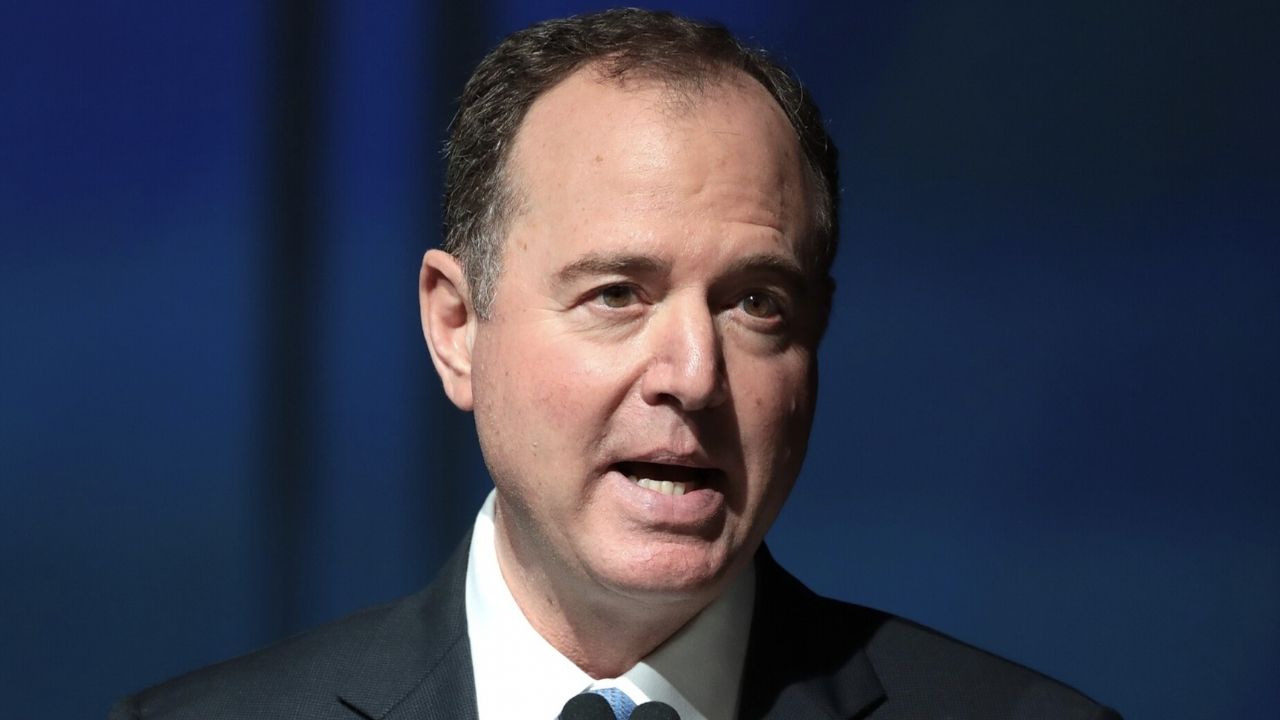
WASHINGTON — Sen. Adam Schiff (D-Calif.) said Saturday that the responses he has received from the largest social media companies about efforts to combat fraudulent election material are “inconsistent and inadequate.” He said so with voting already underway ahead of the midterms. Schiff wrote that he will keep pursuing the issue and will publicly highlight areas where the companies “can and should do more.”
Schiff posted the following on X at 4:31 p.m. on Oct. 24, 2026:
I’m leading an inquiry of the largest social media companies on their efforts to combat the spread of fraudulent material online seeking to disenfranchise U.S. voters.
At this late stage and with voting already underway, the responses we have received to date are inconsistent and inadequate.
Social media companies hold enormous power over the content voters see — they decide what to amplify and what not to.
I will continue to pursue these issues and highlight to the public the areas where these companies can and should do more to safeguard the voting process.
The Report Behind the Post
The New York Times reported on Oct. 22 that the midterms are the first elections in which artificial intelligence is built into every major social media platform. It said efforts to blunt the technology’s harms are uneven. The report said chatbots, media-generation services and automated moderation systems are increasingly shaping what voters see, even as A.I. enables new forms of toxic content.
A survey by the American Association of Political Consultants Foundation found that one in five voters plans to use A.I. to research a race on their ballot. Twice that number have already received election details through an A.I. search summary. Only 1 percent of those polled called A.I. their most credible source for election information.
The Institute for Strategic Dialogue released a report on Thursday concluding that transparency and human oversight are lagging the pace of A.I. development. It found a patchwork of platform A.I. policies that leaves “meaningful gaps” in how generated content is disclosed or restricted before the midterms. The researchers also said platforms are increasingly turning to automated and crowdsourced moderation, though the extent of that shift remains unclear.
The report described the inquiry Schiff references. Schiff and Sen. Alex Padilla (D-Calif.) wrote to the heads of companies including Google, Meta, Snap, TikTok and xAI, asking for their plans to defend election integrity and combat false narratives. Google gave the most extensive answers about A.I., including plans to use it in search to connect users to vetted information on polling places, registration deadlines and results. The senators said the companies’ replies as a whole were inconsistent and incomplete, particularly so close to the election.
The companies gave their own accounts. TikTok said it will label A.I.-generated content and let U.S. users add context to posts through its Footnotes feature. Google said it tests its A.I. overviews for accuracy and labels A.I. content on YouTube. Meta said it has real-time threat modeling and tests its A.I. models to ward off wrong answers about elections. Democracy Works, a nonpartisan group, said most major tech companies are making an effort, with xAI the exception. The report said xAI did not reply substantively to Schiff and Padilla.
The report also cited outside testing. Brennan Center researchers found this summer that popular chatbots regularly pushed back on false election narratives but could still be prompted to produce content that undermines elections. In an October retest, only OpenAI had tightened its controls, while chatbots from Google, Meta and others had regressed. A cybersecurity firm, VisionHeight, reported a network of 37 A.I.-filled “news” sites created in a single day in September that fed chatbots information about candidates in 11 House races.
Schiff’s Record on Social Media and Election Disinformation
The latest inquiry went to the heads of the largest social media companies. In it, Schiff and Padilla, both members of the Senate Judiciary Committee, said the Trump administration’s efforts to sow mistrust in the elections and advances in A.I. are creating new openings for large-scale disinformation. They wrote that platforms that advance efforts to disenfranchise voters would be “scrutinized and held accountable,” including through oversight and potential legislation. They said company responses would inform their work on legislative solutions.
Schiff pursued the issue before the last presidential election. On Sept. 30, 2024, as a House member, he joined seven colleagues in a letter to executives at Meta, X, TikTok, Google, Snap, YouTube and Microsoft. It asked how the companies were preparing for the 2024 election and said platforms must “redouble their efforts” against misinformation and incitement of violence. The letter said several companies had cut election teams after 2022 and urged them to commit to year-round action.
In June 2023, Schiff was among the signers of a letter to YouTube about its election misinformation policy. The letter requested a briefing on election integrity and misinformation on the platform. It also noted that the signers had voiced concern about the reinstatement of former President Trump on social media platforms.
The criticism is not new for Schiff. In June 2020, as chairman of the House Intelligence Committee, he told a forum hosted by George Washington University’s Institute for Data, Democracy and Politics that Google seemed to rely on revealing “as little as possible” about misinformation. He said the approach was meant to avoid criticism for inaction.
What Comes Next
The Oct. 22 report said lawmakers and watchdog groups have complained that tech companies are not sharing enough information about their A.I. testing, safeguards and the extent of voter interaction with A.I. Schiff’s post did not name which companies he considers most deficient. It said only that he will continue the inquiry and make the gaps public.