
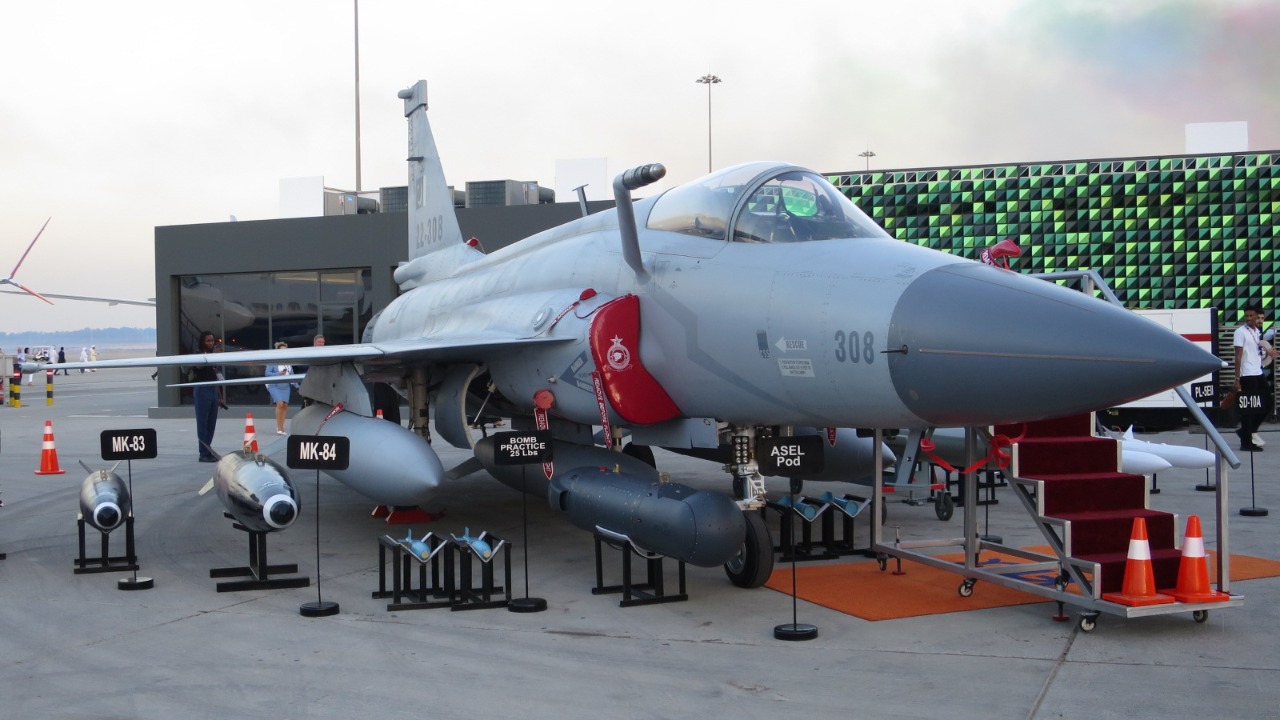
Saudi Arabia’s reported plan to convert part of a financial lifeline to Pakistan into a package of JF-17 fighter jets for Sudan is more than a quirky accounting exercise. It is a window into how Gulf money, South Asian industry, and African battlefields are being stitched together in a new kind of security economy. I see a deal that looks transactional on paper but carries deep strategic and moral implications for three very different states.
At its core, the arrangement would see Riyadh use its leverage over Islamabad’s debt to shape the balance of power in Sudan’s civil war while also nudging Pakistan’s defense industry into a larger regional role. That combination of debt diplomacy, arms exports, and proxy influence is what makes this JF-17 plan so unusual, and why it is drawing scrutiny from diplomats and analysts alike.
The loans-for-jets triangle between Riyadh and Islamabad
The starting point is the relationship between Saudi Arabia and Pakistan, which has long mixed security ties with hard cash. Pakistan has relied on Saudi deposits and loans to steady its foreign reserves, and reporting indicates that Pakistan and Saudi are now in talks to convert a $2 billion loan into a JF-17 fighter package valued at about $4 billion. In practice, that would mean Islamabad repays part of what it owes not with dollars but with hardware, while Riyadh secures influence over how and where those jets are deployed.
One account describes Pakistan and Saudi exploring a structure in which the JF-17s would not join Saudi squadrons but instead be passed on to a third country, with Sudan emerging as the likely recipient. Another report notes that Saudi Arabia and are negotiating a swap that would both ease Islamabad’s repayment burden and deepen its role as a supplier of mid range combat aircraft. I read that as a sign that Riyadh is comfortable using its creditor status not only to secure repayment but to shape Pakistan’s export choices.
Sudan’s war and the $1.5 billion question
The third corner of this triangle is Sudan, where the army and the Rapid Support Forces are locked in a brutal struggle. Pakistan is described as being on the verge of a $1.5 billion defense agreement that would send weapons and jets to Sudan, with Saudi Arabia reportedly brokering the terms. Another detailed account says Pakistan is in the final stage of negotiating a defense agreement estimated at around 1.5 billion USD to supply weapons and JF-17 Block III jets, a 4.5 generation fighter developed by Pakistan and China. Those figures are not abstract, they represent a major bet on the Sudanese army’s ability to pay and to survive.
Another report frames the same package as a $1.5 billion deal that would include artillery, armored vehicles, and potentially some JF-17s, again with Saudi facilitation. A separate account on Pakistan on the verge of a $1.5 billion deal stresses that much of the financing would come from Saudi Arabia, not from Sudan’s own strained treasury. I see that as crucial, because it suggests that Riyadh is not only steering the arms flow but also underwriting it, effectively renting Pakistan’s industrial base to arm a favored side in Sudan’s war.
Pakistan’s search for defense clout and Saudi’s strategic hedge
For Islamabad, the attraction is clear. Pakistan has been trying to turn its domestic arms sector into a source of foreign currency and influence, and one report notes that Pakistan has in recent months stepped up defense outreach as it seeks to expand arms exports and monetise its domestic industry. Another analysis argues that Pakistan’s Sudan arms deal, reportedly backed by Saudi Arabia, bolsters its global defense role by positioning it as a supplier to conflict zones where Western states are reluctant to sell. I read that as a deliberate strategy to occupy a niche between Western export controls and Russian capacity constraints.
Saudi motives are more layered. One assessment of why Saudi really wants the JF-17 argues that a deal could mark the emergence of a new regional defense model less dependent on the United States and its security guarantees. Another report notes that the JF-17 Thunder has been offered as Saudi Arabia‘s next fighter and that reportedly the deal would be worth $4 billion in terms of offsetting the loan, while Saudi Arabia would also spend $2 billion on munitions and support. I see Riyadh using the Sudan channel not only to influence a war but to test drive a Chinese Pakistani platform and a financing model that could later be scaled for its own forces.
Risks for Sudan’s civilians and for Western security ties
The most immediate concern sits in Khartoum and in the cities and villages where Sudan’s war is being fought. One account argues that Burhan, the army chief, is squandering national resources in pursuit of victory rather than returning to inclusive talks. If his forces receive advanced JF-17 Block III jets and fresh stocks of artillery and armor, the incentive to compromise shrinks further. Another analysis of Arshad Mehmood and other analysts’ views notes that Saudi backed arms flows into Sudan could echo earlier Gulf support for factions in Libya, where external weapons hardened battle lines and prolonged the conflict. I find it hard to see how a large influx of combat aircraft into Sudan would do anything different.
There are also risks for Riyadh’s own relationships. One commentary on whether the F-35 is at risk notes that On January 8, 2026, an exclusive Reuters report said Pakistan and Saudi Arabi were in talks on a jets for loans deal that would see repayments made in hardware rather than cash. Another analysis warns that deepening ties to Chinese linked platforms like the JF-17 could complicate any future bid by Riyadh to acquire US stealth aircraft. As I weigh those factors, I see a pattern in which Saudi Arabia is willing to accept friction with Western suppliers in order to gain flexibility, while Pakistan and Pakistan‘s industry chase revenue and Sudan’s generals seek survival, even at a devastating cost to their own people.