
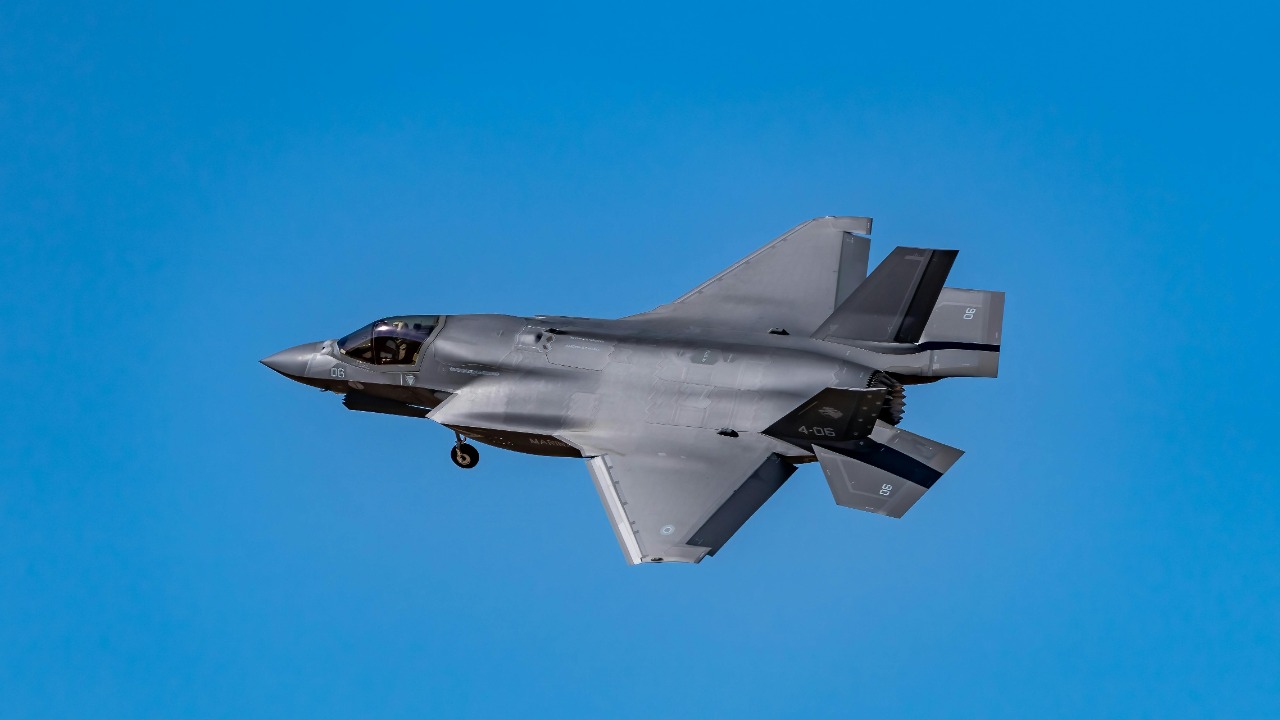
NATO is quietly assembling one of the densest concentrations of fifth generation airpower anywhere in the world, and much of it will sit within quick flying time of Russian territory. By the 2030s, more than 600 F‑35 fighter jets are expected to be operational in Europe, creating a stealth-heavy force that would be central to any high intensity conflict on the continent. For Moscow, that means a future in which advanced Western aircraft are based from the High North to the Black Sea, complicating both its military planning and its political messaging.
The emerging picture is not of a single monolithic fleet, but of overlapping national programs that together add up to a formidable whole. From Finland and Poland on Russia’s immediate flank to Italy, the United Kingdom and other long standing allies further west, governments are buying into the same aircraft, training pipelines and weapons, knitting Europe’s air forces more tightly into the NATO command structure. The result is a step change in the alliance’s ability to threaten Russian assets from multiple directions at once.
From scattered orders to a 600‑jet European F‑35 ecosystem
The core shift is numerical as well as technological. According to multiple defense assessments, by the 2030s more than 600 F‑35 fighter jets are expected to be operational in Europe, a scale that would have been hard to imagine when the program was first conceived. That projection is echoed in other analysis that describes how NATO will soon have 600 F‑35 Stealth Fighters effectively positioned in Russia’s broader neighborhood. These figures aggregate national procurement plans across the continent, turning what began as a handful of early adopters into a continent wide ecosystem of shared tactics, logistics and software upgrades.
That ecosystem is already taking shape. Countries such as the United Kingdom, Italy, the Netherlands, Norway, Denmark and Belgium have all committed to the aircraft, while Switzerland and other European states are also integrating the F‑35 into their future force structures. A separate analysis focused on Russia’s strategic environment notes that Russia Is Stealth Fighter Surrounded as these national fleets grow, underscoring that the cumulative effect matters more than any single country’s order book. The shared platform allows NATO air forces to plug into common mission data files and weapons, turning dispersed squadrons into a more coherent operational mass.
Finland and Poland put fifth generation jets on Russia’s literal border
The most acute change for Moscow comes from new F‑35 operators that share land borders with Russia. Finland, which joined NATO after decades of military non alignment, has committed to a major F‑35 buy that will place advanced fighters within minutes of key Russian bases. Reporting on Finland Future F‑35 Fifth‑Gen Fighters Helsinki Program describes how the country selected the jet through its HX competition and is preparing to receive aircraft and complete pilot and maintainer training. A related update notes that NATO member Finland is on track to receive its first Lockheed Martin F‑35 Lightning II, anchoring fifth generation capability on Russia’s northwestern frontier.
Further south, Poland is moving in the same direction. One detailed assessment of regional airpower highlights that a Fleet of 32 NATO F‑35 Fighters Will Soon Be in Russia Backyard as Warsaw acquires the aircraft to modernize its air force and deter future threats from the east. With Poland already hosting significant NATO ground forces and air defense assets, the arrival of 32 F‑35 jets will deepen the alliance’s ability to project power along the Suwałki Gap and other sensitive corridors. For Russia, the combination of Finnish and Polish F‑35 fleets means that any conflict in the Baltic region would unfold under the shadow of stealth aircraft operating from multiple directions.
Baltic and Nordic deployments test Russia’s red lines in the air

Even before all of these jets are delivered, NATO is already using existing F‑35 squadrons to police the airspace closest to Russia. In the Baltic region, two Italian Air Force Lightning II jets scrambled from Ämari Air Base in Estonia on a day in August to intercept Russian aircraft operating near NATO airspace, marking a first Baltic intercept for Italy’s F‑35 fleet. The episode showed how quickly fifth generation aircraft can be integrated into routine air policing missions, and how close those missions now run to Russian borders from bases in Estonia and other frontline states.
In the High North, Nordic air forces are also experimenting with new ways to operate the jet in austere conditions. A widely discussed exercise saw U.S. Air Force F‑35 Lightning II fighters land on a highway in Finland, demonstrating their ability to disperse away from traditional air bases. Analysis of that drill, framed as Summary and What You Need to Know, emphasized that such operations in Finlan, close to Russian territory, complicate any attempt by Moscow to neutralize NATO airpower with early strikes on fixed runways. Together with Norway’s and Denmark’s own F‑35 deployments, these activities signal that the alliance is preparing to fight in contested northern airspace rather than simply defend it from afar.
Southern flank: Greece and Italy extend the F‑35 arc toward the Black Sea
On NATO’s southern flank, the F‑35 is gradually reshaping the air balance from the eastern Mediterranean toward the Black Sea. Greece has committed to acquiring the aircraft, with reporting noting that Eventually the F‑35s would be deployed to Andravida Air Base in the northwest of the Peloponnese Peninsula. From there, Greek F‑35 squadrons would be well placed to monitor Russian naval movements, support NATO operations in the Black Sea region and reinforce air defenses over southeastern Europe. The presence of stealth aircraft in Greece also adds another axis from which Russian assets in the eastern Mediterranean could be surveilled or targeted in a crisis.
Italy, already an established F‑35 operator, is using its Lightning II fleet for both national defense and alliance missions. The Italian Air Force intercept out of Estonia highlighted how Rome’s jets can be rotated north for Baltic Air Policing, while still anchoring NATO’s posture in the central Mediterranean. As more southern allies, including Greece and potentially others, bring F‑35 units online, the arc of fifth generation coverage around Russia’s southwestern approaches will tighten, complementing the pressure from Poland and Romania on the Black Sea rim.
Moscow’s warnings, NATO’s calculus and the risk of miscalculation
Russian officials have already signaled that they view the spread of F‑35 bases near their borders as a direct threat. When Estonia was floated as a potential host for nuclear capable jets, Russia said it would pose an “immediate danger” to Moscow, framing any such deployment as a destabilizing move. In a separate warning, a senior diplomat stated that If NATO shoots down a Russian plane under the pretext of an alleged airspace violation, this will be war, according to Ambassador Al. These statements underscore how sensitive Moscow is to any perception that NATO’s new stealth aircraft could be used to threaten its strategic assets or challenge its freedom of movement.
For NATO planners, the same capabilities are seen as essential to deterrence and crisis management. Official communications about the aircraft’s role in northern Europe note that Officially the F‑35 is being integrated into quick reaction alert duties, including against Russian surveillance flights, to ensure that alliance airspace is monitored and defended with the most capable platforms available. Video analysis of encounters where NATO F‑35s and Russian Su aircraft FACE OFF for the First Time illustrates how these interactions can unfold at very short notice and with little margin for error. As the European F‑35 inventory grows toward the projected 600 jets, the frequency of such close encounters is likely to rise, increasing both the deterrent value of NATO’s posture and the risk that a miscalculation could spiral into a wider confrontation.