
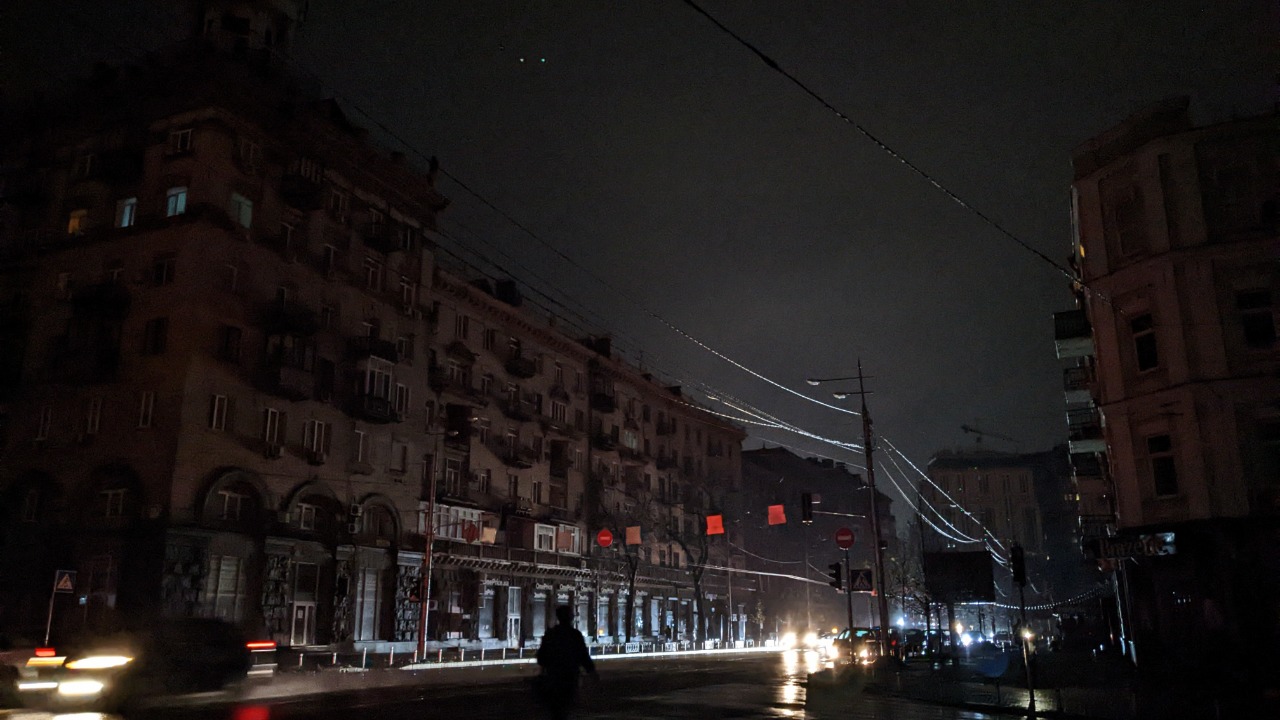
Russian missile and drone strikes on Ukraine’s power grid have once again plunged major cities into darkness and cold, cutting electricity, heat, and water for millions at the height of winter. The latest waves of attacks have hit both frontline regions and urban centers far from the fighting, leaving residents in Kyiv, Odesa, Kharkiv, Dnipro, Lviv, Rivne, Ivano-Frankivsk, and Volyn facing long blackouts and freezing homes. Energy infrastructure has become a central battlefield, with civilians bearing the brunt of the damage.
Coordinated strikes and a winter of blackouts
Russian forces have shifted their focus to Ukraine’s energy system with a scale and tempo that Ukrainian officials describe as among the most intense of the war. On the night of Feb 2 to Feb 3, reports say Russia launched 450 drones and 71 missiles against targets that included power plants and high voltage substations, an assault that marked a renewed effort to knock out electricity supplies across the country. Earlier in the year, the Russian Federation carried out systematic and repeated attacks on energy infrastructure in several regions at once, a pattern that has stretched repair crews and backup systems to their limits.
The pressure has been relentless through an unusually harsh winter, with Ukrainian President Volodymyr Zelenskyy warning that Russia must be stopped from using winter as a weapon against the population. In January alone, Zelenskyy said that In January, Russia launched more than 6,000 drone attacks against Ukraine, a figure that captures how air raids on infrastructure have become a near-daily reality. A Russian Offensive Campaign Assessment describes these barrages as a continuing strategy to degrade Ukrainian capacity, with repeated rounds of missiles and drones probing air defenses and searching for weak points in the grid.
Cities in the dark, homes without heat
The impact has been felt most sharply in Ukraine’s cities, where dense populations depend on centralized heating and high-capacity substations. Kyiv has become a symbol of this strain, with local authorities saying the capital is receiving only 4 to 6 hours of electricity a day in February after repeated strikes on substations. The Ukrainian capital, already scarred by earlier bombardments, now lives by strict schedules of rolling outages that force residents to plan cooking, charging phones, and even medical treatments around narrow windows of power.
United Nations human rights monitors in Kyiv report that the Russian Federation’s energy attacks amid an unusually harsh winter have exposed civilians to extreme hardship, with some districts losing not only light but also heating and water supply. UN rights chief Volker Türk said he was outraged by renewed overnight strikes that knocked out power and heating in major cities, including Kyiv and other urban centers, leaving apartment blocks cold and elevators stalled. Similar blackouts have affected Odesa on the Black Sea coast, the industrial hub of Kharkiv in the northeast, and cities such as Dnipro, Lviv, Rivne, Ivano-Frankivsk, and Volyn, where local authorities scramble to keep critical services running while residents rely on wood stoves, car batteries, and improvised generators.
Human rights concerns and the legality of targeting the grid
Rights advocates argue that the pattern of strikes on power plants and heating facilities is not incidental damage but part of a calculated effort to break civilian resilience. Amnesty International has said that Russia’s attacks on Ukraine’s energy grid cause severe harm, depriving households of electricity, heating, and water during severe winter conditions and raising questions about compliance with international humanitarian law. A separate assessment by UN human rights monitors in Kyiv concludes that systematic and repeated attacks on energy infrastructure in January cut off basic services for prolonged periods, with several regions targeted simultaneously and little apparent regard for the needs of hospitals, schools, and shelters.
Legal experts point out that while dual-use facilities can be military objectives, the scale of disruption to civilian life can still render such attacks disproportionate. A detailed Russian Offensive Campaign Assessment describes how Russia has concentrated strikes on energy nodes that support both industry and residential areas, a choice that maximizes pressure on the wider population. At the same time, Ukraine has begun to mirror some of these tactics, with one report describing how Ukraine hits Russian City to Knock Out Power, Heating as a counterpunch to Russia’s massive bombardment campaign. The growing tit for tat over energy infrastructure deepens concerns that civilians on both sides are being drawn into a contest that treats light and heat as tools of war rather than basic rights.
Ukraine’s race to protect the grid and the stakes for peace talks
Ukrainian authorities are trying to harden the grid even as missiles and drones keep falling. Energy planners and security analysts describe Russia’s onslaught on Ukraine’s power supply as a systematic attempt to push the system toward collapse before any negotiations conclude, prompting a scramble to disperse generation, install mobile transformers, and secure more advanced air defense systems. Ukrainian President Volodymyr Zelenskyy has appealed for additional missile systems from Kyiv’s allies, arguing that Russia must be stopped from using winter to pressure civilians and weaken morale. The Ukrainian government has also promoted energy-saving measures, encouraging residents to reduce consumption during peak hours so that limited supplies can be spread more evenly.
The struggle over power and heating is now shaping the diplomatic track as well as the military one. As negotiators gather for talks brokered by the United States, reports of deadly drone strikes and new salvos against the grid have cast a shadow over efforts to reach even limited agreements. Ukraine has shown it can hit back, with one operation described as Ukraine Hits Russian City to Knock Out Power, Heating, but Ukrainian leaders insist that their goal is to deter further attacks on their own civilians rather than to widen the suffering. As President Volodymyr Zelenskyy has put it, Russia is attempting to “weaponize winter,” and the outcome of that attempt will help determine not only how Ukrainians live through the cold months, but also what kind of peace, if any, can follow.