
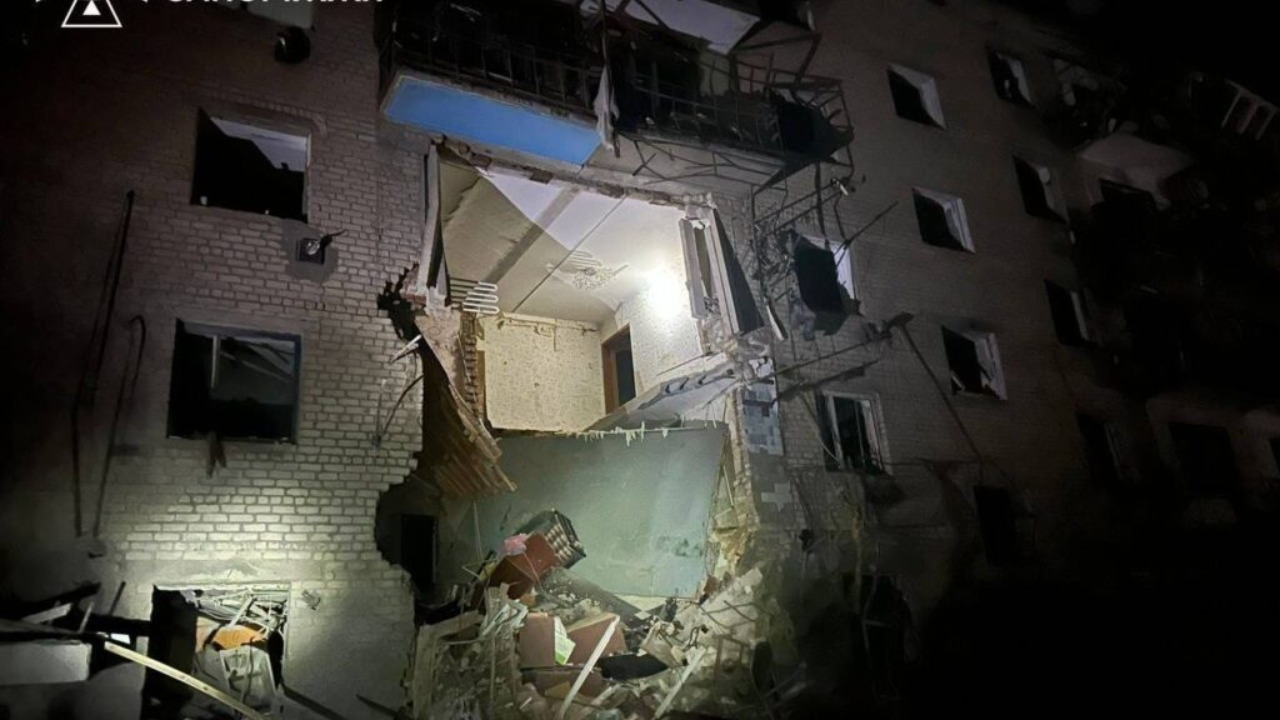
A Russian missile has damaged a factory in eastern Ukraine that produces Oreo cookies, according to Ukrainian officials, who say the strike was a deliberate attempt to hit American business interests. The facility belongs to Mondelēz International and has already been attacked once since the start of the full-scale invasion, turning a symbol of everyday consumer life into a recurring target in a grinding war. Kyiv argues that the strike reflects a broader pattern of Russian attacks on economic infrastructure far from the front line.
Local authorities report that the production site was hit during a wider wave of missile and drone attacks that again highlighted Ukraine’s vulnerability to long-range strikes. Early reports indicated no mass casualties among plant workers, but the damage to buildings and equipment adds another layer of strain to an economy already under pressure from repeated assaults on energy, industry, and logistics.
Missile strike on an Oreo production hub
Ukrainian officials say a Russian missile slammed into a facility that manufactures Oreo cookies in eastern Ukraine, describing the incident as part of a pattern of attacks on foreign-owned industry. The plant is a key site for Mondelēz International, which uses it to produce Oreo and other biscuits for the domestic market and for export. According to accounts cited in Russian missile reports, the strike damaged the production area and disrupted operations, although the full extent of the destruction is still being assessed. Ukrainian diplomats have framed the incident as an attack not only on Ukraine but on an American-linked brand, arguing that Moscow is trying to intimidate Western investors who continue to operate in the country.
This latest attack is not the first time the site has come under fire. Earlier in the war, a facility manufacturing Oreo cookies in Ukraine was hit by a Russian missile on a Saturday, according to accounts of a person who described repeated targeting of the same plant. That history has reinforced Ukrainian claims that the factory is being singled out, not struck by chance, and that Russia is sending a message about the vulnerability of consumer brands that have chosen to keep operating in a country at war.
A strategic town and a symbolic target
The factory is located in or near the town of Trostianets in the Sumy region, a community close to the Russian border that has seen occupation, shelling, and now repeated strikes on its industry. Trostianets is known both as a railway junction and as a hub for food production, which made it attractive to multinational companies before the invasion. Public information on Trostianets highlights its role in the Sumy region and its proximity to the frontier, a location that now exposes it to frequent cross-border attacks. The town’s experience since 2022 has turned it into a symbol of how quickly a quiet industrial center can become a frontline community when war arrives.
Local reporting says the damaged Oreo plant is part of a larger Mondelēz complex that also produces other sweets and biscuits, making it one of the most significant food production sites in this part of Ukraine. A detailed account of the incident notes that Russia hits American in eastern Ukraine, with Ukrainian officials stressing that the target was clearly civilian and commercial. They argue that by striking a sweets factory, Russia is trying to deepen economic pain and erode confidence in Ukraine’s ability to protect everyday workplaces that have no direct military role.
Mondelēz facility in Sumy region and the wider pattern
The attack on the Oreo site fits into a broader series of strikes on Mondelēz assets in the Sumy region. A separate report describes how a Russian missile hit a Mondelēz production facility that produces Oreo and Milka products, damaging at least one of the production buildings. That account, which focuses on a Mondelēz factory in, notes that the site handles a full production cycle from processing raw materials to packaging finished goods. Company information cited in another segment of the same coverage explains that the facility has been operating since 1994 and was built to serve both Ukraine and neighboring markets, underlining how deeply embedded such plants are in local economies.
Ukrainian sources have stressed that, despite the scale of the blast, there were no casualties among factory staff during the most recent strike, although at least one person had previously died at the location. One section of the reporting specifies that, fortunately, there were no injuries in the latest incident, even as production buildings were hit. For Kyiv, that outcome does not reduce the seriousness of the attack, since the loss of capacity at a large food producer affects supply chains, local jobs, and tax revenues at a time when the state is already straining to finance defense and social services.
Economic pressure and international messaging
Ukrainian leaders present the strike on the Oreo factory as part of a campaign by Russia to pressure both Ukraine’s economy and Western companies that continue to do business in the country. Officials argue that by hitting an American-linked sweets factory, Russia is signaling that no foreign brand is off limits. One detailed account of the attack describes how Russian forces targeted in Ukraine, quoting Ukrainian diplomatic figures who say Moscow is trying to frighten investors. Another summary of the same incident notes that a Russian missile strikes, reinforcing the view in Kyiv that the attack was meant to send a political and economic message as much as a military one.
The hit on the sweets plant also sits alongside wider Russian attacks on Ukrainian infrastructure, including energy facilities and other industrial sites. One analysis of the recent wave of strikes notes that Russia used ballistic missiles to destroy a factory of the United States food and beverage company Mondelez International on a Saturday, placing the Oreo incident within a pattern of attacks on Mondelez International assets and other civilian industry. Ukrainian officials and business leaders argue that these strikes are designed to sap public morale, complicate reconstruction, and raise the long-term cost of keeping factories open in a country that remains under regular bombardment.