
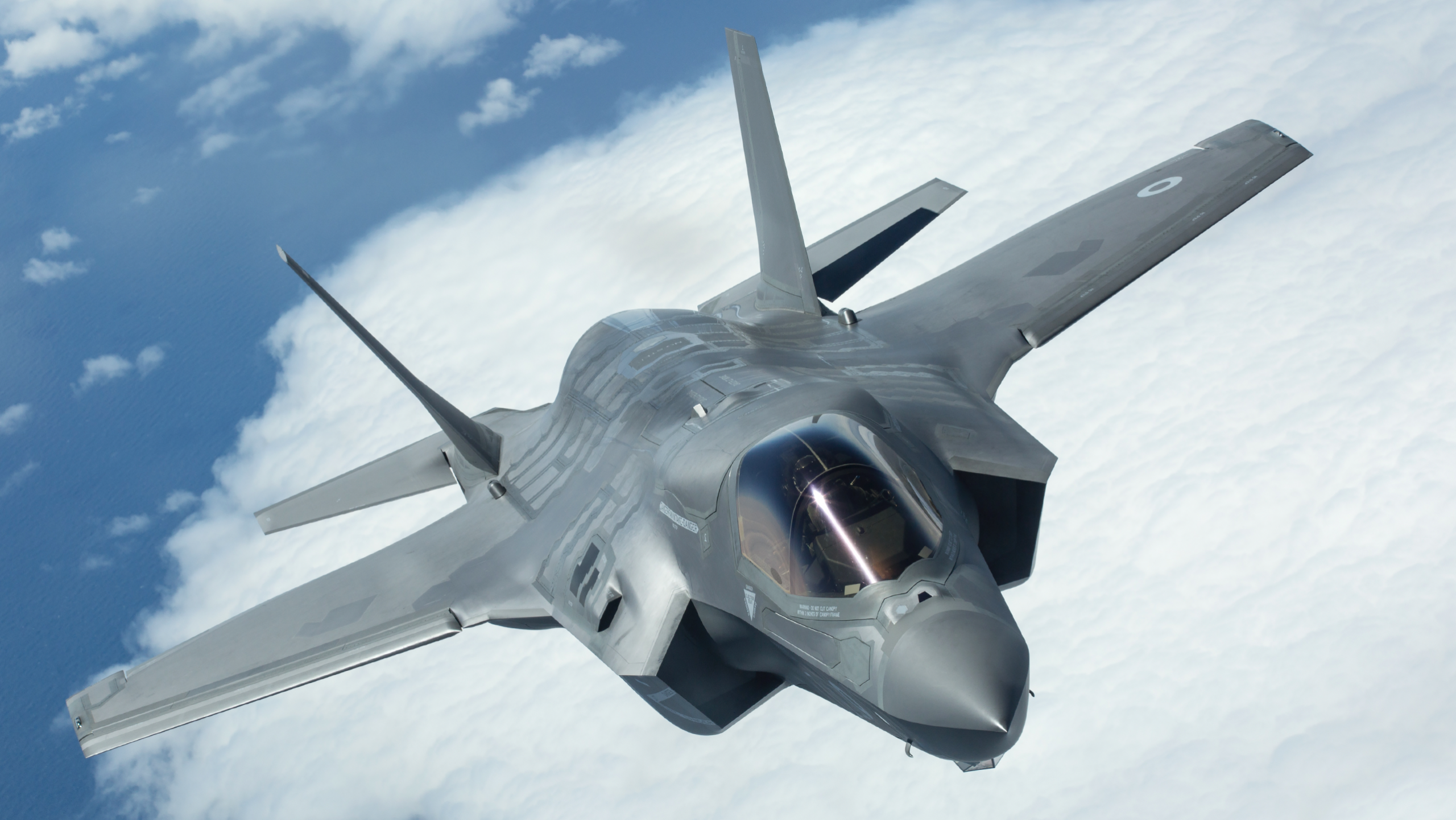
The United Kingdom’s Ministry of Defence announced that Royal Air Force F-35B Lightning jets have achieved their first operational combat kill, shooting down uncrewed aerial systems while operating over Jordanian airspace as part of regional defensive operations. The engagement occurred amid heightened tensions across the Middle East and marked the first time the RAF’s F-35 fleet has successfully destroyed a hostile target during an active mission.
An update on UK operations in the Middle East. pic.twitter.com/0YSomfmW5U
— Ministry of Defence 🇬🇧 (@DefenceHQ) March 3, 2026
According to the Ministry of Defence, the aircraft were conducting defensive patrols when they intercepted drones threatening Jordan. “RAF F-35B jets operating over Jordanian airspace shot down uncrewed aerial systems in defence of Jordan. This marks the first time RAF F-35 has shot down a target on operations,” the ministry said in its announcement. The mission was conducted alongside other British aircraft supporting the broader defensive posture in the region.
Officials said the operation involved multiple RAF platforms working together. The F-35B jets were supported by Typhoon fighter aircraft as well as a Voyager air-to-air refueling aircraft, allowing the patrol to remain on station during the engagement. The Ministry of Defence described the deployment as part of “our defensive operation to protect British interests and allies.”
Additional counter-drone actions were also carried out by British forces operating in the region. A British Armed Forces Counter-Uncrewed Aerial Systems team successfully destroyed drones in Iraqi airspace that were traveling toward coalition personnel. The ministry said the intercept was carried out to prevent the aircraft from reaching their intended targets. “The action was taken in defence of our personnel and allies operating in the area,” the statement said.
The RAF also reported a separate engagement earlier in the week involving one of its Typhoon fighters. On Monday, an RAF Typhoon shot down an Iranian one-way attack drone that had been directed toward Qatar. The aircraft involved in the intercept was operating as part of No. 12 Squadron, a joint United Kingdom-Qatar unit established to strengthen defense cooperation between the two countries.
The F-35B Lightning represents the United Kingdom’s newest generation of combat aircraft and operates alongside the Typhoon in the RAF’s fighter fleet. Designed as a multi-role platform, the aircraft is capable of conducting air-to-air combat, air-to-surface strike missions, and electronic warfare operations within a single mission. Its advanced sensors and mission systems provide pilots with extensive awareness of the battlefield, while its low-observable stealth design allows it to operate in heavily defended environments with a reduced chance of detection.
The aircraft can share targeting and sensor information with other military platforms through secure data links, allowing coordinated operations across air, sea, and land forces. The F-35B variant used by the United Kingdom features short take-off and vertical landing capability, enabling it to operate from aircraft carriers as well as austere forward bases.
The engagement took place as regional tensions continue to escalate following a large-scale military campaign led by the United States and its allies against Iranian military infrastructure. At the direction of the U.S. president, U.S. Central Command launched Operation Epic Fury on Feb. 28, targeting Iranian Revolutionary Guard command facilities, air defenses, missile launch sites, and military airfields identified as posing an imminent threat. Coalition forces have since defended against hundreds of retaliatory missile and drone attacks, with regional air patrols and counter-drone operations playing a key role in protecting allied personnel and infrastructure.
Within that broader security environment, the RAF’s successful intercept marks a milestone for the United Kingdom’s F-35 force, demonstrating the aircraft’s operational role in real-world defensive missions while allied forces continue to respond to escalating drone and missile threats across the region.