
On a rainy weekend in May 2025, more than 3,000 people came to a museum in Hudson, Massachusetts, just to watch old tanks run. The same thing happens every summer in Dorset, where a Sherman named after a Hollywood film still clanks into the arena. Restored military vehicles have a pull that no static display can match.
Getting them there is the hard part. Many of these machines spent decades as range targets, gate guardians or wrecks on the seabed. Volunteers and museum workshops then spent years and serious money to make them move again under their own power.
These are Combat Rated’s picks for eight restored military vehicles that still stop traffic. Each is a specific, named machine, not just a type, and every entry tells you where it lives and where it has appeared. If you want to see one move, the shows are named here too.
1. Sherman “Fury”
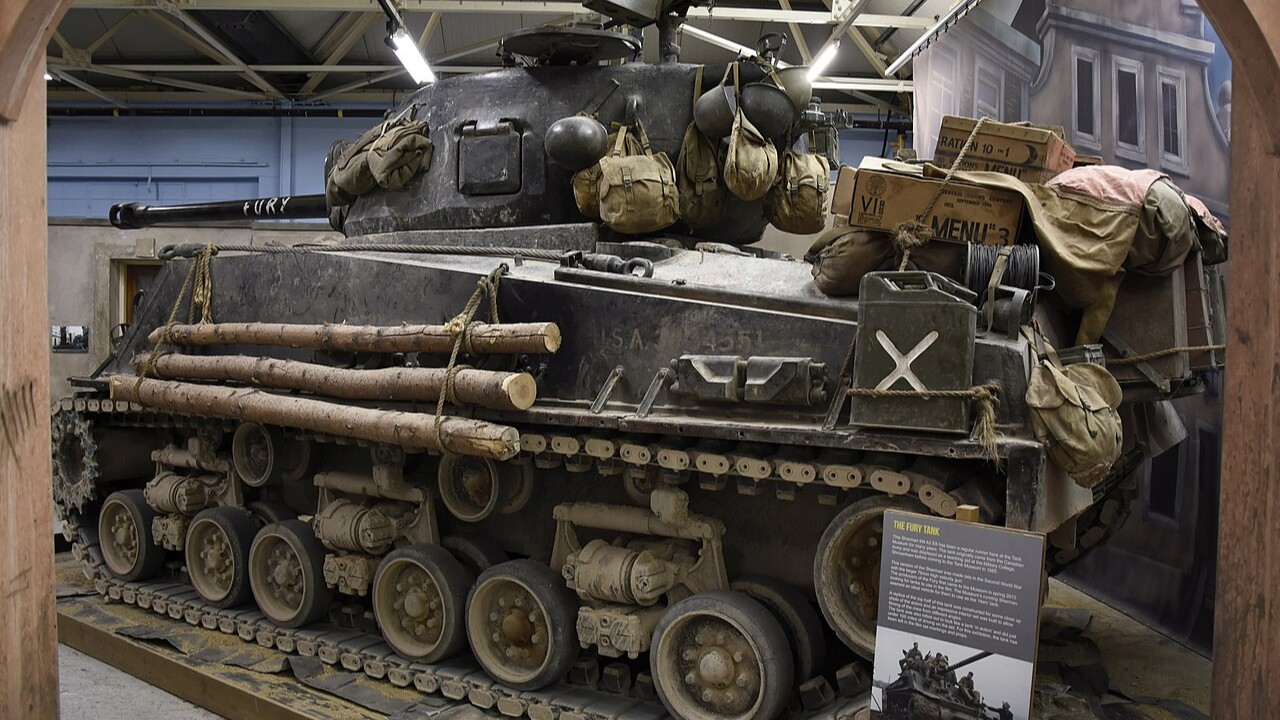
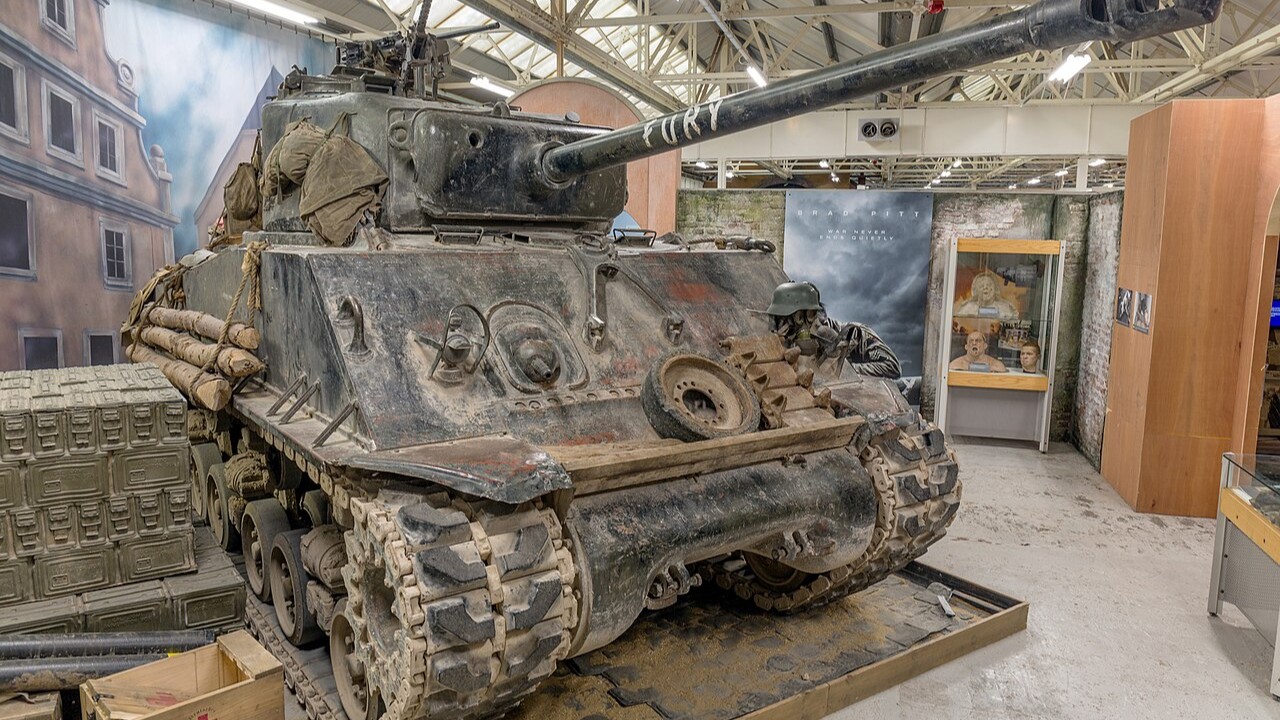
The Tank Museum’s M4A2E8 Sherman is arguably the most famous working Sherman in Britain. It starred in the 2014 film “Fury,” and the name stuck. The museum calls the Sherman the most prolific tank of the Second World War, but this one has a celebrity status no ordinary Easy Eight can match. It came to Bovington in 1985 from the Defence Academy at Shrivenham.
Fame has a price, and in 2024 the bill came due. During routine maintenance, the workshop found worn bearings and failing rubber on the road wheels. The team then replaced the wheels, shock absorbers and springs, the tank’s first major work in 12 years. Finding rear idler wheels alone took about four months, with help from European partners.
According to The Tank Museum, the overhaul cost around £45,000, paid for by the Friends of The Tank Museum. Fury regularly runs at Tiger Days, TANKFEST and Tanks in Action. Its first run after the overhaul was booked for TANKFEST, 26 to 28 June 2026. Only Tiger 131 rivals it for fame at Bovington, where staff call it the museum’s resident film star.
2. Matilda I
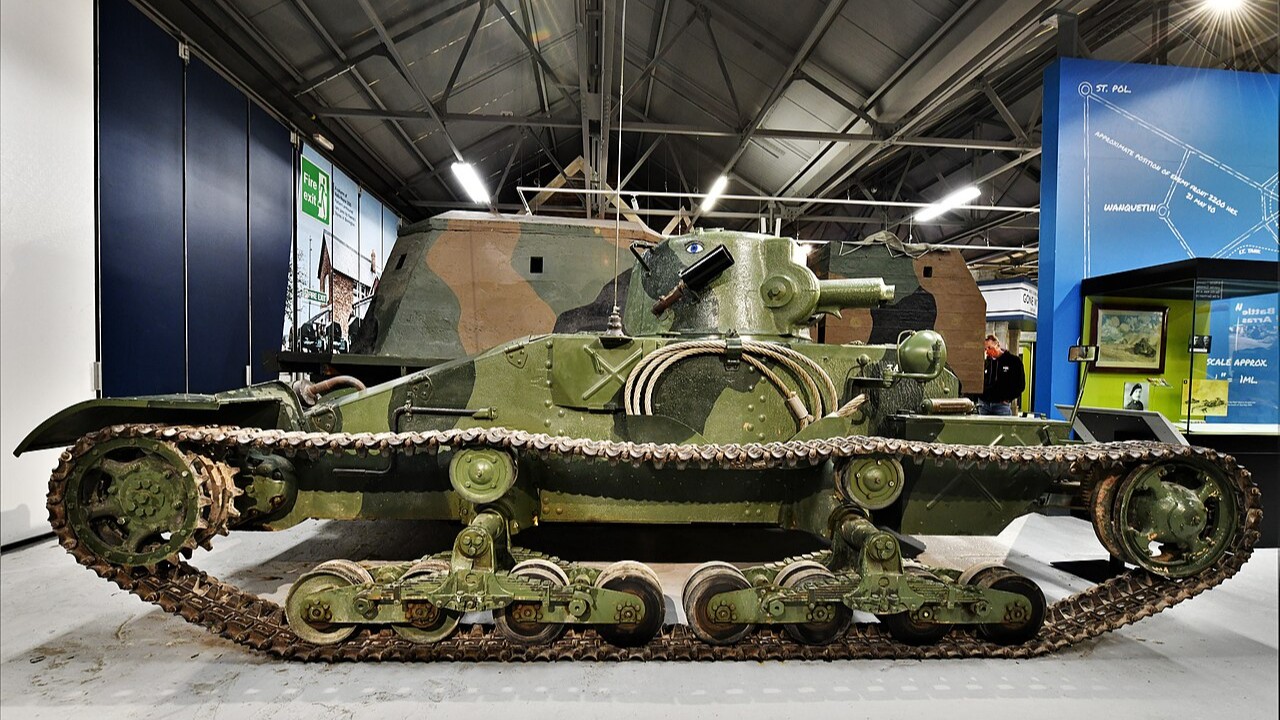
The Matilda I is small, slow and heavily armored, and that was the point. Britain designed it to support infantry, not to race other tanks. Even so, it has a proud history. It led the British attack at Arras in 1940, its best-known moment in action.
The Tank Museum’s example has had a hard life since. It ended up on the Otterburn firing range, a place most old tanks never leave. The museum recovered it from the range, and then the Museum Workshop spent three years restoring it. That is a long time for such a small tank, which shows how much damage the team had to undo.
The end result is truly unique. The Tank Museum describes it as the world’s only running Matilda I. It appeared among the star vehicles at TANKFEST 2025, alongside the later Matilda II, the far better known “Queen of the Desert.” In our view, few restorations anywhere have saved a tank from a fate so close to final. Watching it trundle around the arena, you are seeing something that should have been scrap.
3. M3 Grant
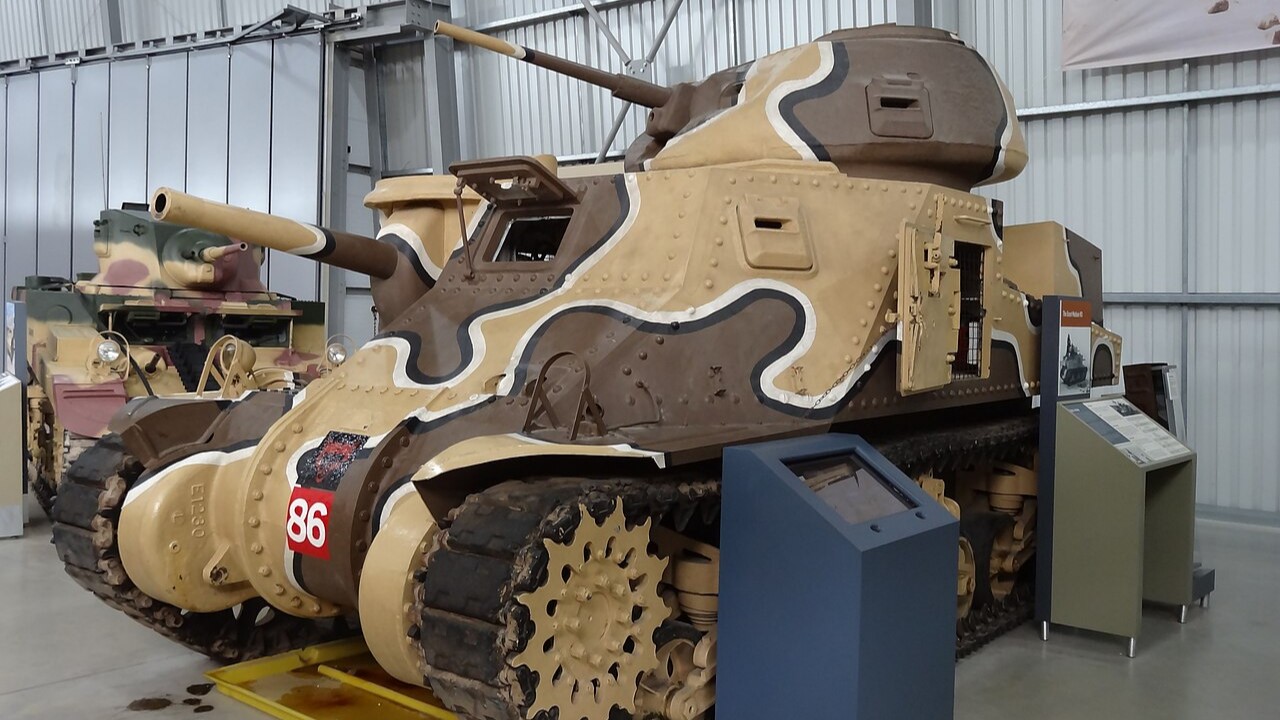
The M3 Grant was an emergency answer to a hard problem. Britain needed a tank with a 75mm gun, and no tank with that gun in its turret was ready yet. So the Grant was rushed out to fill the gap. Museum trustee William Bannister calls it a quickly designed stopgap until the turreted design arrived.
Stopgap or not, it fought hard: the British used Grants in North Africa from May 1942, and they faced Rommel’s forces at the Second Battle of El Alamein that year. This particular tank came to Britain from the Australian Armour and Artillery Museum. It then went through a first phase of restoration in time for a public debut. That first phase was enough to get it moving under its own power.
That debut was a running one, at TANKFEST 2025 in the Second World War line-up. According to Forces News, full restoration will take several years, after which it will join the Bannister Historic Armour Collection. Bannister calls it one of the very few working examples in the world in such good condition.
4. “Black Sea” StuG III
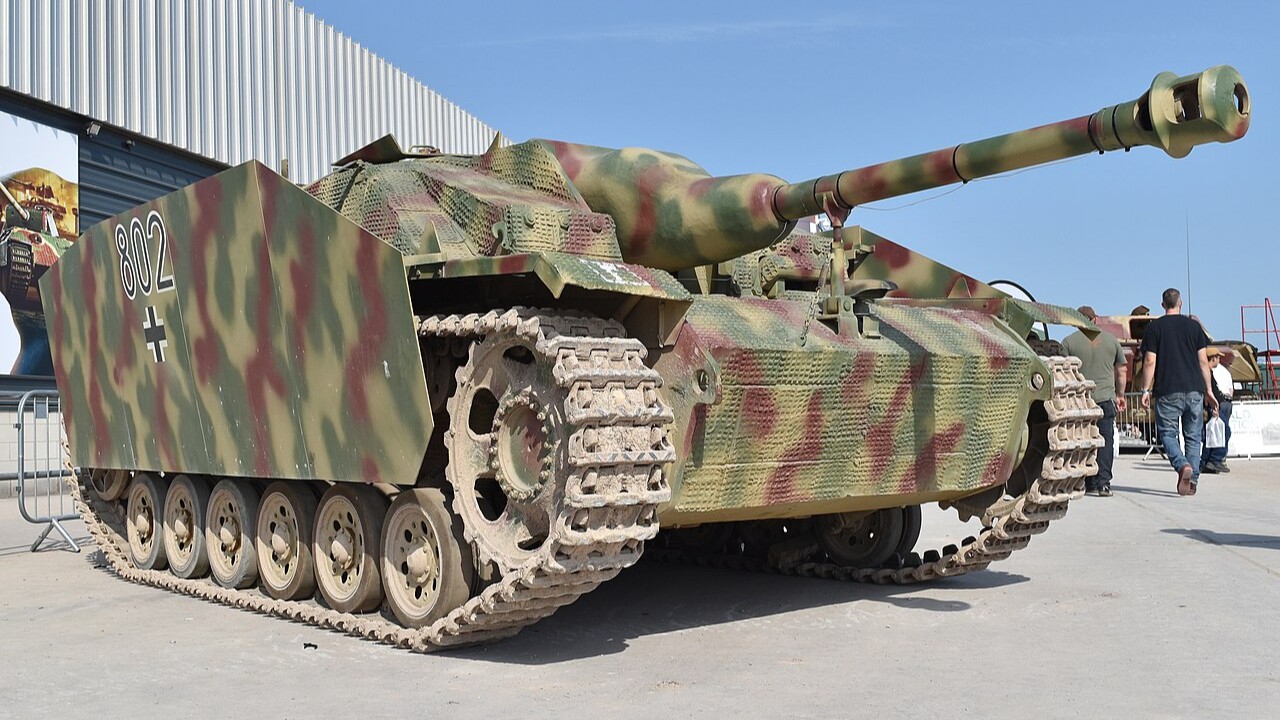
The “Black Sea” StuG III has the most dramatic backstory on this list. MIAG built it in October 1943. Only 2,586 of the roughly 8,565 StuG IIIs came from MIAG, so its survivors are much rarer than the more common Alkett-built ones. Early StuGs carried a short 75mm gun, while later ones like this Ausf. G used the longer StuK 40.
In November 1943, a ship carried it toward Sevastopol along with 11 other StuGs and two Jagdpanzers. A torpedo sank the ship, and the assault gun spent more than half a century on the bottom of the Black Sea. Then, in the late 1990s, salvors raised it, along with a second StuG. The sea had cracked and partly collapsed the hull, destroyed the gearbox casing and stripped the interior.
The Weald Foundation took on the job of bringing it back, using an original Maybach engine. According to The Tank Museum, it was due in the TANKFEST arena at Bovington from 26 to 28 June 2026. That was its first appearance there since 2009. For us, that alone makes it worth the trip.
5. M36 Jackson
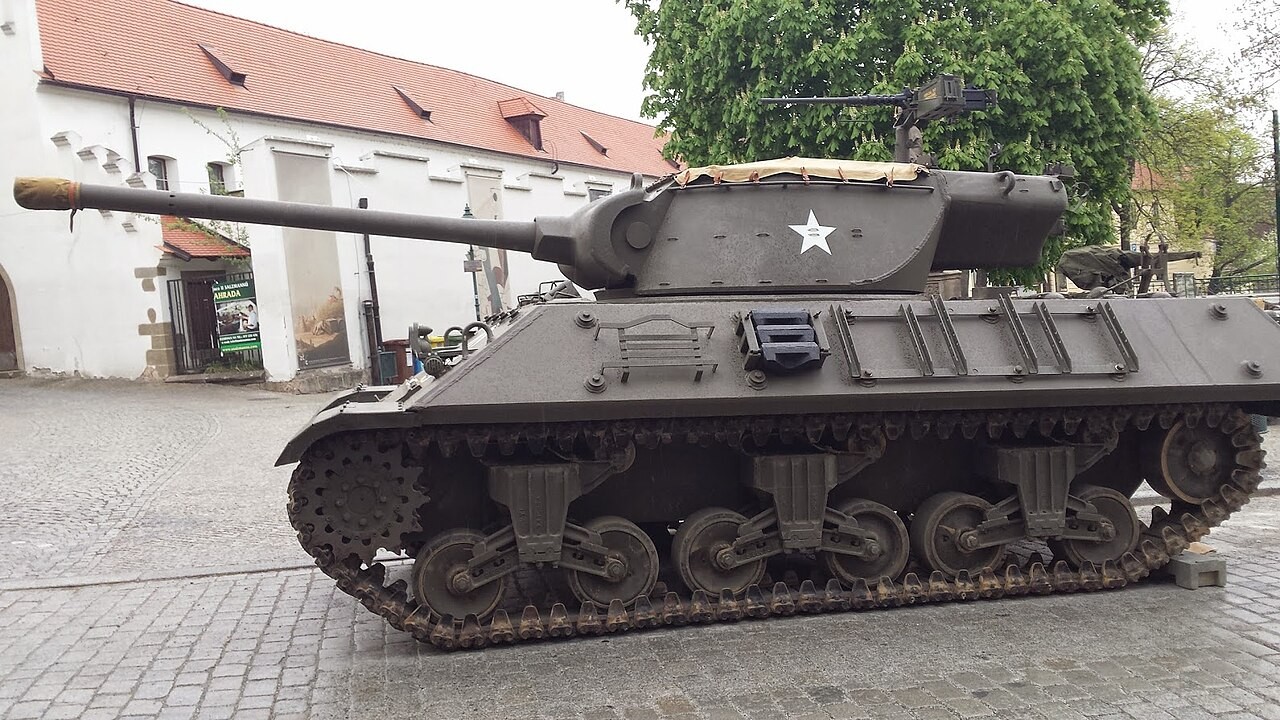
The American Heritage Museum’s M36 Jackson spent most of its life far from home. It was one of 399 M36 tank destroyers bought by Yugoslavia. Yugoslav crews later fitted it with a 500-horsepower Soviet diesel from the T-55, which kept it running but made it a very different machine from the one built in America.
Volunteers at the Hudson, Massachusetts, museum decided to undo that. Under team leader Dick Moran, they stripped the tank completely and sandblasted it inside and out. Then they rebuilt the engine bay and transmission to original Second World War standard, around a Ford GAA V-8. Volunteer Jim Winroth worked on the rebuilt cabin firewall.
The goal, the museum said, was for the M36 to operate as it did in the war. It made its first public showing at the museum’s World War II Tank Demonstration Weekend in late May 2023. Today the museum lists the M36 Jackson among its tank ride programs, next to the M4 Sherman and the M24 Chaffee. In our view, few restored tank destroyers anywhere work as hard for their living.
6. GMC DUKW 353
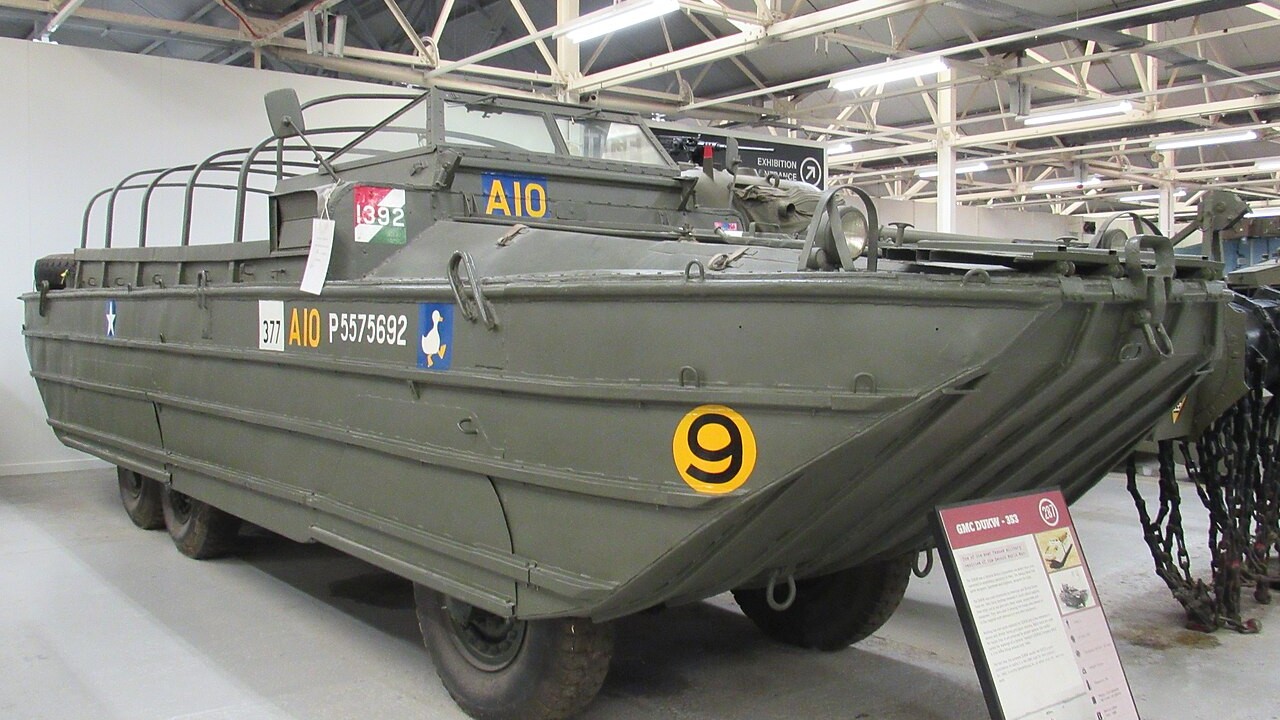
The DUKW is a truck that swims, and it still draws a crowd every time it rolls out. General Motors and the designers Sparkman & Stephens developed it in 1942. They put a watertight hull, a propeller and a rudder on a 2½-ton truck chassis. In all, 21,147 were built, and they served from the D-Day beaches to the Korean War.
The National Warplane Museum’s DUKW was built in 1945. It is on permanent loan from Livingston County, New York, and museum volunteers spent five years restoring it. Now it is fully operational and drivable again, with a road range of about 400 miles. Its GMC Model 270 engine makes 91 horsepower, enough for 50 mph on the road and about 6.4 mph in the water.
Best of all, you can ride in it. According to the National Warplane Museum, it runs regularly in the summer months and at special events, with guests aboard. It can carry up to 5,000 pounds of cargo, so a few passengers are easy work. For us, riding in a working DUKW beats looking at one behind a rope.
7. Volkswagen Typ 128 Schwimmwagen
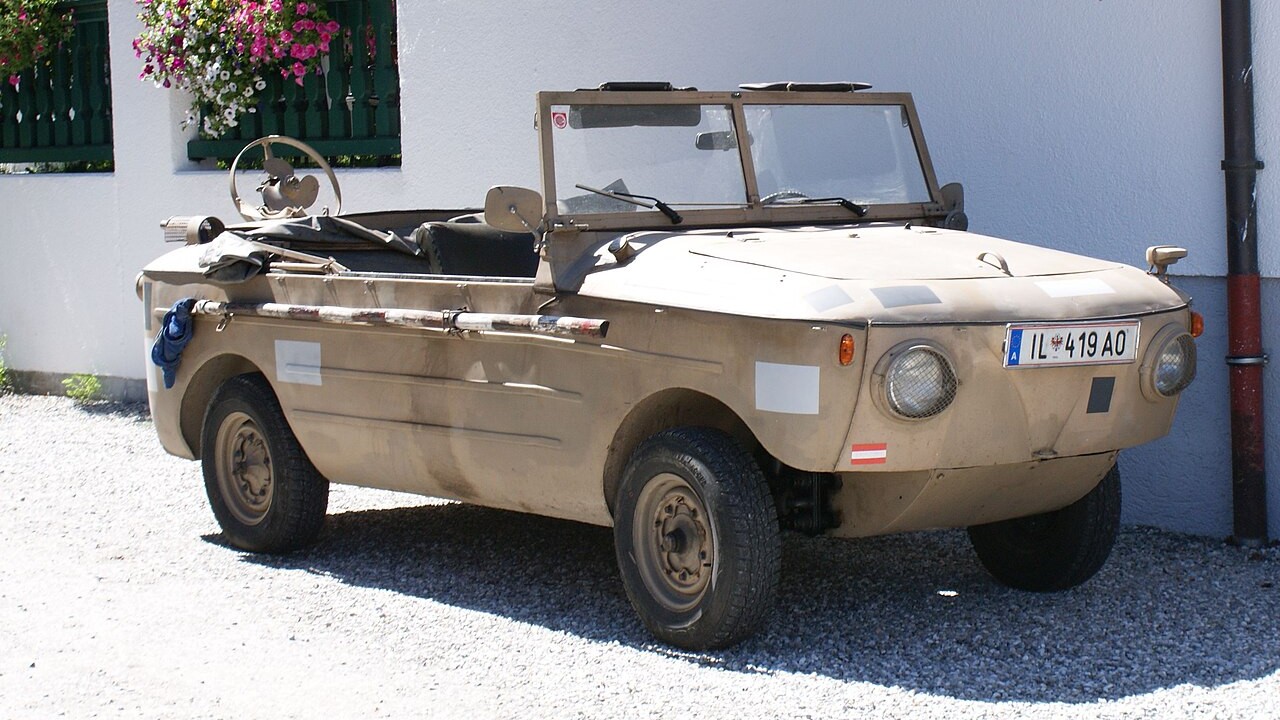
Most enthusiasts know the Schwimmwagen as the little amphibious Volkswagen of the Second World War. The common version was the Typ 166, built in the thousands from 1942. However, the Typ 128 came first. Volkswagen built just 30 of them at Fallersleben in 1941, as a trial series for an amphibious version of the Kübelwagen.
That makes the Typ 128 extraordinarily rare. Even the later Typ 166 is scarce today, with around 180 thought to survive worldwide, according to Portugal’s Museu do Caramulo. For the Typ 128, the numbers are tiny. Only a few restored examples of the original are known to survive anywhere.
One of them is listed among the vehicles at Militracks, held at the Overloon War Museum in the Netherlands. The museum bills the show as the world’s largest event for German vehicle technology from the war. According to the Overloon War Museum, it is the rare forerunner of the famous Typ 166. In our view, it is the hardest machine on this list to see in person, which is exactly why it stops people in their tracks.
8. FV4005
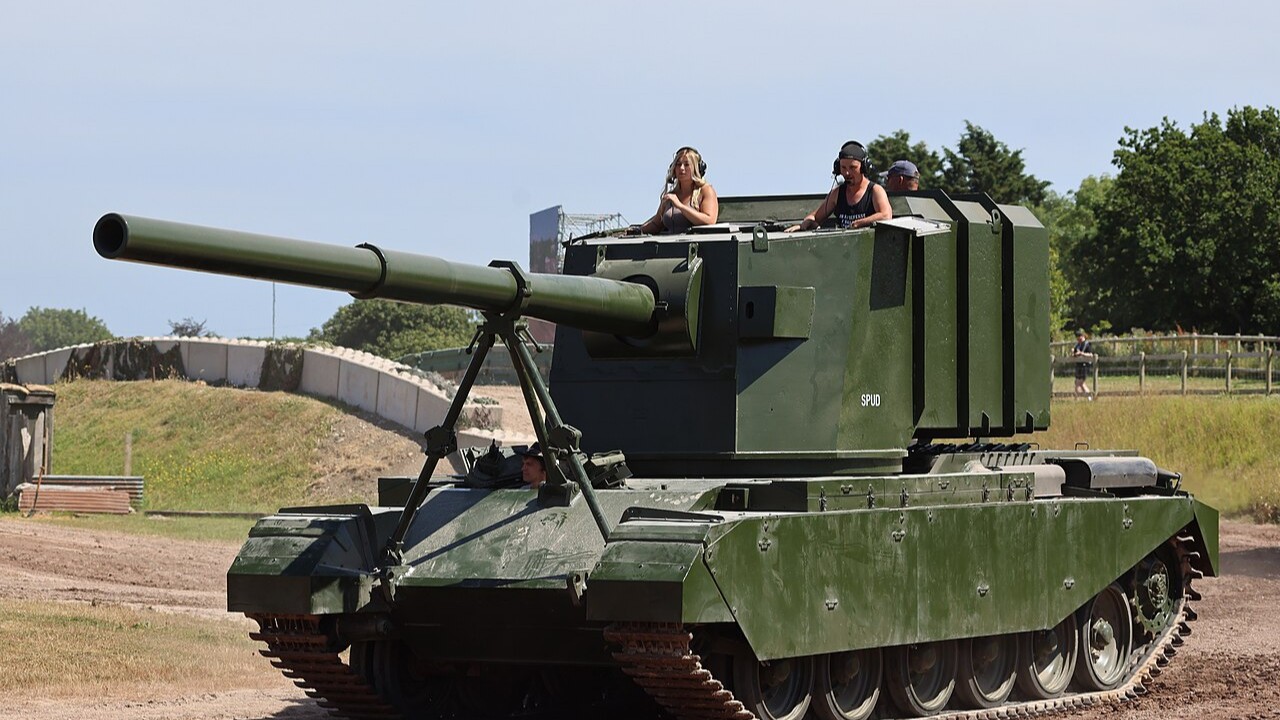
The FV4005 carries the largest gun ever fitted to a tank, a 183mm weapon in a huge box turret. Britain built it as a one-off experiment in the 1950s, when it feared Soviet heavy tanks such as the IS-3. Each round weighed 72.5 kg and took two crew members to load, and the project was abandoned in 1957. Later it picked up the nickname “SPUD,” after trials veteran Harold Hamilton-Taylor.
Its afterlife was humble. The turret sat in The Tank Museum’s car park for about 30 years. After that, it spent 13 years on a spare Centurion hull as a gate guardian. Then the online game World of Tanks made it famous again, and new fans asked the museum to restore it to running condition.
The museum agreed. Working with A W Hewes, it restored the turret and mounted it on an operational Centurion Mk 3 chassis. A fundraiser launched in November 2023 with a £20,000 goal, and World of Tanks pledged another £20,000. The FV4005 made its world debut at TANKFEST 2024, and it was back on the list of star running vehicles for TANKFEST 2026.