
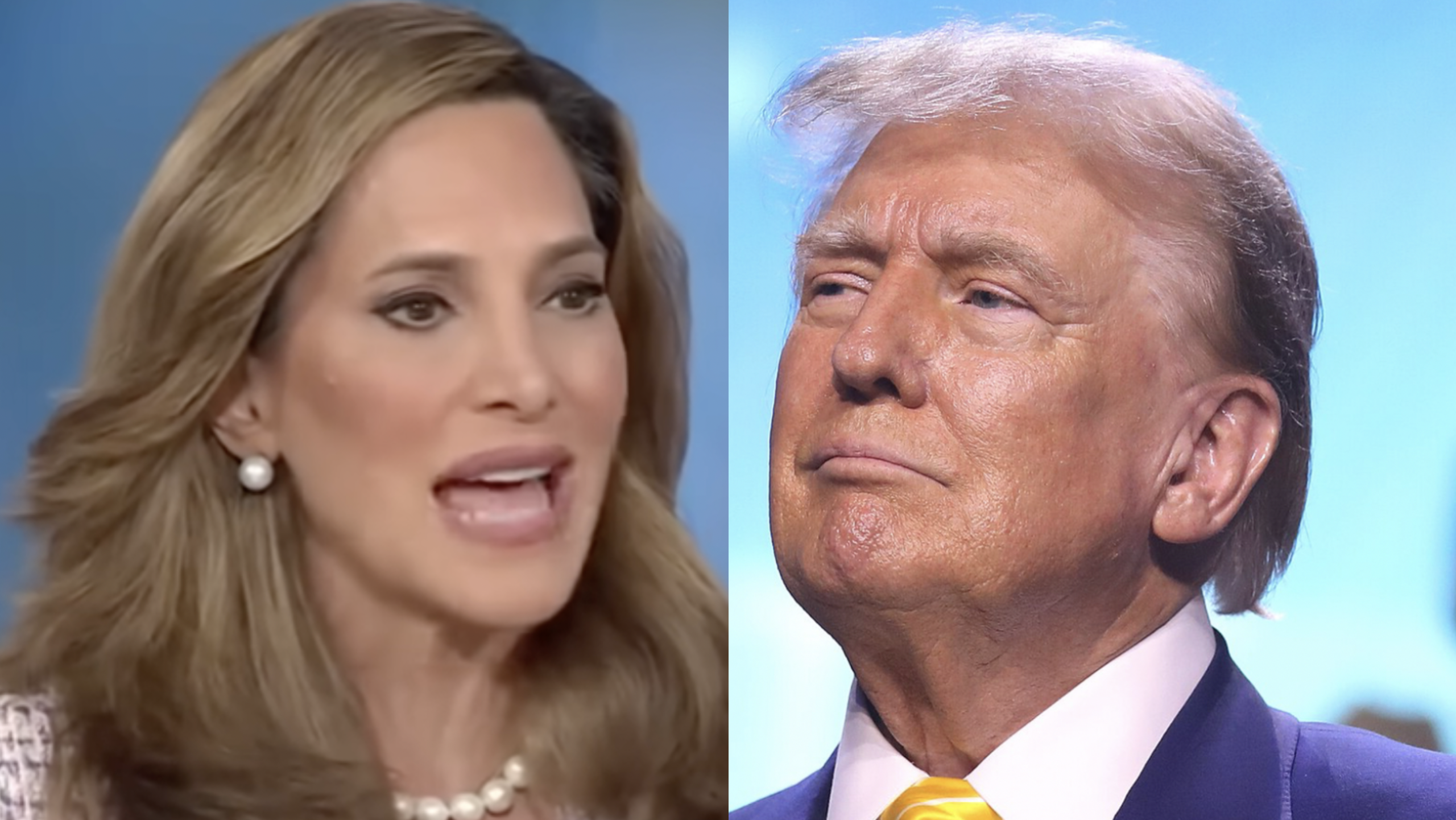
Florida Republican and Cuban-American congresswoman Rep. María Elvira Salazar issued a pointed, direct public call to action on X on May 12, 2026, urging President Donald Trump to move against the Cuban communist regime following a Truth Social post from the president that signaled a potential shift in U.S. policy toward the island. Trump’s post — which described Cuba as a “failed country” and announced that talks between Washington and Havana were forthcoming — drew an immediate and unambiguous response from Salazar, one of the most vocal advocates in Congress for decisive U.S. action against the Castro-era government still in power 90 miles off the coast of Florida.
Trump’s Truth Social Post That Prompted the Response
The exchange began early Tuesday morning when Trump posted to Truth Social before departing for China, where he is scheduled to meet with Chinese President Xi Jinping. “No Republican has ever spoken to me about Cuba, which is a failed country and only heading in one direction — down! Cuba is asking for help, and we are going to talk!!! In the meantime, I’m off to China! President DJT,” Trump wrote. When pressed by reporters at the White House before his departure, Trump declined to provide further detail, saying only: “Cuba is not doing well. It’s a failed nation, and we’ll be talking about Cuba at the right time.” The post offered no timeline, no framework, and no specifics — but it was enough to draw an immediate and forceful reply from Salazar.
Salazar’s Full Post
Salazar’s response on X left nothing open to interpretation. Addressing Trump directly, she wrote:
“Mr. President, Republicans know you are the only person who will be able to free Cuba after 67 years of oppression, and we Republicans in South Florida are supporting you and waiting for you to take the necessary action. There is nothing else to say or discuss.
Cubans on the island are waiting. Cubans in Miami are waiting.
We are waiting for you to give the order.
And it will be done.
With Marco Rubio leading the way.
@realDonaldTrump @POTUS”
The post was a direct, unhedged appeal to the commander-in-chief — framed not as a legislative request, not as a policy recommendation, but as an instruction waiting to be issued. Salazar’s reference to Secretary of State Marco Rubio, himself a Cuban-American from South Florida, was deliberate: positioning Rubio as the operational architect of whatever action the administration ultimately takes against Havana.
“The Only Person Who Will Be Able to Free Cuba”
Salazar’s framing of Trump as “the only person who will be able to free Cuba after 67 years of oppression” reflects the political and emotional weight that the Cuban-American community in South Florida has placed on this administration’s posture toward Havana. The line does not treat Trump’s Cuba policy as one issue among many — it treats it as a historical inflection point, one that has not come in six decades and may not come again. That framing is consistent with the posture Salazar and her South Florida colleagues have maintained throughout Trump’s second term, as the administration has systematically escalated pressure on the Havana regime through sanctions, fuel blockades, and increasingly direct rhetoric about regime change.
The Policy Backdrop: A Regime Under Mounting Pressure
The context behind Salazar’s post is substantial. There is growing speculation in Washington that Trump is seeking to overturn the Cuban government as part of a drive to increase U.S. dominance in the Caribbean and Latin America, and earlier this month, Trump said the United States would be “taking over” Cuba “almost immediately,” tying any such action to the conclusion of the ongoing Iran conflict and the potential repositioning of U.S. naval assets returning from the Middle East. Trump had also already threatened that Cuba was “next” after the U.S. military seized Venezuelan President Nicolás Maduro, a longtime Cuban ally, earlier this year.
His administration has imposed a fuel blockade, curtailed U.S. travel and remittances to the island, and sought to dissuade regional allies from contracting Cuban doctors. On May 1, 2026, Trump signed an executive order sharply expanding sanctions on the Cuban government, targeting its security apparatus, energy sector, financial services, and mining industries, and authorizing secondary sanctions against foreign entities doing significant business with sanctioned Cuban interests. Secretary of State Marco Rubio responded to the May 7 OFAC sanctions designations, stating: “Today’s sanctions demonstrate that the Trump Administration will not stand by while Cuba’s communist regime threatens our national security in our hemisphere. We will continue to take action until the regime takes all necessary political and economic reforms.”
Cubans on the Island Are Waiting
Salazar’s post named two constituencies simultaneously: “Cubans on the island” and “Cubans in Miami.” That framing was not accidental. It connected the political community of South Florida — the most organized and electorally powerful Cuban diaspora in the United States — to those still living under the regime Salazar has spent her congressional career arguing must be dismantled. For Salazar, the two groups are not separate audiences with separate interests. They are one community, divided by geography and circumstance, unified by 67 years of waiting for a government in Washington willing to act.
Salazar’s Broader Position on Cuba as a Security Threat
Earlier on May 12, Salazar had already posted separately on the national security dimensions of the Cuba question, responding to Defense Secretary Pete Hegseth’s testimony before the House Appropriations Defense Subcommittee, where he confirmed that Cuba represents what Salazar called “a clear and present danger” to the United States. In that post, she described Cuba as “a strategic base for China and Russia, and a haven for terrorist organizations, all just 90 miles from our shores,” and stated directly that “Cuba can no longer continue to be the threat it poses to our shores and our security.” The X post responding to Trump’s Truth Social — issued the same day — was the other side of that argument: the security case having been made and confirmed at the cabinet level, Salazar’s message to the president was that the moment for action had arrived.
“With Marco Rubio Leading the Way”
The closing line of Salazar’s post — naming Rubio explicitly as the figure who would lead any Cuba action — carries specific significance on the current geopolitical chessboard. Trump is traveling to meet with Chinese President Xi Jinping this week, and China has called on the United States to immediately end its embargo and sanctions on Cuba. With Trump simultaneously signaling openness to Cuba talks and heading into a summit with Beijing — Cuba’s most consequential remaining international patron — the administration’s next moves on Havana will carry strategic weight well beyond the Caribbean. Salazar’s message, stripped to its essence, was simple: the political support is there, the Secretary of State is ready, the Cuban-American community is waiting. The order, she told the president directly, only needs to be given.