
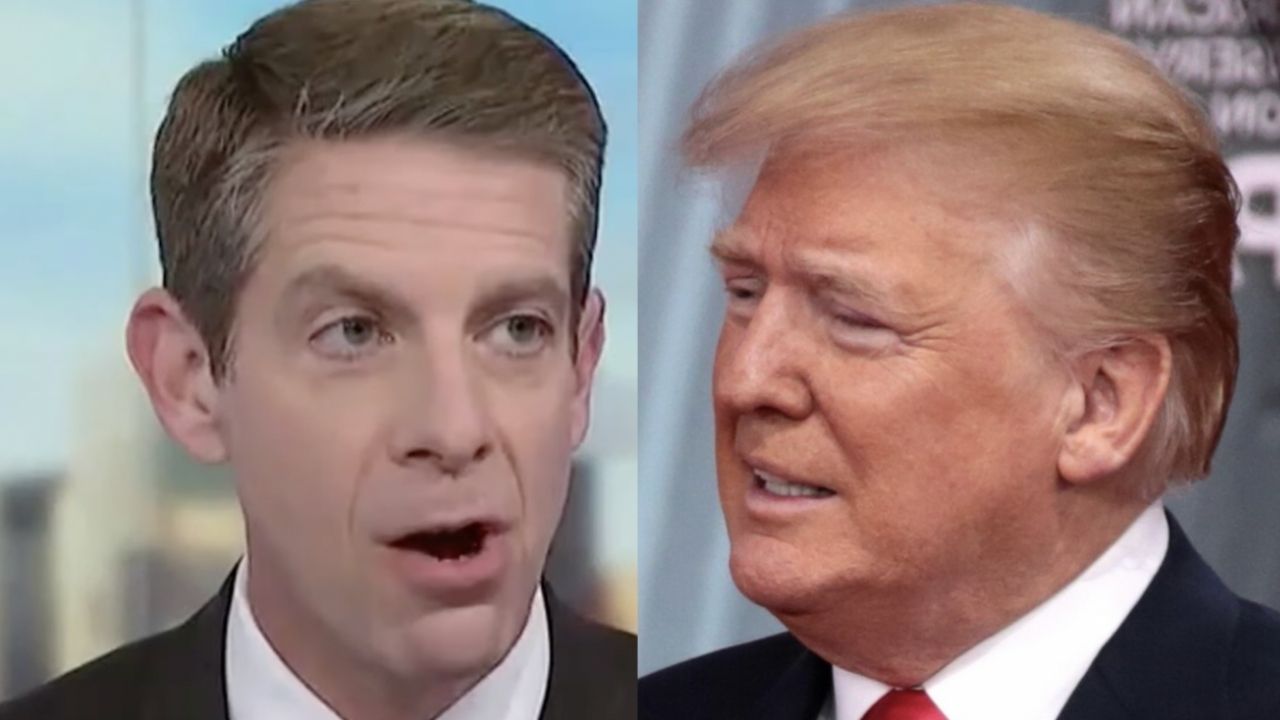
U.S. Rep. Mike Levin (D-CA) accused the Trump administration on Wednesday of throwing Russia an economic “lifeline” by agreeing to buy Russian diesel fuel while Moscow continues its war on Ukraine. In a post on X, the California Democrat, who represents Camp Pendleton, said roughly $4 billion in American money could flow into Russia’s economy while Ukraine receives “nothing” in return. He closed the post with a pointed question: “How does that make any sense?”
Levin’s Full Post
Levin published the statement at 8:37 AM on October 14, 2026. The post reads in its entirety:
“It is completely unfathomable to me that while Russia continues its brutal war against Ukraine, this Administration is choosing to buy Russian diesel and send billions of American dollars into Putin’s economy.
Make no mistake, this is a lifeline for Russia’s war machine.
The NYTimes’ estimates around $4 billion of American money could flow into Russia’s economy. And what does Ukraine get in return? Nothing.
On top of that, Russia continues to target Ukrainian civilians while Trump touts a ceasefire that apparently doesn’t actually exist.
Russia has inflicted extraordinary pain and suffering on the Ukrainian people. Now, instead of squeezing Putin’s ability to keep waging this war, the United States is preparing to hand him billions with no strings attached.
How does that make any sense?”
The Deal Behind the Post
Levin’s remarks came five days after President Donald Trump announced the arrangement on Friday, October 9, in a Truth Social post that followed a phone call with Russian President Vladimir Putin. Trump said Russia would immediately supply more than 300,000 tons of diesel, followed by 500,000 tons in November and one million tons shortly after, with another 3 million tons to come depending on the condition of Russia’s refineries. Trump wrote that “TOTAL CONTROL of the Strait of Hormuz,” combined with the Russian energy announcement, would bring diesel prices down “IN RECORD NUMBERS, AND FAST!”
The Treasury Department moved within minutes to make the deal possible. It issued a license authorizing transactions tied to the sale, delivery, offloading or importation of Russian-origin diesel, including importation into the United States, through 12:01 a.m. Eastern time on April 7, 2027. The United States first sanctioned major Russian oil companies in October 2025 over the war that began in 2022, and the new license marks a reversal of that pressure.
The Report Levin Cited
Levin linked a New York Times article published October 12 that examined what the arrangement means for the war. The report describes a conflict with largely frozen front lines that has become a contest of economic endurance, with Ukraine striking Russian refineries and Russia hitting Ukrainian ports and heavy industry. It states that the diesel agreement could send about $4 billion into the Russian economy, according to energy experts, and that a halt to Ukraine’s refinery strikes, which Trump has also pressed for, could be worth considerably more to the Kremlin. It adds that Ukraine is expected to receive nothing in exchange.
The same report details how much damage Ukraine’s refinery campaign has done. Putin acknowledged this month that the combined attacks on Russian refineries and other businesses have cost Russia about 1 percent of its gross domestic product. The International Energy Agency estimated last month that Russian gasoline output is down 20 percent from 2025 levels and diesel production has fallen by nearly 30 percent. Russia’s oil tax revenue from January to August was nearly 17 percent below the same period last year. The refinery strikes also prompted Moscow to restrict diesel exports, restrictions it now says it will lift to sell fuel to the United States.
The report also describes the toll of Russia’s campaign against Ukraine’s economy. Traffic through the three Odesa ports fell nearly 95 percent in August and September compared with the same period last year, with only 12 ships leaving in September versus 266 a year earlier. Ukraine’s steel industry, which contributed more than 7 percent of the country’s economic output last year, collapsed after strikes on the grid, ports, railways and plants, and in September not a single metric ton of steel was produced in Ukraine for one week. More than 100 Ukrainian civilians were killed in the past week alone, and the United Nations has described civilian casualties as at a “new horrifying level.”
Reaction to the Diesel Deal
Ukrainian President Volodymyr Zelensky condemned the arrangement, calling it a “weak decision” and “dishonest,” and said Russia would “repay” the diesel “with further terror and perfidy.” He noted that a Ukrainian delegation was in Florida negotiating with Trump envoys Steve Witkoff and Jared Kushner at the time. Sen. Richard Blumenthal (D-CT), a co-author of the Russia sanctions law, said the move “is an embarrassment and makes us complicit in Putin’s war against Ukraine.” Rep. Don Bacon, a Republican, said it was time to apply the sanctions Congress recently passed rather than lift measures against Russia.
The announcement came weeks after Congress passed a bipartisan Russia sanctions law on September 16, which Trump signed the same month. The law envisions sanctions on Russian officials, banks and a shadow fleet of tankers, and directs the administration to target the top importers of Russian oil and gas. The diesel deal casts doubt on whether the White House will impose those sanctions this month, and it is the latest of several steps easing pressure on Russian energy since the Iran war began, including an earlier Treasury waiver covering Russian oil already at sea.
Levin’s Record on Russia and Ukraine
Levin’s criticism fits a stance he has held since Russia’s full-scale invasion in 2022. On February 22, 2022, he called the invasion “a blatant assault on international law” and said he expected the Biden administration and allies to impose “increasingly severe sanctions on Vladimir Putin, his cronies, and the Russian government.” He said he was confident the United States and its allies would remain united in “holding Putin accountable” and “supporting Ukraine’s right to defend itself.”
On October 25, 2022, Levin issued a statement on his continued support for Ukraine, saying U.S. military and humanitarian support was “fundamental to defending our own values and national security interests.” He criticized then-Republican leader Kevin McCarthy for suggesting his party was ready to abandon aid, and he rejected the suggestion by some in his own party that negotiations with Putin, whom he called “a war criminal,” were appropriate at that time. He said he would keep backing military and humanitarian aid and urged colleagues in both parties to do the same.
After the contentious February 28, 2025, Oval Office meeting between Trump and Zelensky, Levin called it “nothing short of an internationally embarrassing failure of American leadership.” He said Trump “would rather side with a dictator than a democratic nation defending its freedom,” and stated, “Putin is a murderous thug who illegally invaded Ukraine.” He added that his grandfather and the Greatest Generation “didn’t fight authoritarians in WWII to see the U.S. take the side of one today.”
Levin’s Stance on the Iran War
The diesel deal is tied directly to the war with Iran, which Trump’s own announcement framed as the backdrop for lowering fuel prices. Levin responded to the opening of that war on February 28, 2026, writing that Trump had announced “major combat operations” in Iran, language that “describe[s] sustained warfare.” He said Article I of the Constitution gives Congress the power to declare war, called for a prompt War Powers vote, and said he would oppose a sustained war in Iran. He also noted that Trump had explicitly said during his campaign that he opposed this type of war.
On March 5, 2026, Levin voted yes on a War Powers Resolution that would have required the president to withdraw U.S. forces from Iran absent congressional authorization. “There is no vote I take more seriously than one that determines whether our service members are sent into harm’s way,” he said, noting that he represents the Marines and Sailors at Camp Pendleton. The resolution failed in the House, 212 to 219, with four Democrats voting no.
What the Deal Means Going Forward
Diesel prices hit a record on September 22 and stood at $6.27 a gallon on the day of Trump’s announcement, with futures falling 4.3 percent afterward. The administration faces political pressure to bring costs down before the midterm elections in early November. Reuters reported that analysts doubt the deal will keep prices down, and that it was announced while a Ukrainian delegation was in the United States discussing ways to end the war. Senate Minority Leader Chuck Schumer blamed the high prices on the Iran war and called the Russia deal a political move, a framing that echoes Levin’s argument that Washington is easing pressure on Moscow instead of tightening it.