
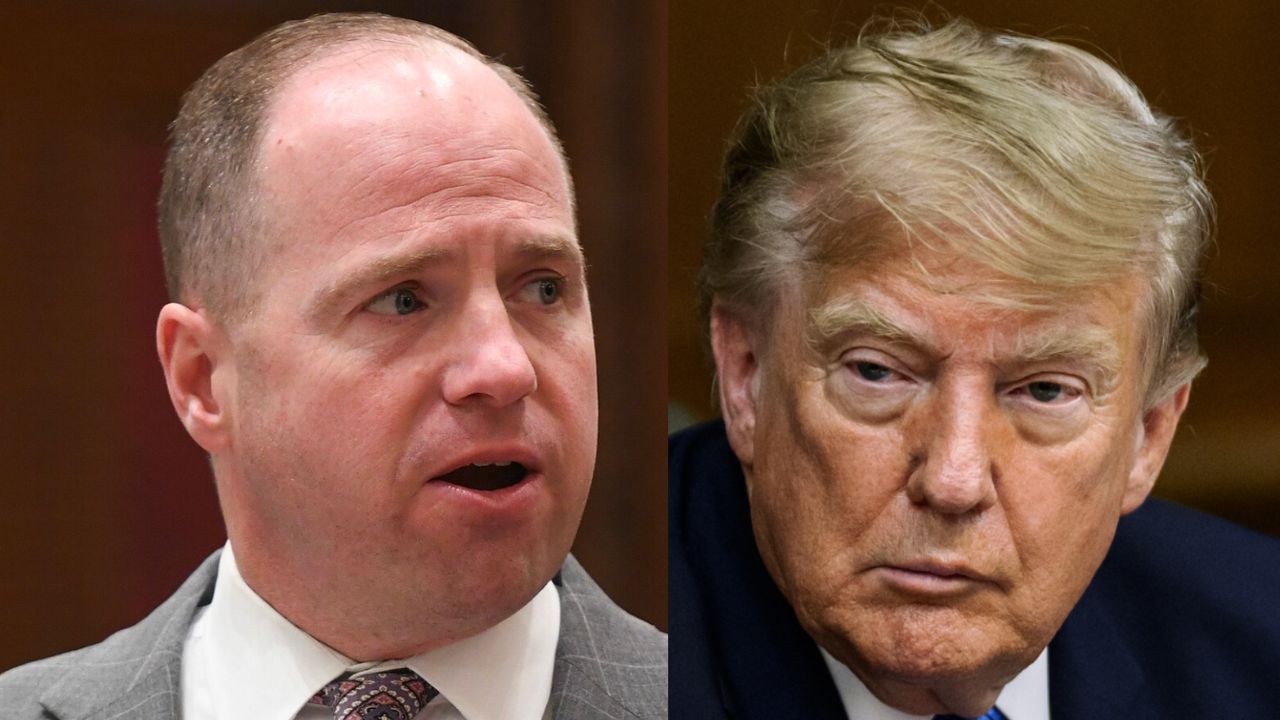
U.S. Rep. Tim Kennedy, D-N.Y., on Sunday called President Donald Trump “dangerous and deranged,” accusing him of starting an Iran war that sent fuel prices soaring and then cutting a deal to buy Russian diesel that Kennedy says funds Vladimir Putin’s war against Ukraine. The congressman, who represents New York’s 26th District in the Buffalo area, also condemned Trump’s call for Ukrainian President Volodymyr Zelensky to be replaced, saying it shows the president would “rather do business with a dictator than stand with our ally.”
Kennedy posted the remarks on X at 10:58 a.m. on Sunday, Oct. 11, 2026. They came less than two days after the Trump administration moved to open U.S. markets to Russian diesel, and one day after Trump publicly suggested Ukraine should choose a new leader. The post was Kennedy’s sharpest public rebuke yet of the president’s Iran and Russia policies, topics he has criticized repeatedly since the war began.
What Kennedy Said
Kennedy’s full post read:
“This dangerous and deranged president started a war of choice in Iran that he said would be over in days. Seven months later, diesel is over $6 a gallon, and families, farmers, and truckers across Western New York are paying for it.
Now Trump is cutting a deal to buy Russian diesel, funding Putin’s war against Ukraine. Adding insult to injury, he’s calling for President Zelensky to be replaced.
He’d rather do business with a dictator than stand with our ally. That tells you exactly who Donald Trump is.”
Kennedy’s reference to cost at the pump is borne out by federal and market figures. When the U.S. and Israel launched the war in late February, the national average for a gallon of diesel was about $3.76, and prices climbed quickly as crude oil costs soared and tanker traffic bottlenecked in the Strait of Hormuz. The national average was still $6.23 on Friday, after hitting a record $6.52 in September.
Sen. Ed Markey, D-Mass., ranking member of the Senate Small Business Committee, said in September that, 200 days into the war, the average family faces more than $1,400 a year in added fuel costs, and that households have paid an extra $108.6 billion for gasoline and diesel since February.
The Russian Diesel Deal
The Treasury Department’s Office of Foreign Assets Control issued General License No. 135 on Oct. 9, signed by OFAC Director Bradley T. Smith. The license authorizes transactions otherwise barred under U.S. sanctions regulations that relate to the sale, delivery, offloading or importation of Russian-origin diesel fuel, including importation into the United States. It runs through 12:01 a.m. eastern daylight time on April 7, 2027. The license does not authorize debits to accounts of the Central Bank of the Russian Federation, the National Wealth Fund or the Russian Ministry of Finance.
The license is the first Treasury action easing diesel sanctions for longer than the standard 30-day window since the start of the Ukraine war, and it follows a series of extensions on Russian fuel shipments since the Iran war began. The announcement came as Trump faces voter anger over fuel costs ahead of the Nov. 3 midterm elections.
Hours after the deal was announced, Trump spoke at length by phone with Putin just as Ukrainian negotiators arrived in Miami to meet his envoys, Jared Kushner and Steve Witkoff, The New York Times reported. Putin’s foreign policy adviser, Yuri Ushakov, said Moscow would consider when to resume negotiations, and Ukrainian officials said the Miami talks ended without a breakthrough. Putin said Russia had confirmed its willingness to supply oil and petroleum products to the U.S. market but did not specify amounts, and the Kremlin apparently offered no concessions in return.
On Saturday, Trump accused Ukraine of causing a “world problem” through its strikes on Russian refineries and said “it’s time for Ukraine to get a new president.” Zelensky answered that Ukraine’s team was being used as a smoke screen and called the diesel announcement a weak decision. Ukrainian Foreign Minister Andrii Sybiha said Zelensky has the support of the Ukrainian people and that they alone have the right to decide who leads them.
The same day, Zelensky said Russia directed five guided bombs at a residential area of Zaporizhzhia, killing at least 20 people, including three children. Daniel Fried, a former U.S. ambassador to Poland, said Moscow appears uninterested in diplomacy and is waiting for Washington and Kyiv to offer more. He also warned that the approach undermines the security of Europe, which he said faces escalating Russian shadow warfare.
Kennedy’s Record on the Iran War
Kennedy’s opposition to the Iran war dates to its first day. In a Feb. 28 statement from Buffalo, he said Trump had launched pre-emptive strikes without congressional authorization or making a case to the public. He added that “Trump chose escalation over diplomacy,” and said service members deserve better than being sent to war without a plan or authorization.
On March 4, after a classified briefing for members of Congress, Kennedy said no evidence had been presented that Iran posed an imminent threat to the U.S. homeland or its interests abroad. “This is a war of choice,” he said, adding that the Constitution gives Congress the power to declare war and that “Congress must act now.”
On April 7, after Trump threatened Iran’s infrastructure, Kennedy called on Speaker Mike Johnson to bring a war powers resolution to the House floor. He said Americans were witnessing “weakness masquerading as strength,” and that the war began without the consent of the American people or a vote of Congress.
Congress has since voted repeatedly on the issue. The House has passed a war powers resolution three times, most recently with seven Republicans joining Democrats, including two from Iowa. The Senate considered its 14th war powers resolution since Feb. 28 in late September, and Republicans rejected it. The Senate approved a resolution in June after four Republicans joined Democrats, but Republicans reversed course the next day.
Kennedy on Russia and Ukraine
Kennedy’s criticism of Trump’s posture toward Moscow also predates this weekend. After the Feb. 28, 2025, Oval Office meeting between Trump and Zelensky, he called Trump’s treatment of the Ukrainian leader demeaning and disrespectful, and said plainly that “Ukraine is a democracy, Putin is a dictator.”
On the second anniversary of the full-scale invasion in February 2024, he described Putin’s war as a “brutal and illegal invasion” and urged Congress to approve new funding for U.S. allies. He had met that month with a U.S. Senate delegation led by then-Majority Leader Chuck Schumer. In a separate post after joining the Ukrainian Welcome Foundation of Western New York, he pledged to keep advocating for Ukraine’s defense and future rebuilding.
What Comes Next
With the midterms three weeks away, fuel prices are a central campaign issue. Senate Majority Leader John Thune said the Iran war has overtaken other issues for voters, with diesel costs a particular concern in the Midwest. It remains unclear whether Russian diesel imports will lower U.S. prices before Election Day, and Putin has offered no volume commitments.
Diplomatically, the weekend’s events left the Ukraine track in doubt. The administration’s recent offers to Moscow reportedly included releasing frozen Russian sovereign assets, a sale of parts of Lukoil to Middle Eastern investors, and Belarusian potash exports, while Kyiv has demanded guardrails. Kennedy’s post leaves little doubt where he stands: he says the diesel deal and the call to replace Zelensky show whose side the president has chosen.