
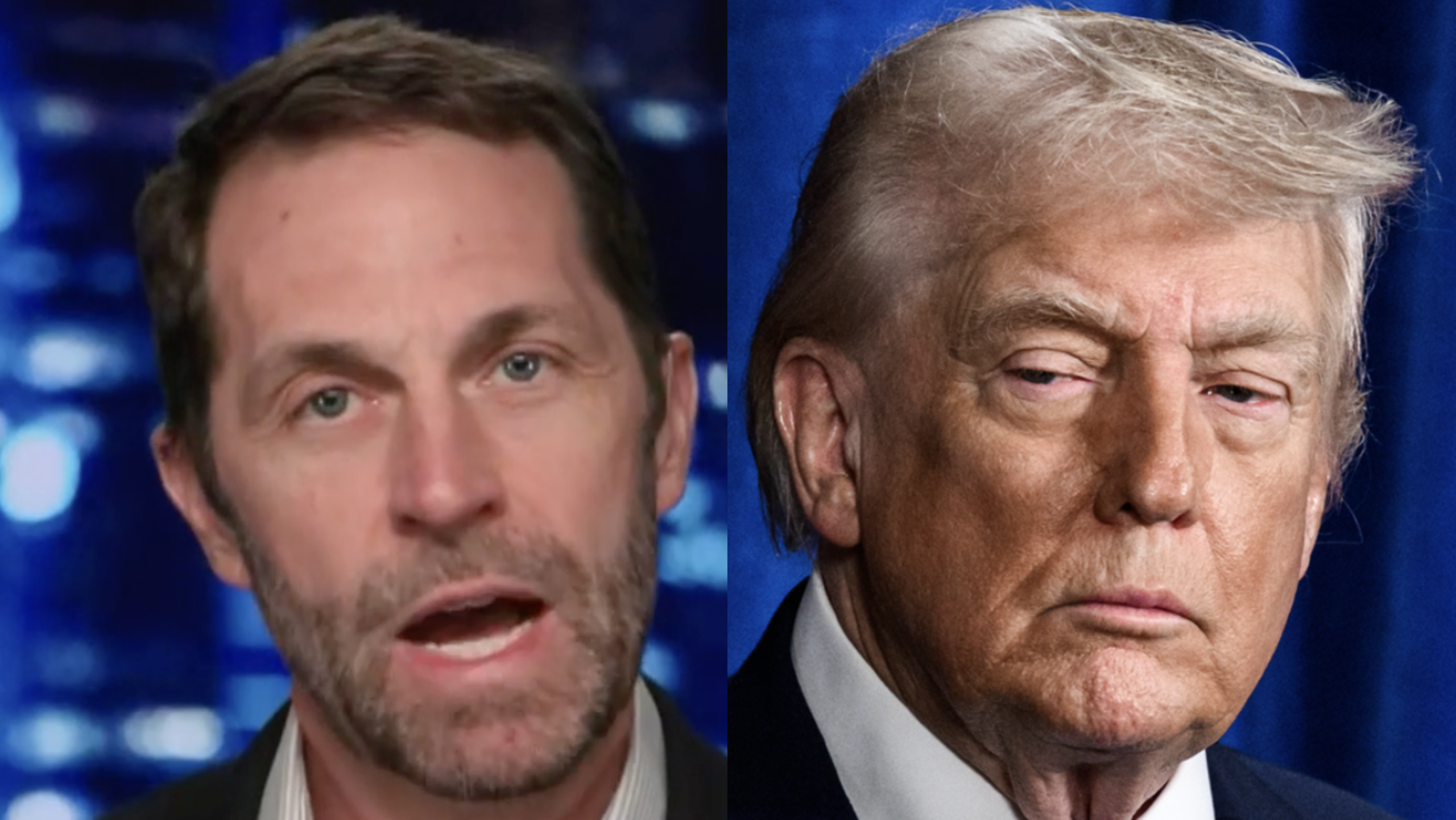
Colorado Congressman Jason Crow took direct aim at President Donald Trump on Sunday, accusing him of treating American foreign policy as entertainment while servicemembers die and working Americans absorb rising costs from a war that has now officially crossed the $25 billion threshold.
Crow, a former Army Ranger and combat veteran who serves on both the House Permanent Select Committee on Intelligence and the House Armed Services Committee, posted the remarks to X at 5:39 p.m. on May 11, 2026, alongside a video in which he expanded on the charge at length.
“Trump’s treating U.S. foreign policy like a reality show,” Crow wrote. “But bombing seven countries and starting reckless wars is deadly serious. American servicemembers have been killed and working people are paying higher prices.”
The Full Post and Video
The post was brief, but the video attached to it was pointed. In it, Crow walked through what he described as a pattern of militarized spectacle that has defined the Trump administration’s approach to global conflict over the past 14 months.
The full transcript of the video reads:
“We saw the last 14 months Donald Trump conduct seven different bombing campaigns in seven different countries, and he treated all of them like a reality TV show, right? Put the video on there, come up with great names for the operation. Operation Epic Fury, Operation Midnight Hammer, you know, Project Freedom. Who could be against Project Freedom? Problem is, when you’re dealing with great power competition in a global national security strategy, it takes more than a great buzz line, a great name of an operation, and short video clips to actually deliver a result. In which case, here we are in a quagmire with no real way out of it.”
“Who Could Be Against Project Freedom?”
The congressman’s critique zeroed in on what he described as a branding-over-strategy approach to warfare — one in which military operations are marketed with cinematic names and short video clips designed for social media consumption rather than grounded in coherent long-term strategy. Crow rattled off a string of those operation names — Operation Epic Fury, Operation Midnight Hammer, Project Freedom — as evidence of a pattern he argued prioritizes perception over results.
Crow has used the word “quagmire” repeatedly to describe the state of the Iran conflict, a characterization that drew a sharp public rebuke from Defense Secretary Pete Hegseth, who told lawmakers during an April congressional hearing: “You call it a quagmire, handing propaganda to our enemies? Shame on you for that statement.” Hegseth called Democratic critics “reckless, feckless, and defeatist” before the House Armed Services Committee. Crow has not backed down from the characterization.
A $25 Billion Price Tag
The war Crow is calling a quagmire now carries an official price tag. A senior Pentagon official confirmed in late April that the U.S. military’s involvement in Iran has cost $25 billion to date — a figure first disclosed to lawmakers on the House Armed Services Committee by Jules Hurst, who is performing the duties of Pentagon comptroller. Hurst told the committee that the majority of that spending went toward munitions, though the estimate’s full scope — including base repair and infrastructure rebuilding across the Middle East — remained unclear.
The $25 billion figure is equal to the entire annual budget of NASA. Rep. Adam Smith, the top Democrat on the House Armed Services Committee, responded bluntly when the number was finally disclosed: “I’m glad you answered that question. Because we’ve been asking for a hell of a long time, and no one’s given us the number.”
The disclosure raised additional questions, given that a Reuters source had previously told the outlet that the first six days of the war alone cost the United States at least $11.3 billion — a figure difficult to reconcile with a total of $25 billion for a conflict now entering its third month.
The Human Cost
Beyond the financial toll, Crow’s post cited the loss of American lives as central to his argument. Thirteen U.S. troops have been killed in the conflict and hundreds more have been wounded, according to Pentagon figures. The United States launched strikes against Iran beginning February 28, and while a fragile ceasefire is currently in effect, tensions in the region remain elevated. The Pentagon has deployed tens of thousands of additional forces to the Middle East, including maintaining three aircraft carrier strike groups in the region simultaneously.
Crow has been one of the loudest voices on Capitol Hill opposing the conflict since its opening day. When the administration announced what it called “major military operations” and calls for regime change in Iran on February 28, Crow released a statement calling it “a war of choice with no clear end game, no authorization from Congress, and little support from Americans.” A former paratrooper who deployed to war three times, Crow has drawn on that experience explicitly in his public criticism of the conflict’s strategic rationale.
Economic Fallout for Working Americans
Crow’s reference to working people paying higher prices aligns with a broader economic picture that has grown increasingly difficult since the war began. Disruptions in oil and natural gas shipments through the Strait of Hormuz — through which approximately 20 million barrels per day flowed before the conflict — have driven American gasoline prices to their highest level in nearly four years, according to data from the American Automobile Association. Agricultural products, including fertilizer inputs that move through the strait, have also seen significant price increases. The IMF has cut its 2026 global growth forecast to 2.5 percent, citing stagflation risks across developing economies.
Hegseth, defending the war’s costs before Congress, framed the expenditure in broader terms. “What would you pay to ensure Iran does not get a nuclear bomb? What would you pay?” he asked lawmakers. Republicans have largely held ranks behind the administration, while Democrats have sought to tie the unpopular conflict to affordability concerns ahead of November midterm elections — elections in which Republicans may face difficulty holding their House majority, according to public polling cited by Reuters.
A War Powers Push
Crow has not limited his criticism to social media posts and floor statements. He recently introduced a War Powers Resolution alongside Rep. Seth Moulton of Massachusetts — another combat veteran and House Armed Services Committee member — aimed at formally ending what he has called Trump’s “illegal war of choice with Iran.” “Congress must end President Trump’s illegal war of choice with Iran,” Crow said in a statement accompanying the resolution. “His war has cost the lives of U.S. servicemembers, raised prices for Americans at home, damaged our alliances, and made us less safe.”
The resolution reflects a broader push by Democrats to reassert congressional authority over military action, an effort that has so far been blocked by the Republican majority. Congress has not formally declared war since World War II.
Standing Criticism From a Combat Veteran
The “reality show” framing Crow used Sunday is consistent with a line of attack he has maintained since the conflict began — that the administration has prioritized optics and operation branding over strategy and outcomes. In earlier appearances, Crow described Trump as having created “a quagmire with no real way out” and accused the administration of making the United States “a laughing stock around the world.”
Crow said that explanations given during congressional briefings on the war’s status and objectives have ranged from “we’ve already won, we just haven’t won enough” to “we’ll tell you when we know” — characterizations he called unsatisfactory. With the ceasefire fragile, costs mounting, American troops dead, and gas prices near four-year highs, the Colorado Democrat shows no signs of softening his position. In his own words, posted to X on Sunday afternoon: bombing seven countries is not a television program, and the consequences are not edited out before airtime