
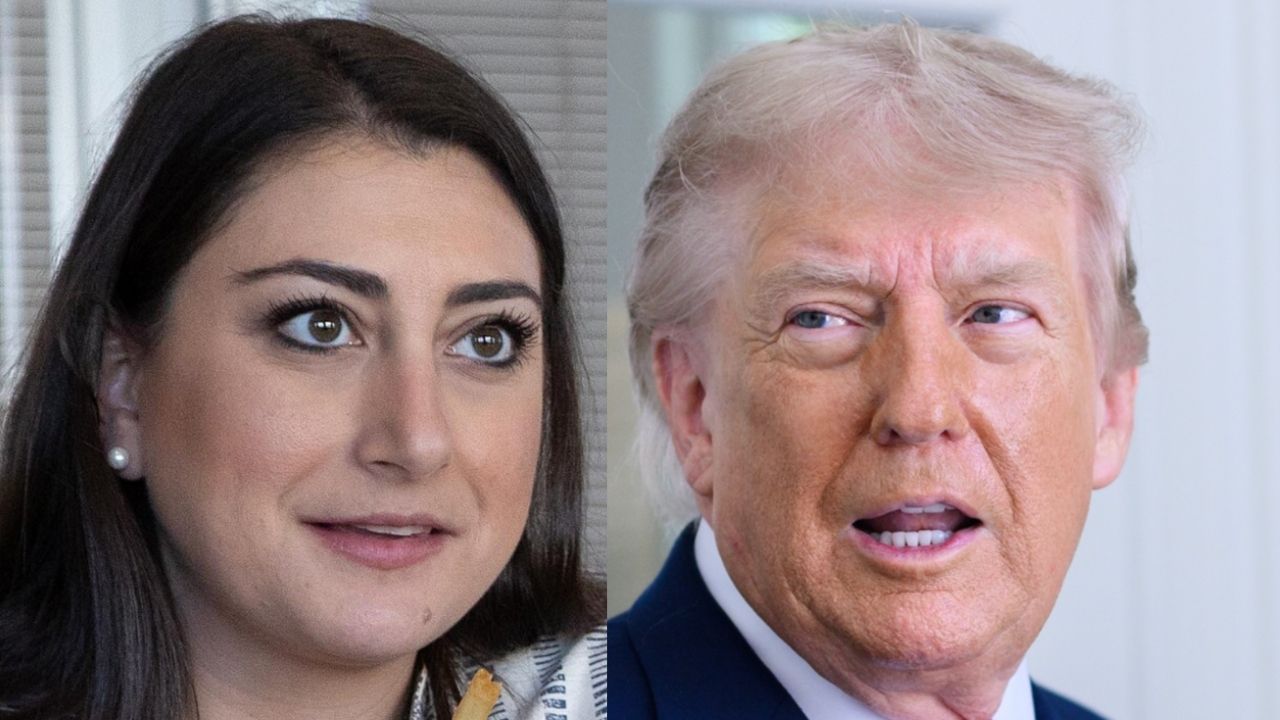
Rep. Sara Jacobs, a California Democrat who represents the country’s largest military community in San Diego, accused President Donald Trump on Monday of prolonging the six-month-old war in Iran in part because his personal financial holdings in the oil and gas industry have surged in value since the fighting began. The accusation, posted to X on the morning of September 14, 2026, points directly to a CNBC investigation published five days earlier documenting how Trump’s investment accounts continued buying and selling energy stocks throughout the war, often on days when his own administration’s decisions moved global oil markets.
Jacobs’ post, published at 10:04 a.m. Eastern time, reads in its entirety:
“If you’re wondering why Trump is focused on everything but ending the Iran war as quickly as possible… this might be why. While you pay more at the pump, Donald Trump is getting rich off oil stocks.”
The Reporting Behind the Accusation
Jacobs’ post links directly to a CNBC analysis published September 9 examining Trump’s financial disclosures, quarterly corporate reports and market data. The outlet found that Trump’s nine largest disclosed oil and gas holdings — including Chevron, ConocoPhillips, Exxon Mobil, Kinder Morgan, Marathon Petroleum, Occidental Petroleum, Phillips 66, Valero Energy and the Williams Companies — gained an estimated $1.5 million to $4.4 million in value between February 27, the eve of the war, and August 31.
CNBC’s review found that Trump’s accounts reported purchases and at least 23 sales involving the nine companies through June 29, the most recent date disclosed, though the filings do not specify exact share counts or execution prices, meaning the estimates do not reflect realized profits. The outlet also reported that it found no evidence Trump or his investment managers traded on advance knowledge of his decisions, that his financial interests influenced policy, or that he personally directed any transaction.
Trades Timed to Market-Moving Announcements
The CNBC investigation detailed a pattern of trading activity that coincided with major turns in the war. On March 2, the first trading day after the initial U.S.-Israeli strikes on Iran, Trump’s accounts reported purchases of shares in eight major oil and gas companies, including between $100,001 and $250,000 of Exxon stock. By August 31, the rise in Exxon’s share price alone had added an estimated $176,000 to $690,000 to that position. Three weeks later, on March 23, when Trump postponed threatened strikes on Iranian energy infrastructure and cited “very good and productive conversations,” Brent crude plunged nearly 11% and his accounts reported 16 additional oil and gas stock purchases that same day.
The reporting also noted a sale on April 7, when a Trump investment account reported selling between $500,001 and $1 million in Exxon shares roughly two and a half hours before Trump announced a two-week ceasefire with Iran. Exxon opened more than 6% lower the next morning. In total, CNBC estimated that if the shares involved in Trump’s 23 disclosed sales had been held since before the war, they would have been worth $36,000 to $95,000 more at the time of sale than they were on February 27.
Ethics Watchdogs Raise Conflict-of-Interest Concerns
Government ethics groups cited in the CNBC report argued that the pattern raises questions about the separation between Trump’s public decisions and his private finances. Donald Sherman, president and CEO of Citizens for Responsibility and Ethics in Washington, said that when a president can move markets through official decisions and personally benefit from the result, the public is left uncertain where national policy ends and private financial interest begins. Scott Greytak of Transparency International U.S. said that a discretionary investment account “is a smokescreen, not a blind trust,” arguing that Trump would still be aware his money is heavily invested in energy and would see the upside when his administration’s actions move those stocks.
The White House has pushed back on any suggestion of a conflict of interest. Spokesman Davis Ingle told CNBC that “neither President Trump nor any member of his family has any ability to direct, influence, or provide input regarding how the portfolio is invested or when investments are bought or sold,” adding that all investment decisions are made by independent managers and that there are no conflicts of interest. The Trump Organization did not respond to CNBC’s requests for comment on the September report, though it has previously said outside financial institutions control individual investment decisions through fully discretionary accounts that rely heavily on automated strategies.
Congressional Democrats Have Pressed the Same Case for Weeks
Jacobs’ Monday post follows an August report from Democratic staff on the congressional Joint Economic Committee, which estimated that Trump’s broader oil and gas portfolio had grown by as much as $15.5 million in value during 2026, with his disclosed holdings — reported at between $12.5 million and $45.6 million in his 2025 filing — estimated to be worth as much as $61.1 million by mid-August. Sen. Elizabeth Warren of Massachusetts wrote on X following that report that Trump “started a war with Iran this year — and sent oil and gas stocks soaring.”
The Joint Economic Committee’s Democratic staff also found that the nine oil and gas companies in Trump’s portfolio recorded a combined $47.6 billion in second-quarter profit, roughly triple the $15.9 billion they earned a year earlier. Exxon and Chevron, Trump’s two largest energy holdings, together reported $26.6 billion in profit, up from $9.6 billion. Meanwhile, the committee’s staff estimated that Americans had paid an extra $71.5 billion for gasoline since the war began, or roughly $604 per household.
Rising Prices at the Pump Amid Corporate Profits
Even after a recent pullback, U.S. crude was trading around $91 a barrel as of early September, 36% above prewar levels, while gas prices averaged $4.09 nationally, with AAA projecting the Labor Day weekend would be the most expensive on record for gas. Exxon CEO Darren Woods told investors on a July 31 earnings call that refining capacity relative to demand was the tightest he had seen outside the COVID-19 pandemic, adding that “these high margins lead to high product prices.” Phillips 66 CEO Mark Lashier struck a similar tone on August 5, telling investors that refining conditions would remain strong “even if peace broke out tomorrow.”
Polling suggests the issue could carry political weight heading into the November midterms. An early August Reuters/Ipsos survey of 4,505 adults found that 48% of Americans ranked the cost of living as their top voting issue, while 70% disapproved of Trump’s handling of it. Trump has publicly criticized oil companies for high prices even as his own accounts profited from their shares, telling reporters on August 3 that Chevron and ExxonMobil were “making too much money” and needed to “give some of that back to the public.”
Jacobs’ Sustained Opposition to the War
Monday’s post is the latest in a monthslong campaign by Jacobs against the war in Iran. In the immediate aftermath of the initial U.S.-Israeli strikes on February 28, Jacobs released a statement declaring that “Donald Trump’s strikes on Iran will go down as one of the biggest foreign policy blunders in American history,” arguing the administration had failed to learn from the United States’ record in the Middle East and was “wasting billions of taxpayer dollars” while setting the country up for “another endless war.”
Jacobs later introduced a war powers resolution aimed at ending the conflict and bringing home San Diego-based service members, saying at the time that “our service members deserve better than to be treated as expendable – and so do the American people who are being forced to pay over $1 billion per day for this military adventurism.”
She has also drawn a direct line between the Iran conflict and the Trump administration’s broader foreign policy toward Israeli Prime Minister Benjamin Netanyahu, saying that “Bibi Netanyahu has literally been trying to get presidents from both parties to do a regime change operation in Iran with him for decades,” and that “Donald Trump is just the first one stupid enough to actually do it.”
Part of a Broader Financial Windfall Since Returning to Office
Trump’s energy holdings represent one piece of a broader expansion of his personal wealth since he returned to the White House in January 2025. Forbes estimated Trump’s net worth at roughly $3.9 billion in 2024, before his fortune climbed to approximately $7.3 billion by September 2025 — a jump the outlet attributed largely to cryptocurrency ventures, including the $TRUMP and $MELANIA meme coins launched days before his inauguration, as well as gains tied to Trump Media and Technology Group. Some later estimates place his net worth closer to $6.4 to $6.5 billion amid market fluctuations.
Congressional Democrats have signaled they intend to keep scrutinizing those finances. On August 27, Rep. Jamie Raskin of Maryland opened an investigation into 1789 Capital, an investment firm where Donald Trump Jr. is a partner, alleging the firm benefited from Trump administration contracts, funding and regulatory actions; Trump Jr. told The Guardian the allegations were “unsubstantiated talking points.” Several Democrats have raised the prospect of expanding investigations into Trump’s stock trading and family business ventures if they gain control of either chamber of Congress after November’s midterm elections.
What Comes Next
Whether Jacobs’ latest post translates into further congressional action remains to be seen, but it reflects a consistent Democratic strategy of tying the war’s economic toll on ordinary Americans directly to Trump’s personal financial position. Raymond James senior investment strategist Pavel Molchanov, who covers the energy sector, told CNBC that oil prices and energy stocks would likely fall once the war ends, but cautioned that “when that happens is ultimately a political decision.”
For now, Jacobs’ message to her constituents and the broader public remains blunt: as Americans absorb record gas prices tied to a war now in its seventh month, the sitting president’s own energy investments have continued to climb in value — a dynamic she argues helps explain why the administration has shown little urgency to bring the conflict to a close.