
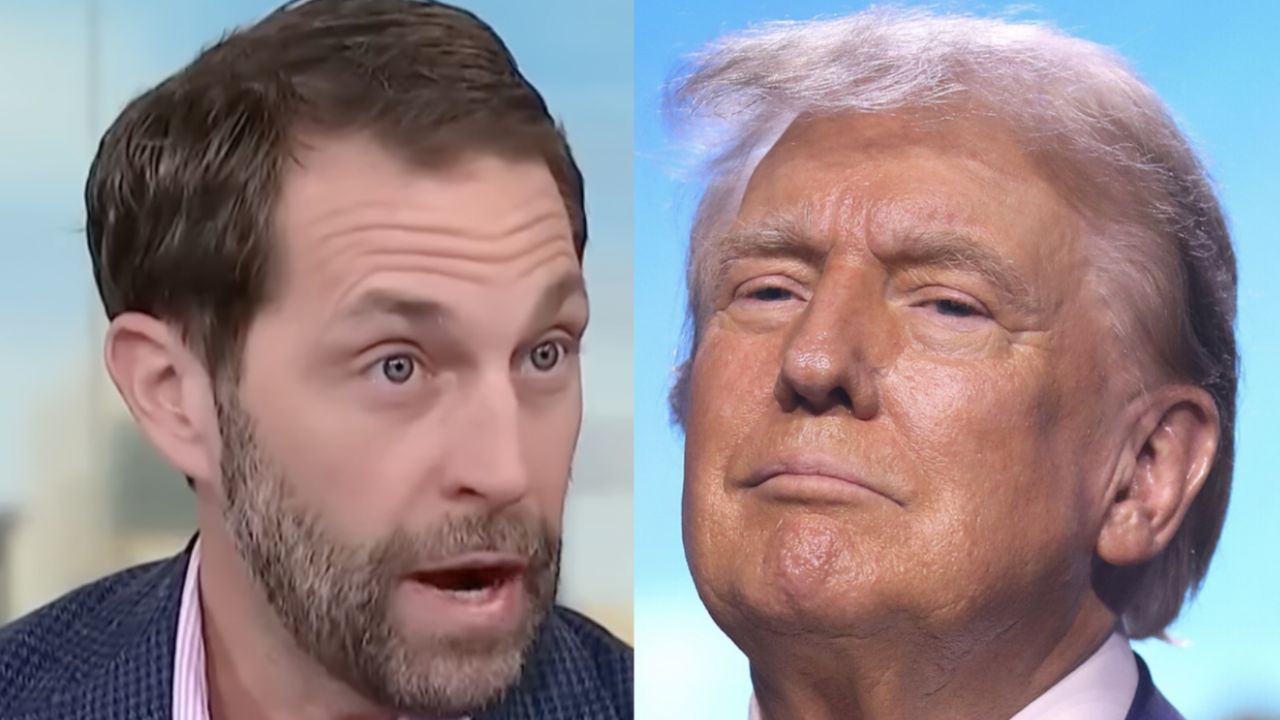
WASHINGTON — Rep. Jason Crow (D-CO), a former Army Ranger who served three combat tours in Iraq and Afghanistan, accused President Donald Trump on Thursday of abandoning U.S. allies and courting adversaries in order to distract from the war with Iran. The charge, posted on X, came six days after Trump announced a deal with Russian President Vladimir Putin on diesel fuel and the Treasury Department eased sanctions on Russian diesel exports.
The Post
Crow published the statement at 8:47 PM on Oct. 15, 2026. The full text reads:
“President Trump is betraying our allies & cozying up to our adversaries to cover for his failed war with Iran.
Rather than ending his forever wars, he’s turning on Ukraine, giving Putin a lifeline, and breaking promises to lower costs.”
Crow attached two reports to the post as context for his claims. One was a report from Aug. 15, 2025 on Trump’s statements before his Anchorage, Alaska summit with Putin. The other was the Oct. 9, 2026 report on the Russian diesel agreement.
What Trump Said Before the Anchorage Summit
The first attachment reported that Trump told journalists on the morning of the Aug. 15, 2025 summit that Russian business leaders were traveling with Putin’s delegation. He said they would not be “doing business until we get the war settled.” Trump said that if the meeting made progress, he would discuss business cooperation with Moscow. He also said Russia would face “very severe” economic consequences if no progress was made toward peace with Ukraine.
The Diesel Deal and the Treasury License
On Oct. 9, 2026, Trump announced on Truth Social that Putin had agreed to supply more than 300,000 tons of diesel to U.S. and global markets. A further 500,000 tons would follow in November, and 1 million tons “immediately thereafter.” Russia would later deliver an additional 3 million tons, depending on the condition of its refineries. The volumes total roughly 36 million barrels. If released all at once, that would cover about three weeks of a global diesel shortfall of 1.6 million barrels a day, a gap the International Energy Agency has attributed to offline refineries in the Middle East and Russia.
Within minutes of the announcement, the Treasury Department’s Office of Foreign Assets Control issued General License 135. The license authorizes transactions under the Russian Harmful Foreign Activities Sanctions Regulations and the Ukraine-/Russia-Related Sanctions Regulations “related to the sale, delivery, offloading, or importation, including importation into the United States,” of Russian-origin diesel. It runs through 12:01 a.m. eastern daylight time on April 7, 2027. The license does not authorize debits to accounts of the Central Bank of Russia, the National Wealth Fund or the Ministry of Finance.
Fuel Prices and the Midterms
The shift came as diesel prices averaged $6.28 a gallon on Oct. 9, up from $3.68 a year earlier, AAA data showed. The increases have hit farm states especially hard and have fueled Republican concern about losing the House and Senate in the Nov. 3 midterm elections. The move also marked a break from earlier steps, as Trump had signed a bipartisan measure the previous month meant to pressure major buyers of Russian oil and gas.
Ukrainian President Volodymyr Zelensky warned that Russia would “repay” the diesel “with further terror and perfidy.” Rep. Michael McCaul (R-TX) said he was concerned that lifting sanctions “will only fund the Kremlin’s war machine.” Clayton Seigle, an energy-security scholar at the Center for Strategic and International Studies, said the arrangement could let Russia export more than 100,000 barrels a day of diesel it cannot absorb domestically over the winter.
Bipartisan Pushback in Congress
The criticism has not been confined to Democrats. A bipartisan group of senators urged Trump on Tuesday to withdraw from the deal and rescind the sanctions waiver, writing that it “damages American security interests and is a betrayal of the people of Ukraine.” They called it “a gift to our adversary and a betrayal of our Allies.” Separately, five House Republicans and 17 House Democrats asked Trump to cancel the agreement and revoke the license, and asked him to explain how it squares with an existing ban on Russian energy imports.
The Starlink Dispute
Ukrainian authorities said this week that Starlink had restricted some military internet services, disrupting operations that include interceptor drones. Ukrainian official Serhiy Beskrestnov warned that the slowdown “cannot be a coincidence” after the diesel deal. Elon Musk wrote on X that any limits on speed or usage are decided by the U.S. military and “ultimately” the president. A Trump administration official said the White House had nothing to do with the restrictions, and officials pointed to a technical malfunction. Trump said Tuesday that the United States had not stopped sharing intelligence with Ukraine. He also suggested on Saturday that Zelensky had not done enough to end the war, blaming him for high U.S. diesel prices.
Crow’s Record on Iran
Crow’s statement fits a position he has stated since the war began. On Feb. 28, 2026, the day of the initial strikes, he called the war “a war of choice with no clear end game, no authorization from Congress, and little support from Americans.” He urged Congress to return to Washington immediately to vote on a War Powers Resolution. On March 30, he and every Democrat on the House Armed Services Committee asked Chairman Mike Rogers to hold public hearings on the war.
On April 15, Crow and Sen. Michael Bennet (D-CO) said “Russia is cashing in from high oil prices.” On May 1, Crow introduced a War Powers Resolution with Rep. Seth Moulton (D-MA). He delivered a House floor speech on May 20 ahead of a vote on a Crow-backed resolution. When the House passed a bipartisan War Powers Resolution on June 3, Crow called the war “an unmitigated disaster” and said 13 servicemembers had died. On July 22, ahead of another vote on his resolution with Rep. Pramila Jayapal (D-WA), he put the death toll at 18.
At the six-month mark on Aug. 28, Crow said Trump “campaigned on ending wars in the Middle East” but had “done the exact opposite of what he campaigned on.” He said 18 servicemembers were dead, hundreds were wounded and taxpayers had spent billions on a war that “has only raised their prices at home.” The release said he continues to lead legislation to prohibit federal funding for the war.
Crow’s Record on Russia and Ukraine
Crow’s focus on Russia and Ukraine predates the Iran war. In December 2021 he led a congressional delegation to Ukraine. After Russia’s full-scale invasion in February 2022, he called for comprehensive sanctions to shut Russia off from the international financial system, long-term support for Ukrainian resistance and a realignment of NATO posture. He also co-introduced a bipartisan House resolution backing Ukraine. Weeks into the invasion, he said sanctions were a “long game” and that the United States had to make sure it was “sticking with them.”
During the Biden administration, Crow led bipartisan colleagues in a letter urging the United States to send fourth-generation fighter aircraft and ATACMS missiles to Ukraine. Russia later placed him on a list of 963 Americans permanently barred from entering the country. In 2020, as a House impeachment manager, he criticized the withholding of aid to Ukraine “while our friends were at war with Russia.”
What It Means
The diesel deal now sits at the intersection of two issues Crow has pressed for months: the cost of the Iran war and the pressure on Russia. Surging diesel and gasoline prices have driven the White House to seek relief, and the Treasury license is the first sanctions easing tied explicitly to U.S. fuel costs ahead of the midterms. Legal analysts note the president likely has the authority to issue the license, but also that allied sanctions on Russia’s oil sector may limit how much fuel actually reaches markets. Crow’s post frames the arrangement as a political rescue for Moscow and a distraction from the war with Iran. The license is set to run through April 7, 2027.