
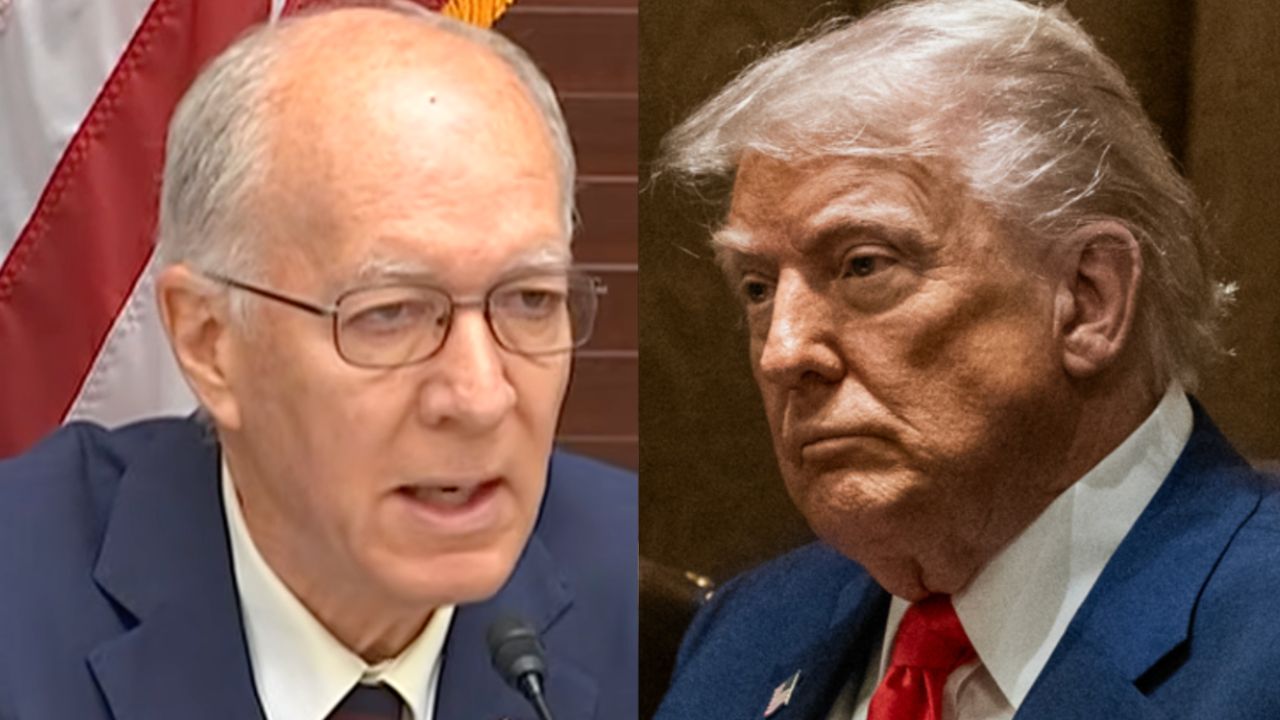
U.S. Rep. Bill Foster, D-Ill., said on Sunday that hard-working Americans should be able to enjoy a relaxing Labor Day weekend, but that soaring gas and diesel prices tied to President Donald Trump’s war in Iran are instead adding financial stress to families across the country. Foster’s statement, posted to X on the morning of the holiday, cited specific per-gallon figures showing gas above $4 and diesel approaching $6, both sharply higher than the same weekend a year ago.
The Post
Foster published his statement on X at 11:09 a.m. on September 6, 2026. The full post reads as follows:
“Hard-working Americans should get to relax and enjoy Labor Day Weekend, but soaring gas and diesel prices from Trump’s war in Iran are causing added stress for families.
Gas is over $4 a gallon, nearly a dollar higher than last year. Diesel is close to $6 a gallon, $2 up from last year.”
Foster attached a news article to the post detailing the price increases in greater depth, drawing a direct line between the ongoing conflict and the cost of fuel heading into the holiday weekend.
Gas and Diesel Prices Climb Nationwide
According to the article Foster linked, Illinois drivers were paying an average of $4.32 per gallon for regular gasoline as of the Thursday before Labor Day, based on AAA data, while the national average stood at $4.14 per gallon. That marks a substantial increase from the same point last year, when Illinois motorists paid an average of $3.49 per gallon and the national average was $3.19.
Diesel prices showed an even sharper climb. The national average rose from $3.76 a year ago to $5.82, according to GasBuddy data cited in the article, surpassing the previous single-day record of $5.819 set on June 17, 2022.
The War in Iran and Rising Oil Costs
The higher fuel prices are tied to the United States’ ongoing war with Iran, which had entered its sixth month as of the holiday weekend. Oil prices moved higher in the days leading up to Labor Day as the conflict intensified, with Iran striking Kuwait in retaliation for U.S. bombardments earlier in the week. That exchange followed a U.S. strike on Iranian rocket launchers on an island in the Strait of Hormuz, which American officials said were being positioned to deploy mines into the waterway.
The renewed fighting pushed U.S. crude prices sharply higher over the course of the week, though the rate of increase eased somewhat by Thursday. Brent crude, the international benchmark, rose 0.1% to $95.75 per barrel, while U.S. benchmark crude rose 0.5% to $91.51 a barrel.
AAA noted that crude oil accounts for roughly half of what consumers pay at the pump, and that strong refinery demand combined with relatively low crude oil inventories continue to support elevated fuel prices nationwide.
Chevron’s Venezuela Deal and Trump’s Promises
Against this backdrop, oil giant Chevron confirmed it will expand operations in Venezuela following an agreement announced by Trump to develop the country’s oil reserves, which also gives the Pentagon a financial stake in the resulting profits. Trump has said the arrangement would “substantially lower” gasoline prices in the United States.
Energy analysts, however, have cautioned that Venezuela’s severely degraded infrastructure and continued international sanctions mean its daily oil output remains just over 1 million barrels, compared with the 10 million to 11 million barrels produced daily by Saudi Arabia and roughly 14 million barrels produced daily by the United States. Amy Jaffe, director of the Global Energy, Climate and Sustainability Lab at New York University, told the Associated Press that new production facilities in Venezuela’s Orinoco region could take two to four years to come online, with other areas lacking pipeline infrastructure potentially taking even longer.
Holiday Travel Adds to the Strain
The price spike arrived as the Illinois Tollway anticipated more than 8.5 million vehicles traveling over the Labor Day weekend, with Friday expected to be the heaviest travel day at more than 2 million vehicles, and Tuesday close behind at roughly 1.8 million, compared with an average daily volume of about 1.7 million vehicles on the system. AAA noted that Labor Day travel tends to compress into a shorter window than other holidays, mixing with normal commuter traffic to create significant congestion.
The Illinois Department of Transportation said some construction-related lane closures would be lifted where possible for the holiday weekend to ease travel disruption, with non-emergency closures suspended from 3 p.m. Friday through 11:59 p.m. Monday. Ongoing work zones, including ramp closures connecting I-290 to I-294 on the Tri-State Tollway, remained in place and continued to affect drivers.
Foster’s Message to Constituents
Foster’s post frames the fuel price increases as a direct consequence of the administration’s war footing in Iran, positioning the added financial burden on American families as a cost of the conflict that coincides with a holiday traditionally associated with rest and travel. His statement did not propose specific policy remedies but centered on drawing public attention to the gap between the price of gas and diesel this year versus last, and attributing that gap to the war.
As the war in Iran continues into its sixth month, fuel costs remain a visible point of friction between congressional Democrats and the Trump administration, with Foster’s Labor Day statement adding to a broader pattern of lawmakers linking domestic economic pressures, including gas prices and the national debt, directly to the ongoing military conflict.