
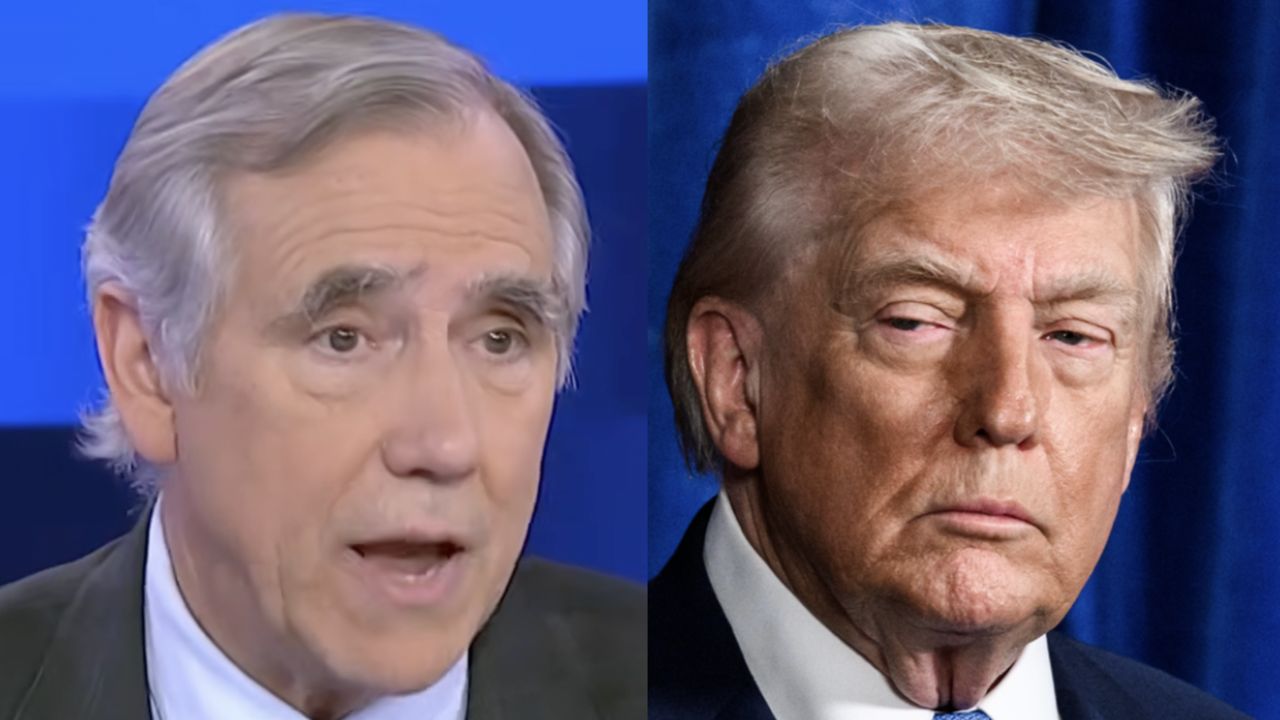
Merkley Ties Soaring Diesel Prices Directly to the War
U.S. Senator Jeff Merkley (D-OR) used a social media post on Saturday, September 26, 2026, to accuse President Donald Trump of driving up fuel costs for working Americans through what he described as an illegal war with Iran, while renewing his call for Congress to pass a War Powers Resolution ending U.S. involvement in the conflict. The senator’s post came less than 48 hours after his own War Powers Resolution failed on the Senate floor by a single vote, and as national diesel prices continue to set records nearly seven months into the war.
The Full Post
Merkley’s statement, posted to X at 3:25 PM on September 26, 2026, read in its entirety:
“The national average price for a gallon of diesel is now $6.50!
Trump’s illegal war is screwing over famers, truckers, and folks across the country trying to put food on the table.
I’m focused on passing a War Powers Resolution to end the war with Iran.”
A Senior Foreign Relations Committee Member
Merkley, a senior member of the Senate Foreign Relations Committee, has positioned himself throughout 2026 as one of the chamber’s most consistent voices pushing to end U.S. military involvement against Iran, repeatedly forcing floor votes on War Powers Resolutions aimed at requiring Trump to withdraw forces from hostilities absent explicit congressional authorization. Saturday’s post extended that campaign into the realm of consumer economics, framing the price at the pump as a direct and personal cost imposed on farmers and truckers by the administration’s handling of the war.
Diesel Hits an All-Time High
The figure Merkley cited reflects a well-documented surge in fuel costs since the war began. The national average price for diesel reached about $6.44 per gallon in the days before Merkley’s post, according to AAA data, and had already surpassed $6 a gallon for the first time in U.S. history earlier in September. By late September, diesel had climbed to roughly $6.51 a gallon — up from $3.69 a year earlier, with the fuel’s cost rising 42 cents in a single week.
From $3.52 to Over $6.50 in Seven Months
The scale of the increase becomes starker when measured against pre-war levels. In January 2026, before the U.S. and Israel first struck Iran in late February, the average diesel price nationally stood at $3.52 a gallon — meaning prices have jumped more than 78 percent since the conflict began. A separate analysis found diesel prices rose from an average of $3.75 on February 28 to more than $6.50 by late September, a spike researchers said has produced a domino effect of rising inflation, higher borrowing costs, and climbing mortgage rates.
Why Diesel in Particular Has Spiked
Energy analysts have pointed to the closure of key Middle East shipping corridors, including the Strait of Hormuz, as a central driver of the increase, compounding a domestic refining bottleneck that predates the war. Diesel refining capacity in the United States has shrunk for years, with only one new refinery built in the past five decades and more than a dozen plants converted to renewable diesel production, which cuts conventional output. As of late August, crude inputs to refineries reached roughly 17.5 million barrels a day, with refineries running at nearly 98 percent of capacity — leaving little room to absorb additional demand shocks from the war.
How This War Compares to Past Fuel Shocks
The scale of the diesel spike has drawn comparisons to past global energy disruptions. Economists have noted that the rise in diesel costs since February represents the largest fluctuation in the fuel’s price since Russia’s 2022 invasion of Ukraine rattled global oil markets. Unlike the Ukraine-driven shock, which primarily disrupted crude and natural gas exports from Russia, the current spike has been intensified by the closure of the Strait of Hormuz, a chokepoint for Gulf oil shipments, alongside reported damage to energy infrastructure in Saudi Arabia and Qatar — leaving diesel prices, adjusted for inflation, at levels last seen during the 2022 disruption and rising further since.
The Strategic Reserve Has Been Drained
Oil industry executives have also warned that the federal government’s usual tool for cushioning fuel shocks is no longer available. The U.S. has drawn down its Strategic Petroleum Reserve in an effort to push oil supply back toward pre-war levels, leaving the administration with fewer options to blunt further price increases should the conflict escalate. The same reporting noted that the effort to restore oil flows had also come at the cost of drawing down weapons stockpiles.
The Resolution That Failed by One Vote
Merkley’s Saturday statement followed directly on the heels of a Senate vote just two days earlier. On September 24, 2026, the Senate voted 50-49 to reject a War Powers Resolution — the measure Merkley had sponsored — that would have directed Trump to end hostilities with Iran absent explicit congressional authorization. Four Republicans, Susan Collins of Maine, Rand Paul of Kentucky, Lisa Murkowski of Alaska, and Thom Tillis of North Carolina, crossed over to support the resolution, while Democrat John Fetterman of Pennsylvania voted against it.
A Largely Symbolic but Politically Charged Vote
Because the measure took the form of a concurrent resolution, it would not have carried the force of law even had it passed, and it was never subject to a presidential signature or veto. Reporting on the vote noted it marked roughly the seventh time in recent months that the Senate has failed to adopt a war powers measure tied to the Iran conflict, with only one such resolution ever securing a majority over the course of the year — a measure the White House has said it will not treat as binding, citing constitutional objections to the War Powers Act itself.
Merkley’s Long-Running Campaign on the Issue
Saturday’s post was consistent with a position Merkley has held publicly since the earliest days of the conflict. In a February 28, 2026 statement issued the day the war began, Merkley invoked James Madison’s warning that “the Executive is the branch of power most interested in war, and most prone to it,” declaring: “Donald Trump is not a king. These strikes are wrong and unauthorized.” He added that the country had already spent “more than $8 trillion” and lost more than 7,000 servicemembers across two decades of war in Iraq and Afghanistan, warning that “families carry that pain for generations.”
Repeated Floor Fights and Failed Votes
Merkley has forced or joined War Powers votes on multiple occasions since, including a March 4 vote in which he said the Trump administration had “repeatedly misled the American people about its plans for war against Iran, sending our nation down a dangerous path,” and a May 13 vote after which he said Senate Republicans had “once again rubber-stamped Trump’s unconstitutional war with Iran,” adding that “the Strait of Hormuz—which was open before the war—remains closed, choking off vital supplies and raising costs for working families.”
Calling the Operation an “Epic Failure”
Ahead of a May floor vote, Merkley argued the military campaign, formally named Operation Epic Fury, should instead be called “Epic Failure,” telling colleagues: “We have in this situation no access to the highly enriched uranium, we have strengthened the [Iranian] hard-liners, we have weakened the reformers, we have damaged our relationship with our allies.”
A Growing, If Still Insufficient, Republican Break
Merkley’s push has coincided with a slow erosion of Republican unity behind the war. The House passed a war powers resolution in June by a vote of 215-208 with four Republicans joining Democrats, and passed a second such measure again in July, while a growing number of GOP senators facing competitive midterm races have begun voicing discomfort with the war’s economic toll. Even so, Senate Majority Leader John Thune has continued urging Republicans to stand behind the president, and the White House has maintained that any war powers resolution passed by Congress lacks constitutional force over the president’s authority as commander in chief.
The Political Stakes Ahead of November
The renewed attention to fuel prices comes as both parties look toward the November 3 midterm elections, with Democrats seeking to use the war’s economic fallout, including diesel and gasoline prices, as a central campaign issue against vulnerable Republican incumbents. Throughout 2026, the Senate has held roughly 14 separate votes on Iran-related war powers resolutions, with only two securing majority support, underscoring how central — and how repeatedly unsuccessful — the legislative fight has been for Democrats seeking to end the conflict through Congress.
What Comes Next
Merkley’s office has not, as of Saturday, issued a formal press release elaborating on the X post, though the statement is consistent with the senator’s established pattern of pairing floor votes with public statements tying the war’s costs directly to household expenses. With diesel prices continuing to set records and the Senate’s most recent effort to end the war falling one vote short, Merkley signaled Saturday that he intends to keep pressing for a resolution, a fight that is likely to continue playing out on the Senate floor and on social media in the weeks leading up to the midterm elections.