
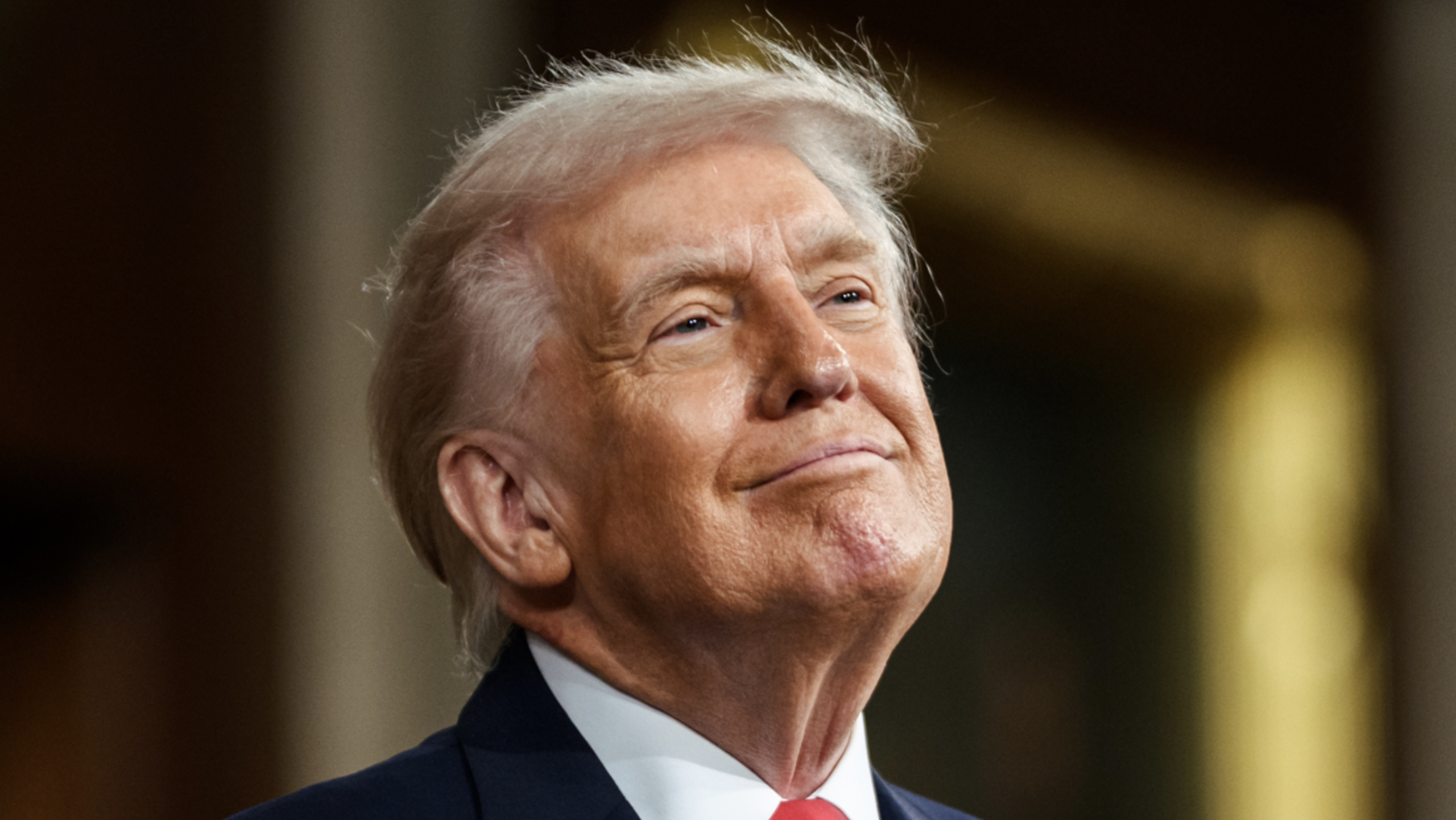
A major American airport changed its name Thursday for the first time in decades. Effective July 9, 2026, Palm Beach International Airport — the primary commercial gateway to one of the wealthiest and most politically charged zip codes in the United States — is now officially President Donald J. Trump International Airport. The rebrand, mandated by Florida state law and nearly a year in the making, represents one of the most consequential airport renamings in recent American history, touching everything from FAA navigation codes to airline baggage tags and carrying a price tag of $5.5 million.
The Trump family marked the occasion before most of the country was awake. Eric Trump, the president’s son, boarded a private plane and ensured his family was aboard the first aircraft to touch down at the newly christened facility in the pre-dawn hours.
“There’s no way in hell I was letting UPS be the first plane to land,” Eric Trump said in an interview with Fox & Friends.
State Law Drove the Change — Not the County
The renaming was not a local decision. On March 30, 2026, Florida Governor Ron DeSantis signed legislation amending state statute to preempt local government authority over the naming of major commercial service airports — defined as those classified by the FAA as large or medium hub airports. The law, CS/CS/HB 919, codified the names of all seven of Florida’s major commercial service airports, with Palm Beach International as the only one whose name was changed.
The bill passed the Florida Senate 25-11 and cleared the House 81-30 before DeSantis signed it. The legislation required Palm Beach County, as owner and operator of the airport, to pursue all necessary approvals — including from the Federal Aviation Administration and the holders of the Trump name trademark — before implementing the change.
Trademark Agreement, FAA Sign-Off, and a May Deadline
Because the name “President Donald J. Trump International Airport” carries trademark protection, Palm Beach County entered into a formal Naming Rights and License Agreement with the rights holders on May 5, 2026. The agreement, required to shield the county from potential trademark infringement liability, outlined each party’s roles and responsibilities and authorized the commercial use of the name at no cost to Palm Beach County — a condition written into the original legislation.
Federal Aviation Administration coordination ran parallel to the legal process. As of July 9, both the airport’s FAA locational identifier — the code used by pilots, air traffic controllers, and aviation navigation systems — and its ICAO identifier changed. The FAA code moved from PBI to DJT. The ICAO identifier shifted from KPBI to KDJT. These are the codes governing flight planning and technical aviation infrastructure, distinct from the codes passengers use when booking travel.
Travelers: Use PBI Until August 18
For passengers, the transition is more gradual. The IATA code — the three-letter identifier appearing on airline tickets, baggage tags, and reservation systems — will not change until August 18, 2026, when it will also become DJT. The change was initiated by the International Air Transport Association at the request of several airlines operating at the airport. Until that date, travelers booking flights or checking baggage should continue using PBI. JetBlue Airways is the airport’s largest carrier. Delta Air Lines and American Airlines together account for roughly two-thirds of all flight operations at the facility.
Airport officials were emphatic that none of the underlying operations have changed. All routes, schedules, and passenger services continue without interruption. Palm Beach County retains full ownership and operational control of the airport. The renaming is, by legal definition, a branding designation only — one that does not require a new legal entity or changes to any existing contracts or documents.
$5.5 Million Cost, Split Between State and Airport Revenues
The transition carries significant cost. The Palm Beach County Department of Airports estimates the total price of implementation at approximately $5.5 million, covering signage, wayfinding systems, branding materials, technology infrastructure, and printed materials, all of which will be updated in phases. The State of Florida appropriated $2.75 million toward the project. The remaining balance will be drawn from the Department of Airports’ operating budget and capital improvement program. Airport officials confirmed that no local property tax dollars will be used — the airport operates entirely on its own revenues.
The airport has acknowledged that additional funding may be needed to complete all phases of the rebranding, and is working with its legislative delegation to identify further state appropriations and eligible grant sources.
A Name Now Spreading Across American Institutions
The Palm Beach airport joins a rapidly growing list of American institutions bearing the president’s name since he returned to the White House for a second term. Trump’s name has been affixed to a planned class of Navy warships, a visa program for wealthy foreign nationals, a government prescription drug pricing website, and federal savings accounts for children. In Washington, the Trump name was added to the United States Institute of Peace building, though courts have blocked efforts to apply it to the John F. Kennedy Center for the Performing Arts.
The airport’s location adds particular weight to the renaming. Palm Beach is home to Mar-a-Lago, Trump’s primary residence and the social and political center of his movement.
“I don’t think there’s anybody more synonymous with Palm Beach than Donald Trump in maybe all of Florida,” Eric Trump said in a separate Fox News interview.
Other American airports have been named for political figures — Little Rock’s airport bears the names of both Bill Clinton and Hillary Clinton, though it retained its LIT code. Airports in Las Vegas and San Jose have also been renamed after former lawmakers. The Palm Beach rebrand is notable in that both FAA and IATA codes are being changed to match the president’s initials, a degree of institutional alignment that goes further than most comparable renamings.
The airport said it will continue to provide updates to airlines, partners, and the public through its official website and communications channels as the phased signage and branding transition continues through the coming weeks.