
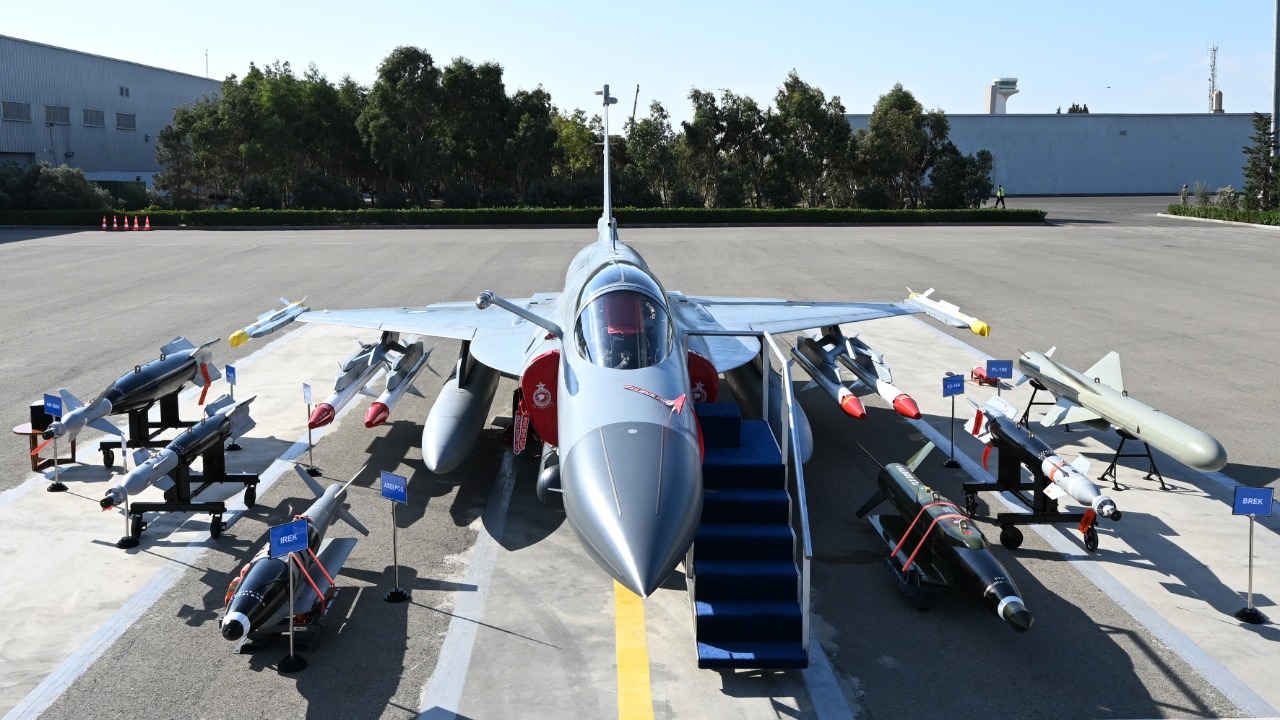
Pakistan’s rapid expansion as an arms producer is reshaping the strategic map of South Asia and the wider Islamic world, and it is doing so at a moment when Washington is searching for flexible partners. As Pakistan moves from a buyer of foreign systems to a supplier of aircraft, missiles, and armored vehicles, it is creating leverage that can either deepen its ties with the United States or pull it further into rival security blocs. For the United States, Pakistan’s defense industrial rise is less a problem to be managed than a potential asset that, if handled with care, can support regional balance without sacrificing commitments to India.
The opportunity lies in aligning Pakistan’s search for export markets and economic recovery with American goals on counterterrorism, maritime security, and supply chain resilience. That will require a more deliberate strategy than the episodic engagement that has defined the relationship since the Cold War, and a willingness in Washington to treat Pakistan as a multidimensional actor rather than a single-issue partner.
Pakistan’s arms industry comes of age
The starting point is the scale of Pakistan’s transformation from a dependent importer to a significant producer. According to the Stockholm International Peace Research Institute, often cited as SIPRI, Pakistan ranked 10th globally in arms imports in 2021, yet it has simultaneously built a domestic sector that now supplies a large share of its own needs and is pushing aggressively into export markets. The country’s defense ecosystem, anchored in entities like Pakistan Ordnance Factories and Pakistan Aeronautical Complex, is increasingly central to Pakistan’s economic planning and foreign policy outreach.
That shift is visible in a reported 13 billion dollar drive to move from minor player to regional force in defense exports, with expanding markets across Asia, Africa, and the Middle East. Interest in Pakistani platforms such as the JF-17 fighter jet, co-developed with China, and a growing catalog of armored vehicles and precision munitions, has turned arms sales into a tool of statecraft. A recent analysis of Pakistan’s weapons exports highlighted a KTrade report that tracks rising demand for Pakistani tanks, naval systems, and small arms from Saudi Arabia to Sudan, underscoring how defense production is now a pillar of Islamabad’s outreach to the Arab world.
Economic recovery through military diplomacy
For Pakistan’s leadership, arms production is not only about prestige or deterrence, but it is also a core element of economic recovery. One assessment of Pakistan’s strategic shift describes how the state is marketing its “stability” and institutional continuity as value-added components of its exports, presenting defense deals as bundled packages of training, maintenance, and political alignment. This approach aims to turn military diplomacy into a revenue stream that can ease pressure on foreign exchange reserves and reduce reliance on multilateral bailouts. It also gives Pakistan’s armed forces a direct stake in sustaining external relationships that keep factories running and contracts flowing.
The fiscal logic is sharpened by a 20 percent hike in defence spending that analysts say will force Islamabad to walk a fine balance between security needs and social sector investment. To justify that burden at home, the government is under pressure to show that defense outlays generate export earnings and jobs rather than simply consuming scarce resources. That imperative explains why Pakistan is courting buyers from Saudi Arabia to Sudan and why it has re-emerged, as one account put it, as a key strategic player that has even presented practical solutions to the United States on critical minerals and regional connectivity.
Strategic opening for Washington amid regional rivalries
For Washington, the growth of Pakistan’s defense sector presents a chance to rebuild a relationship that has long oscillated between tactical cooperation and deep mistrust. Analysts of U.S.-Pakistan ties argue that the relationship has often been a “path to nowhere,” focused narrowly on counterterrorism or Afghanistan, while the United States has steadily bolstered its ties with India. A related scenario analysis notes that the most likely trajectory is that the U.S. will continue to strengthen its relations with India The, treating that partnership as a vital relationship that anchors its Indo-Pacific strategy. Yet the same assessment acknowledges that Pakistan retains unique leverage in Afghanistan, the Gulf, and among Muslim-majority states that cannot be replicated by New Delhi.
The emerging arms industry gives Washington a new entry point. A detailed argument on Pakistan’s burgeoning arms industry contends that the United States should treat Pakistan’s defense exports as a platform for structured cooperation, ranging from co-production of less-sensitive systems to joint training and maintenance hubs. The broader lesson that the piece suggests extends beyond Pakistan: Washington should expect strategic flexibility in return for support, while remaining transparent with New Delhi about the scope and limits of any defense collaboration. In practice, that could mean U.S. backing for Pakistani participation in peacekeeping, maritime patrols, or counterterrorism missions, paired with clear assurances to India that no cooperation will erode its qualitative edge.
Managing risks: missiles, alliances, and a crowded neighborhood
The opportunity is real, but so are the risks. The United States has already accused Pakistan of developing long-range missiles that could carry nuclear warheads, a charge detailed by Arms Control Today By Kelsey Davenport and Daryl G. Kimball. Concerns about missile proliferation and nuclear doctrine will inevitably shape how far Washington is willing to go in supporting Pakistan’s defense industry. At the same time, Pakistan is deepening its own network of security ties, including a Saudi-Pakistan defence pact that regional observers describe as a potential game changer for West Asia and South Asia, after an agreement announced on 17th September, Saudi Arabia that signaled closer coordination on training and equipment. These moves underscore that Islamabad will not wait for Washington’s blessing before expanding its footprint.