
Public opinion in the United States has settled on a clear verdict about President Donald Trump’s push to acquire Greenland: most people want no part of it. While the White House frames the idea as a bold strategic move, only about one in five Americans is prepared to endorse such an extraordinary expansion of U.S. territory. The gap between Trump’s rhetoric and the electorate’s skepticism is now one of the sharpest divides in his foreign policy agenda.
As I weigh the polling and the strategic arguments, I see a president intent on reshaping the map and a public that views the proposal as both risky and remote from daily concerns. The numbers are not a blip, they reflect a durable discomfort with the notion of taking control of a self-governing part of the Kingdom of Denmark, even in the name of national security or economic opportunity.
Polls show a hard public “no” on Greenland
The central fact in this debate is that Americans are overwhelmingly opposed to Trump’s Greenland gambit. A national survey conducted earlier this week found that 75% of Americans oppose the United States attempting to take control of Greenland, while only about one in five respondents expressed support for the effort, a figure that aligns with the headline finding that just 17% approve of the acquisition push. In that same research, pollsters Jennifer Agiesta and Ariel Edwards-Levy reported that resistance to the idea cuts across party lines, underscoring how far the president’s ambitions sit from mainstream sentiment, as reflected in the national poll.
Other surveys reinforce that picture rather than complicate it. Reporting by Sophie Brams describes how “Less than 20 percent of Americans approve of Presi” Trump’s Greenland acquisition efforts, a formulation that mirrors the “only 1 in 5 Americans support” language used in another poll write-up that explicitly notes the research methods as a poll and again stresses that support is stuck below 20%. Those findings, detailed in coverage of the survey and echoed in a separate poll report, dovetail with analysis that “Overall, 55% of Americans oppose the hypothetical purchase of Greenland,” a figure that comes from The Reuters polling series and is cited in a broader look at how Americans view annexation and territorial expansion.
Trump’s maximalist stance collides with that data
Against that backdrop, Trump has chosen not to trim his sails but to escalate his language. In a recent appearance, he declared that “anything less” than U.S. control of Greenland is “unacceptable,” a phrase that leaves little room for compromise with Copenhagen or Nuuk and that signals to his supporters that he views the island as a test of American resolve. That same report notes that only 39 percent of Americans approve of his handling of foreign policy overall, a figure that suggests his Greenland rhetoric is landing in a context of broader unease about his approach to allies and adversaries, as detailed in coverage of his comments on NATO and Denmark.
Trump has also warned that Greenland’s defiance is a “major problem” ahead of his meeting with Danish officials, framing the island’s resistance as an obstacle to U.S. national security rather than a legitimate expression of self-government. In that same context, Drew Horn, the CEO of GreenMet, has argued that control of Greenland’s mineral resources could bolster U.S. national security, a claim that helps explain why the White House is so fixated on the island despite the polling headwinds. Those arguments, laid out in reporting on Trump’s warnings and on Drew Horn’s role as CEO in the debate over Greenland’s defiance, show a president leaning on security and resource narratives that have yet to persuade most voters.
The strategic and financial stakes behind the fantasy
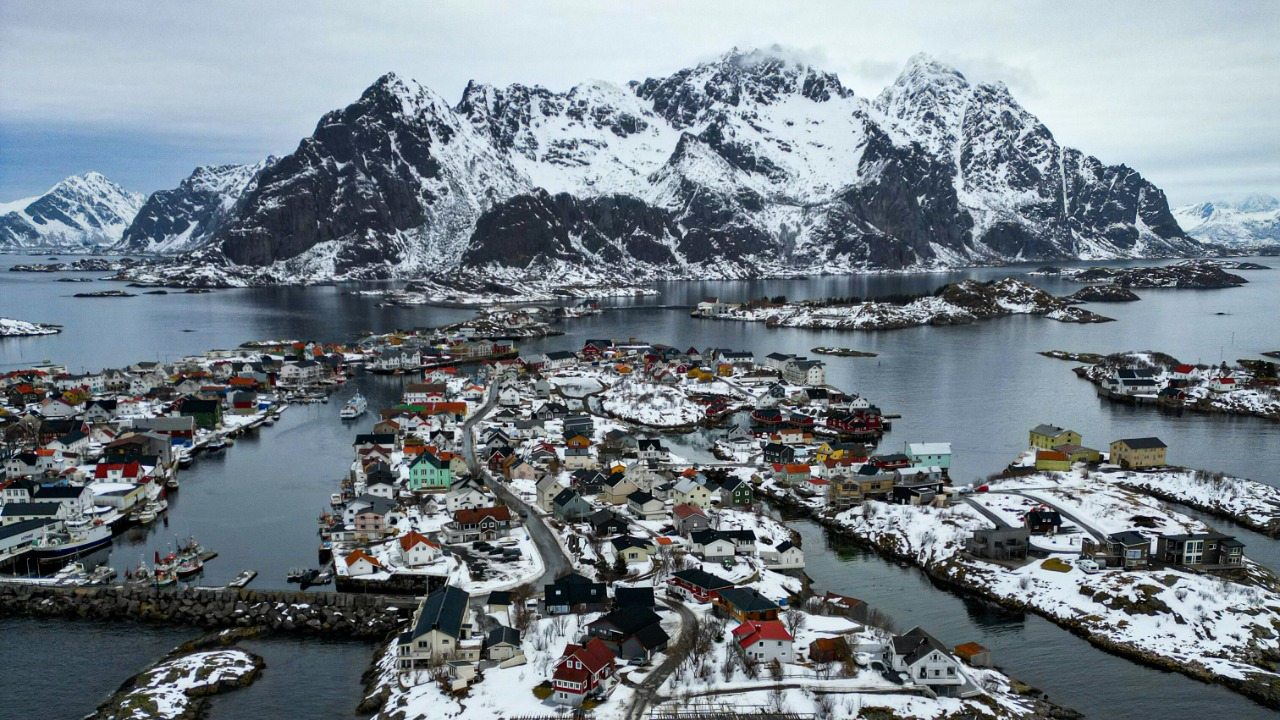
When I look past the polling, the strategic logic is not entirely fanciful. Greenland sits at the center of the Arctic, a region where melting ice is opening new sea lanes and intensifying competition among the United States, Russia, and China. The island’s geography, visible in any basic overview of Greenland, gives it outsized importance for missile warning systems, undersea cables, and rare earth minerals that feed advanced manufacturing and defense technologies. Trump’s advisers and allies have repeatedly pointed to those factors to argue that bringing Greenland under U.S. control would secure a long term strategic advantage.
The price tag, however, is staggering even before any political cost is counted. Internal estimates described in one report suggest that buying Greenland could cost as much as $700 billion for Trump, a sum that would rival the entire annual defense budget and that would almost certainly require a generational commitment of taxpayer funds. That analysis, attributed to reporting by Gordon Lubold, Courtney Kube, Abigail Williams and Monica Alba, underscores how any acquisition would reshape federal spending priorities and invite fierce debate over whether such an investment is justified, as laid out in the examination of how $700 billion might be marshaled “one way or the other.”
Greenland, Denmark, and the limits of American power
For all of Trump’s insistence, the people who actually govern Greenland and Denmark have been clear that the island is not for sale. President Donald Trump has pressed forward with his desire to take control of Greenland, but officials in Copenhagen and Nuuk have stressed that any change in status must be in the interest of the kingdom and respect Greenland’s autonomy. A detailed explainer on why Trump wants Greenland notes that Polls show a U.S. takeover is unpopular and that local leaders view the island’s resources and strategic position as assets to be developed in cooperation with NATO allies rather than transferred outright.