
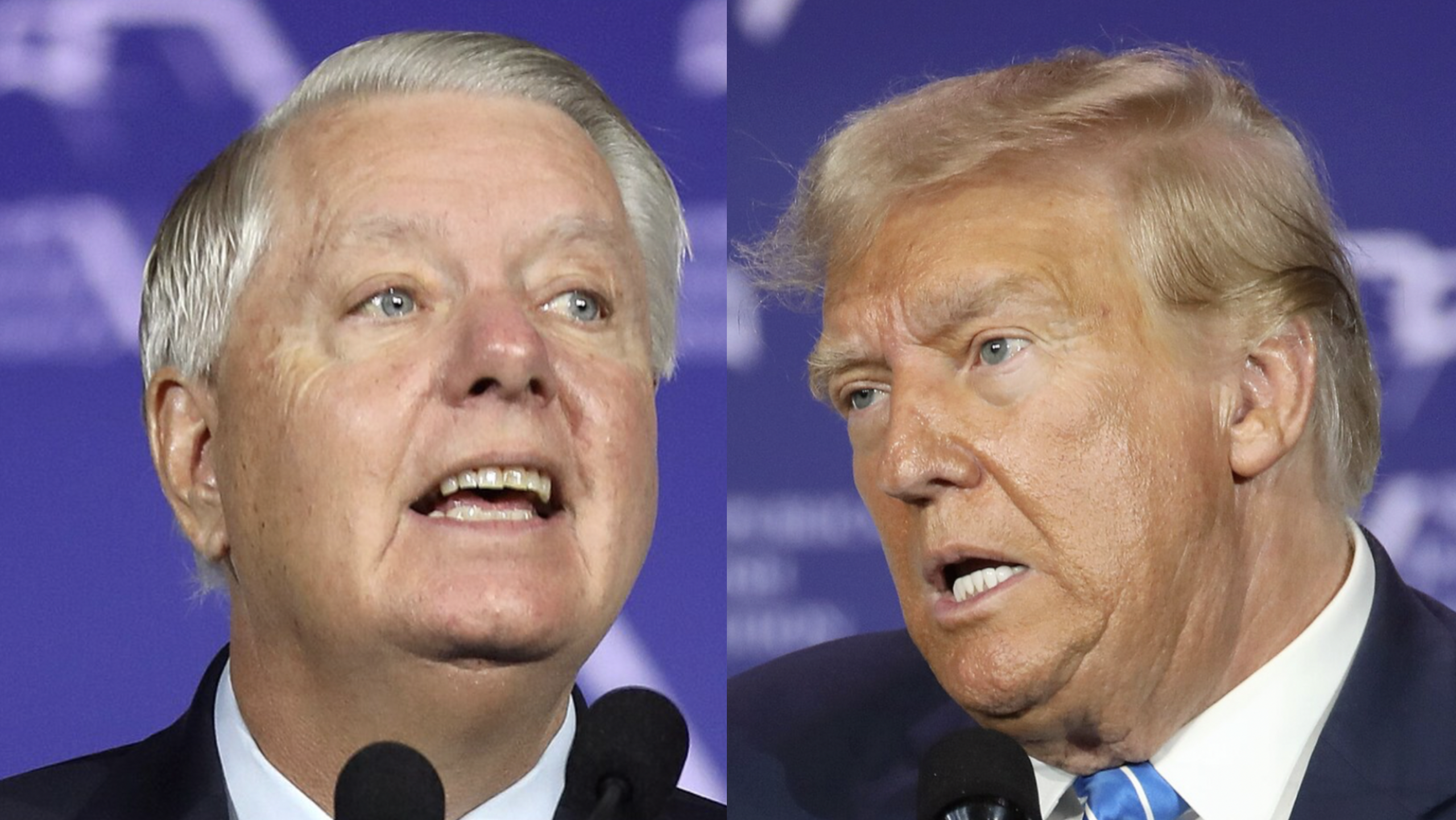
Sen. Lindsey Graham (R-S.C.) used a post on X Wednesday to offer one of the most sweeping endorsements of Donald Trump’s record on Israel that any sitting U.S. senator has issued, declaring that no president in American history has done more for the Jewish state — and calling on the president to finish what he started by expanding the Abraham Accords to include Saudi Arabia.
“No one has been a better friend of Israel than President Trump,” Graham wrote in the post, published May 27, 2026, following a White House cabinet meeting in which Trump outlined his determination to bring additional nations into the landmark normalization framework.
The statement was not offered in isolation. It came alongside Graham’s full-throated support for Trump’s Iran diplomacy and his renewed push for a Saudi-Israeli peace deal — but it also served as a summary of a record that spans two presidential terms and more than a decade of consequential decisions in the Middle East.
A First Term That Rewrote the Map
Trump’s first term produced a series of pro-Israel moves that broke with decades of American foreign policy precedent. In December 2017, he formally recognized Jerusalem as the capital of Israel and set in motion the relocation of the U.S. Embassy from Tel Aviv — a move Israeli Prime Minister Benjamin Netanyahu described at the time by saying, “He did it again. First he recognized Jerusalem as Israel’s capital and moved the U.S. embassy here.”
In March 2019, Trump went further. He recognized Israeli sovereignty over the Golan Heights — a plateau Israel captured from Syria during the Six-Day War in 1967 and annexed in 1981 — making clear that he understood the existential security concerns facing the country. Netanyahu responded by saying Trump had made history, listing the Golan recognition alongside the Jerusalem decision and the withdrawal from the Iran nuclear deal as acts of historic importance.
That withdrawal from the 2015 Joint Comprehensive Plan of Action — a deal Trump had long criticized as dangerously weak — was itself a pillar of his first-term Israel policy. Graham, for his part, had opposed the Iran nuclear deal from the start and supported the embassy move to Jerusalem. Both men had long agreed that the Obama-era framework gave Tehran too much in exchange for too little. American Jewish Congress
The crowning achievement of Trump’s first term on the Israel file came in September 2020. Under President Trump, Israel and the United Arab Emirates agreed to normalize relations on August 13, 2020 — the first Arab country to make peace with Israel in over 25 years. Under President Trump, Israel and Bahrain normalized their relations on September 11, 2020. Under President Trump, Israel and Sudan agreed to normalize their relations on October 23, 2020. And Israel and Morocco agreed to full diplomatic relations on December 10, 2020. These agreements, collectively known as the Abraham Accords, were brokered in the White House and signed in the Rose Garden — the first formal Middle East peace agreements in 26 years.
A Second Term That Extended the Support
Trump returned to the White House in January 2025 with the U.S.-Israel relationship in an acutely sensitive moment, following Hamas’s October 7, 2023 attack on Israel and the subsequent military campaign in Gaza. From the Israeli perspective, Trump’s return to the White House represented an unprecedentedly positive turning point.
In his second term, Trump brought about a ceasefire in Gaza and the return of all living Israeli hostages, and the United States joined Israel’s twelve-day war targeting Iran’s nuclear infrastructure. The ceasefire agreement was widely described as one of the crowning foreign policy achievements of Trump’s second term.
The scale of U.S. aid, particularly its seemingly unconditional nature, along with the strong alignment between Washington’s policies and those of the government in Jerusalem, made U.S.-Israel relations an exception against the backdrop of the United States’ otherwise turbulent relationships with its allies.
Trump also expanded the Abraham Accords in November 2025, announcing that Kazakhstan had formally joined the framework — the first expansion of the 2020 peace initiative normalizing Israel’s ties with Muslim-majority nations during his second term. Trump marked the moment by saying it was “the first of many.”
Graham: A Decades-Long Pro-Israel Record
Graham’s praise for Trump’s Israel record is rooted in his own long-standing commitment to the U.S.-Israel alliance. From the start of his Senate tenure, Graham cultivated a reputation as a reliable friend of Israel, sponsoring and shepherding measures that constrained Palestinian funding and bolstered Israeli security — most prominently the Taylor Force Act and support for large security assistance agreements — positioning himself as “one of the strongest pro-Israel voices in Congress.”
Graham cosponsored the Israel Anti-Boycott Act and the Combating BDS Act of 2017 and has been a strong voice in advocating for security assistance to Israel throughout his Senate career. He also authored the Taylor Force Act, which ended American taxpayer dollars from flowing to the Palestinian Authority so long as it financially rewarded terrorists and their families.
In his X post Wednesday, Graham tied his own record to Trump’s, framing the president’s push for Saudi-Israeli normalization as a shared mission. “I have been working on normalization for years, including during the Biden administration, because I know this leads to a lasting peace and a new Middle East that could become an economic powerhouse, not a powder keg,” he wrote.
The Full Post
Graham’s complete statement, published May 27, 2026, read:
“I very much appreciate President Trump’s desire to end the Iranian conflict with a diplomatic solution that is real and sustainable. I have complete confidence in President Trump and his team to achieve this shared goal. However, the biggest news out of the cabinet meeting is President Trump’s determination to expand the Abraham Accords, to include Saudi Arabia making peace with Israel. This would be the biggest change in the Middle East in thousands of years, effectively ending the Arab-Israeli conflict. I am convinced that President Trump — above all others — has the ability to make this happen. He has been a good, reliable partner to Saudi Arabia and the Crown Prince, and no one has been a better friend of Israel than President Trump. I have been working on normalization for years, including during the Biden administration, because I know this leads to a lasting peace and a new Middle East that could become an economic powerhouse, not a powder keg. I will do everything in my power, working in a bipartisan fashion, to help President Trump achieve peace between Saudi Arabia and Israel.”
Graham closed by pledging to work across the aisle to help the president reach that goal — a notable commitment from a senator who has spent decades positioning himself as one of Israel’s most reliable allies in Washington. With the Abraham Accords now firmly at the center of Trump’s second-term Middle East agenda, Graham appears intent on ensuring the framework he has long championed reaches its most consequential expansion yet.