
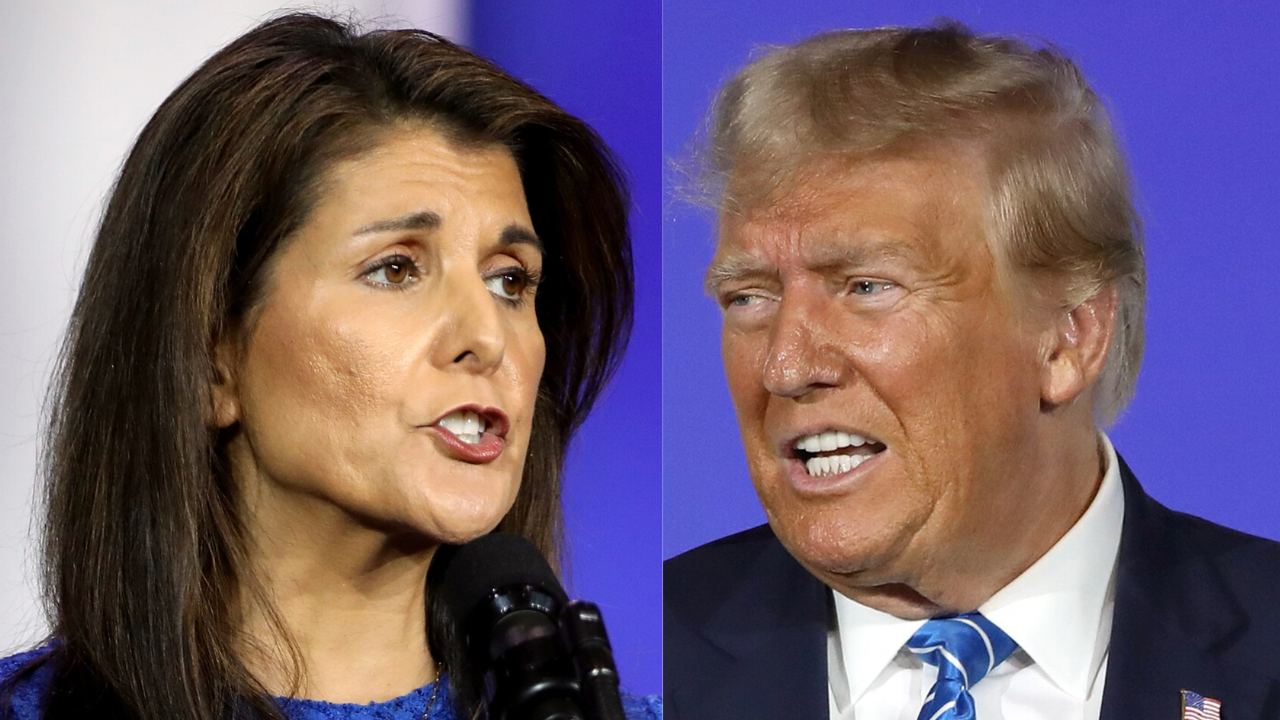
Former South Carolina Governor and U.S. Ambassador to the United Nations Nikki Haley on Wednesday called on Washington to immediately enforce sanctions against China, accusing Beijing of directly rearming the Iranian regime as it recovers from months of war with the United States and Israel. Haley’s statement, posted to X at 2:02 p.m. on July 29, 2026, came after Reuters reported that Iran is set to receive a major shipment of Chinese-made air-defense missile systems within weeks.
Her post read in full:
“China isn’t just buying Iranian oil— it’s re-arming the regime.
We need to enforce the sanctions against China now.”
The statement was posted directly in response to a Reuters exclusive published earlier the same day, which detailed a newly signed arms agreement between Tehran and a Hong Kong-based intermediary acting on behalf of Chinese suppliers.
The Reuters Report That Prompted Haley’s Response
According to Reuters, Iran is expected to receive within weeks a first shipment out of up to 400 Chinese-made shoulder-fired air-defense missile launchers, according to three sources familiar with the deal. The purchase, valued between $60 million and $70 million, ranks among Tehran’s largest known efforts to rebuild its short-range air defenses since the outbreak of its war with the United States and Israel, a conflict that exposed serious gaps in Iran’s ability to protect military sites and strategic infrastructure.
The contract covers between 300 and 400 man-portable air-defense systems, known as MANPADS, including Chinese-made QW-12 and FN-16 missiles. The agreement was signed with Zhongqing Baoshang International Investment, a Hong Kong-based company that sources said is serving as an intermediary between the Iranian side and the Chinese supplier.
China Denies Involvement
China’s Foreign Ministry pushed back on the reporting, stating that “the relevant reports are completely groundless,” and adding that “China has consistently played a role in promoting peace and ending the conflict.” Zhong Qing Bao Shang Group, the Beijing-based parent company of the intermediary named in the deal, did not respond to a request for comment. Pakistan’s military public relations wing, ISPR, also denied any role in facilitating the transfer, calling reports of Pakistani involvement “absolutely concocted and false.”
Under the plan described by Reuters’ sources, initial deliveries would move by air from Urumqi in western China, transiting through Pakistan before reaching Iran. Sources cautioned that while the agreement has been signed, delivery timelines, quantities and other logistical details could still change.
Why the Missile Systems Matter
Military analysts note that portable air-defense systems like the QW-12 and FN-16 carry strategic value beyond their individual firepower. Unlike fixed air-defense batteries, MANPADS can be dispersed quickly, operated by small teams, and relocated on short notice, making them significantly harder for adversaries to target than stationary systems. The QW-12 and FN-16 are shoulder-fired, infrared-guided systems designed to engage low-flying aircraft, helicopters and drones, and their mobility allows rapid deployment around military installations, energy infrastructure and other sensitive sites.
Defense analysts cited by Reuters regard the QW-12 as less capable than newer Chinese variants such as the QW-18 and QW-19, but say it can still provide an effective layer of short-range protection against drones and low-altitude threats. A European security source told Reuters that authorities in his country were also tracking several additional contracts under discussion involving QW-series systems, including the QW-18 and QW-19 models. A separate security source in the Middle East said Iran had been pursuing QW-12 and QW-18 purchases but was unaware a deal had already been finalized.
A Pattern of Deepening Military Ties
Reuters also reported that two Western intelligence sources and an Iranian official said Tehran has explored overland routes to move Chinese military supplies and dual-use components more discreetly, in an effort to reduce the risk of disruption to the shipments. The report noted that the procurement underscores Iran’s continuing reliance on a mix of domestic weapons production and foreign suppliers, despite years of sanctions and restrictions on defense-related imports.
The missile shipment is not an isolated transaction. Reuters previously reported that Iran was also close to finalizing a separate agreement with China to acquire anti-ship cruise missiles, though it could not confirm whether that agreement was ultimately completed. Taken together, the reports point to an expanding military relationship between Beijing and Tehran at a moment when the United States has been trying to isolate Iran economically and militarily.
Haley’s Consistent Position on China and Iran
Wednesday’s post is consistent with a position Haley has pressed repeatedly since the U.S.-Iran conflict escalated earlier this year. In June, after President Trump ordered strikes on Iranian nuclear and military sites, Haley publicly backed the operation while simultaneously pushing for the administration to widen its pressure campaign. Speaking to Fox News at the time, she said the U.S. needed to “up the pressure on China and Russia for their role arming the regime and allowing them to stall further,” arguing that Iran uses negotiations to buy time while rebuilding its capabilities.
She went further shortly afterward, saying Trump should personally warn both Beijing and Moscow to halt their support for Tehran. “When we go after China and Russia, and hold them accountable, and tell them to stop, that’s when we’ll start to really see Iran get weakened,” Haley said, adding that Trump “needs to pick up the phone and call Xi, and he needs a pickup a phone and call Putin and say, ‘Stop it.'” She warned that Trump “needs to let them know that they will be held accountable, and he will put force on them if they continue to help Iran in this war.”
Opposing Sanctions Relief Amid the Ceasefire
As a fragile ceasefire took hold last month following a 14-point interim peace memorandum signed June 17, Haley urged the administration not to ease pressure on Tehran or its foreign backers. In a post on X, she wrote: “Keep the sanctions on Iran. Don’t unfreeze their assets. Put the pressure on China and Russia to stop buying oil and supplying Iran with equipment.” She added, “The administration did the bulk of the work. Reversing the progress that was made is a waste. Keep the pressure on and have the gulf states support that pressure. You have to stop their ability to get any money.”
Just last week, Haley again tied Iran’s battlefield capabilities directly to Beijing and Moscow, writing on X: “It is important to remember that yes, Iran struck our military bases and killed and injured many soldiers but who is giving them the satellite imagery to do so? China and Russia.”
A Long-Standing Focus on Beijing’s Role in Sanctions Evasion
Haley’s warnings about China’s relationship with Iran predate the current conflict by years. During her tenure as U.N. Ambassador and in the years since, she has repeatedly argued that Beijing’s willingness to purchase sanctioned Iranian oil has functioned as a financial lifeline for Tehran. Writing in the Washington Post in 2021, she argued that China had become the primary mechanism keeping the Iranian regime funded despite it having “no access to international banking systems” and most of its assets frozen, describing Beijing as the country propping up Iran’s ability “to fund terrorist groups across the Middle East.”
Current Battlefield Context
Haley’s Wednesday statement lands amid a broader deterioration in regional stability. The war between Iran and the United States and Israel, now in its fifth month, has technically been under a ceasefire since April, but President Trump has warned that strikes could resume if negotiations fail to produce a durable settlement. Washington abruptly suspended a two-week bombing campaign on Saturday, though the administration has signaled that military options remain on the table.
The stakes surrounding Iran’s air-defense rebuild are also unfolding against a tense maritime backdrop. Just days before the Reuters report, an Iranian-owned cargo ship was struck in the Caspian Sea near Russia’s Astrakhan port, killing one sailor and wounding three others, further complicating an already volatile security picture across the region.
What Comes Next
With the missile shipment reportedly expected to begin arriving within weeks, Haley’s call to “enforce the sanctions against China now” places renewed pressure on the Trump administration to decide how forcefully it will respond to Beijing’s role in supplying Tehran. Whether the administration moves to sanction the Hong Kong-based intermediary named in the Reuters report, or pursues broader measures against Chinese entities tied to the transaction, remains to be seen. For now, Haley’s message stands as the latest in a sustained campaign to keep China’s role in Iran’s rearmament at the center of the U.S. policy debate.