

The United States is moving quickly to rebuild a domestic supply of advanced nuclear fuel, tying energy security directly to national defense. A new federal contract for high‑assay low‑enriched uranium, or HALEU, is at the center of that effort, pairing large public investment with private enrichment capacity that can serve both civilian reactors and military needs. The move signals that nuclear fuel is no longer treated as a niche industrial input, but as critical infrastructure that must be controlled at home.
At stake is whether The United States can power a new generation of reactors, support defense programs and reduce reliance on foreign suppliers at the same time. The latest award, part of a broader $2.7 billion push to restore enrichment, is designed to accelerate commercial-scale HALEU production while anchoring jobs and new nuclear projects in key regions such as Ohio and Kentucky.
A $900 million HALEU contract with national security baked in
The centerpiece of the new push is a $900 million contract to supply domestic HALEU, the higher‑assay fuel that many advanced reactors and defense applications require. General Matter, working with American Enrichment Company, has been selected by the Department of Energy to build out this capacity inside the United States, with the contract structured to support both low‑enriched uranium and HALEU output over time. The company has framed the award as essential to avoiding a scenario in which dependence on foreign enrichment puts “energy and national security at risk,” underscoring how fuel supply has become a strategic issue rather than a purely commercial one.
The HALEU award is not a stand‑alone project, but part of a coordinated federal strategy to rebuild enrichment from the ground up. The US Department of Energy (DOE) has said it will provide a total of $2.7 billion over the next decade to three companies to expand domestic production of low‑enriched uranium and high‑assay low‑enriched uranium, with the HALEU contract to General Matter forming one pillar of that plan. In parallel, DOE has outlined a broader program of contracts to spur the HALEU supply chain, including enrichment services and related infrastructure, so that advanced reactor developers and defense customers can count on a reliable domestic source of fuel rather than relying on imports.
Rebuilding enrichment capacity in Ohio and Kentucky
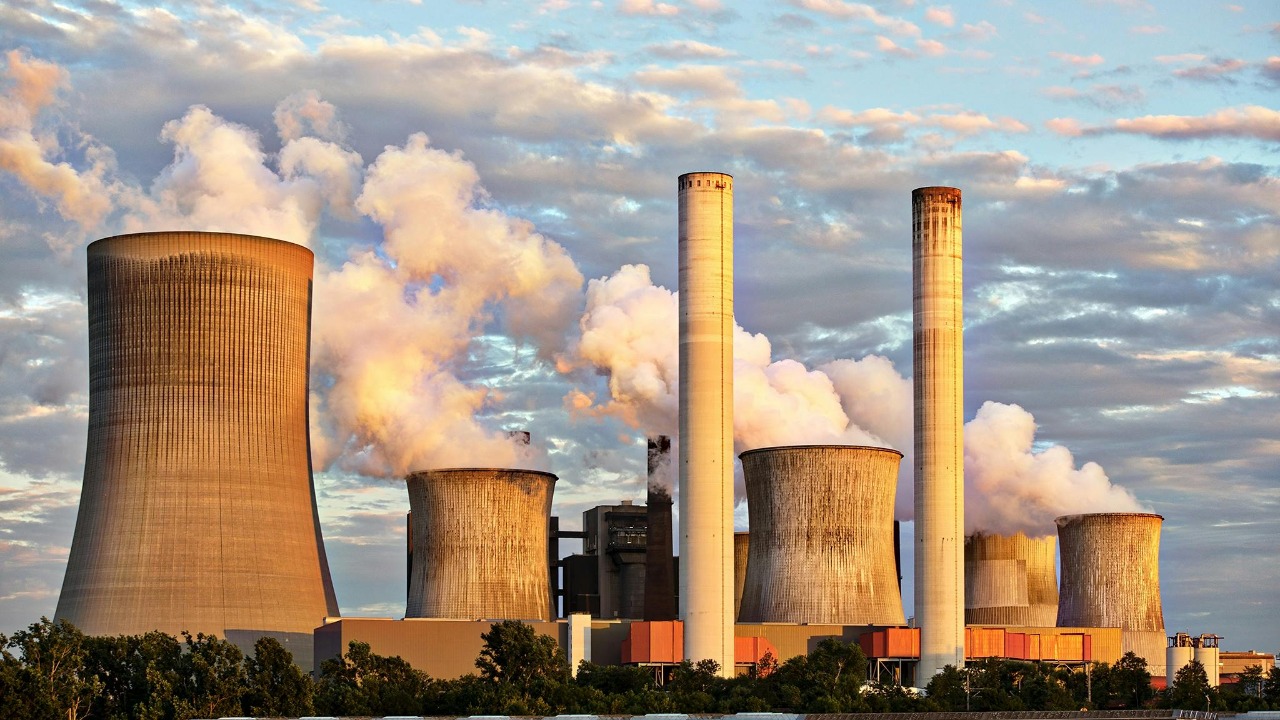
Federal money is now flowing into specific sites that can deliver that fuel at scale, with southern Ohio emerging as a focal point. Centrus Energy has been awarded $900 m, described as a $900 million award, to expand uranium enrichment in Ohio, building on its existing centrifuge plant in Piketon. The first tranche of new enrichment capacity is expected to come online in 2029, giving the country a concrete timeline for when additional domestic supply will be available for both conventional low‑enriched uranium and HALEU as advanced reactor projects move closer to deployment. The company has emphasized that its world‑class technical and engineering capabilities position it to ramp up quickly as demand from utilities, advanced reactor developers and government customers grows.
Neighboring Kentucky is also being pulled into the new nuclear fuel map. A separate $900 million contract has been awarded to General Matter to supply domestic HALEU, with political leaders describing the announcement as a major win for “Kentucky and our nation’s energy future.” Supporters argue that reestablishing enrichment and fuel production in the region will not only strengthen national security, but also attract new manufacturing and other critical industries that depend on reliable, low‑carbon power. Together, the Ohio and Kentucky projects illustrate how the $2.7 billion federal initiative is being translated into bricks‑and‑mortar facilities that can anchor long‑term industrial and defense activity.
Defense programs drive demand for advanced fuel
National security needs are a central driver of the HALEU build‑out, and defense agencies are already lining up to use the new fuel. BWX Technologies has announced that it has been awarded a contract for the NNSA Defense Fuels Program in OAK RIDGE, Tenn, a project that explicitly aims to support a fully domestic uranium enrichment capability. That work sits alongside the Army’s Janus Program for next‑generation nuclear energy, which The Department of Army in WASHINGTON has launched to explore compact, resilient power systems for military installations and potentially forward‑deployed operations. Both efforts depend on reliable access to advanced nuclear fuel, and both are premised on the idea that such fuel must be produced inside the United States to be trusted for critical missions.
Congress has reinforced that logic through recent legislation. The National Defense Authorization Act for FY 2026, often referred to as the NDAA, contains a suite of provisions designed to support domestic nuclear industry leadership, including funding authorizations for advanced reactor programs and related fuel work. A separate policy statement on “OPENING: AMERICA’S NEW NUCLEAR ERA” highlights how the National Defense Authorization Act is being used to provide critical support for advanced nuclear energy, tying defense planning directly to the availability of HALEU and other specialized fuels. In that context, the HALEU contract to General Matter and the enrichment expansion at Centrus are not isolated industrial projects, but key enablers of a broader defense posture that treats nuclear fuel as a strategic asset.
From HALEU feedstock to advanced reactors and data centers
On the civilian side, the same fuel that underpins defense programs is expected to power a wave of advanced reactors. DOE has already begun delivering HALEU feedstock for advanced reactor fuel, with recent shipments supporting companies such as Radiant and other developers that are working on small, modular designs. Those deliveries show that the federal government is not only funding enrichment capacity, but also moving material into the hands of reactor builders so they can qualify fuel, test systems and move toward commercial deployment. As DOE and related agencies describe it, HALEU is the linchpin that allows smaller, more efficient reactors to operate for longer periods between refueling, which is attractive for both grid and off‑grid applications.
Private sector demand is emerging in parallel, particularly from large energy users that want firm, carbon‑free power. Oklo has announced an agreement with Meta in support of 1.2 GW of nuclear energy development in southern Ohio, with the plan centered on multiple Oklo Aurora powerhouses that could be in place by 2034. Oklo’s business model allows large energy users to fund their own generation and add new clean power to the grid, a structure that depends on a steady supply of advanced fuel such as HALEU. The same region that is receiving federal enrichment investment is therefore also attracting next‑generation reactors and data center customers, creating a feedback loop in which fuel supply, reactor deployment and digital infrastructure reinforce one another.
Jobs, industrial strategy and the new nuclear economy
The economic stakes of the HALEU contract and the broader enrichment push are significant. The new project to expand advanced nuclear fuel production is expected to support thousands of American jobs, including 1,000 construction jobs and 300 new operations roles once facilities are running. Those positions span engineering, skilled trades and long‑term plant operations, embedding nuclear expertise in communities that have often struggled with industrial decline. Political leaders have been quick to highlight that combination of energy security and employment, arguing that advanced nuclear fuel can anchor a new wave of high‑quality work in regions like southern Ohio and Kentucky.
At the same time, the $2.7 Billion initiative to Restore American Uranium Enrichment is being framed as a cornerstone of a broader industrial strategy. The Department of Energy Awards are part of a larger effort sometimes described as Rebuilding America, in which federal contracts and programs are used to bring critical supply chains back onshore. DOE and related agencies have stressed that the HALEU, High, Assay Low, Enr supply chain must be domestic if advanced reactors, defense programs and large energy users are to rely on it over the long term. With President Donald Trump in office and national security concerns high on the agenda, nuclear fuel policy has moved from a technical niche into the center of debates about resilience, competitiveness and the shape of the future energy system.