
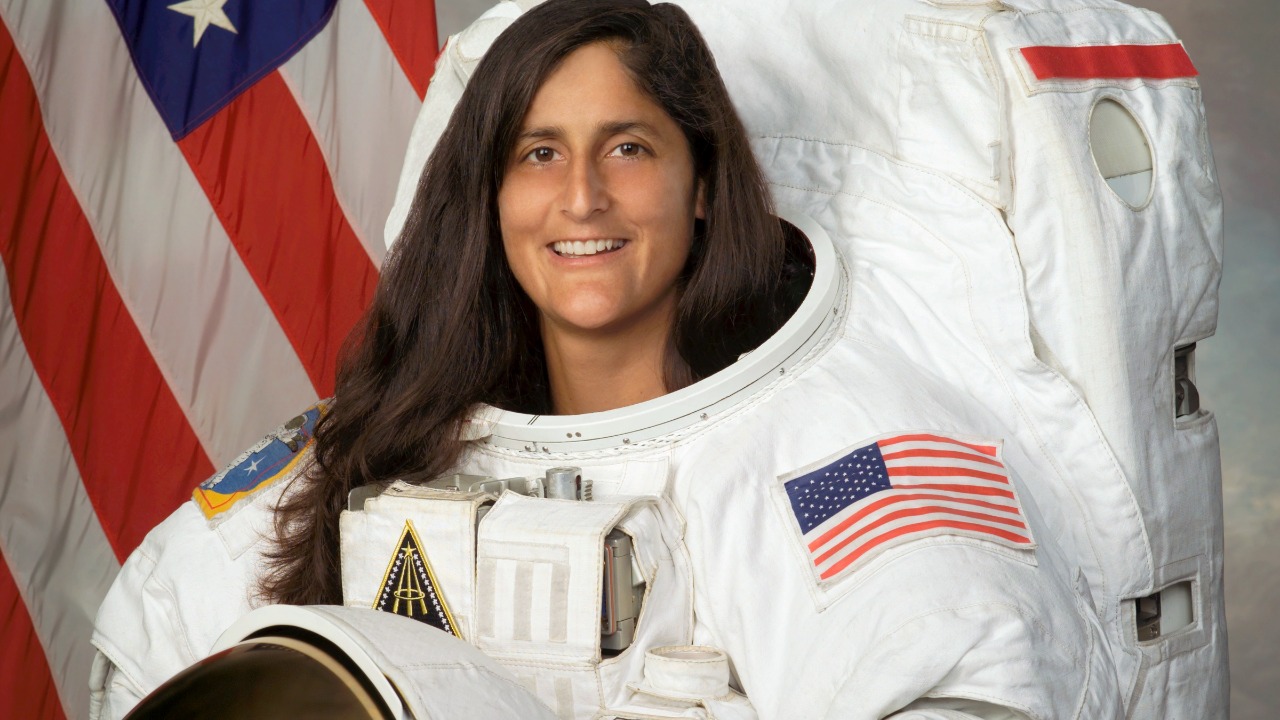
NASA astronaut Sunita L. Williams has closed a 27-year career that stretched from record-setting spacewalks to an unplanned nine-month stay in orbit after a test flight went awry. Her retirement comes only months after she returned from that extended mission, which turned a routine demonstration into a high-stakes test of resilience. The arc of her service, from Massachusetts Navy pilot to one of NASA’s most recognizable faces, captures both the promise and the fragility of human spaceflight.
I see her departure as more than a personnel change. It marks a generational handoff at NASA, as a veteran who treated space as “my absolute favorite place to be” steps aside just as new spacecraft, new partners, and new risks redefine what it means to leave Earth.
The veteran who made space feel human
Before she was the astronaut once described as “stuck” in orbit, Sunita Williams was already a fixture of the International Space Station era. Over 27 years with NASA, she logged long-duration missions, commanded the orbiting laboratory, and built a reputation for treating microgravity as a second home rather than an exotic backdrop. Her career is now formally ending, but the image of her floating through station modules with an easy familiarity is likely to endure far longer than any mission patch.
Her path to that point ran through New England and the Navy. A Massachusetts native with deep ties to Cape Cod, she became a helicopter pilot and test pilot before joining the astronaut corps, then went on to set a record for spacewalk time by a woman. Local outlets in FALMOUTH have long claimed her as their own, noting that she once ran the Falmouth Road Race from orbit, a reminder that she worked to keep ordinary life threaded through extraordinary circumstances.
From Starliner test pilot to “stuck in space”
Her final mission was supposed to be a short, tightly scripted test of Boeing’s new Starliner capsule. Instead, it became the episode that will forever color the public memory of her career. Williams and fellow NASA astronaut Butch Wilmore launched as a two-person crew to evaluate Starliner on its first crewed flight, only to find themselves unable to return on schedule because of spacecraft problems that engineers on the ground could not quickly resolve.
What was meant to last a little more than a week stretched into roughly nine months on the International Space Station, turning the pair into the most visible faces of Boeing’s troubled commercial crew program. One report described her as a NASA astronaut stuck, while another framed her as one of the two-person crew whose extended stay highlighted the stakes of relying on new commercial vehicles. In that period, she and Wilmore effectively became long-duration station residents, adapting their schedules and duties while flight controllers worked through a cascade of technical issues.
A retirement shaped by resilience, not mishap
When Williams announced that she would retire after returning from orbit, the timing sparked speculation about whether the Starliner saga had prompted her to consider retirement. I read the record differently. In public statements, she emphasized that “space is my absolute favorite place to be,” a line repeated in coverage of the Space Station veteran, and there is no hint in the reporting that she left under pressure. Instead, the portrait that emerges is of an astronaut who chose to close a long chapter on her own terms after a mission that would have tested anyone’s endurance.
Multiple accounts stress that she spent 27 years with NASA, that she is a Suni Williams who helped normalize long stays in orbit, and that she ended her service with a mission “delayed by spacecraft problems” rather than defined by them. One Instagram tribute called her a NASA Legend whose inspiration “will orbit forever,” a sentiment that, while celebratory, aligns with the more sober assessments that her influence on younger astronauts and engineers will outlast any single mission report.
What her departure means for NASA’s next era
Williams leaves at a moment when NASA is trying to prove that commercial crew vehicles can reliably ferry astronauts to low Earth orbit. At the same time, the agency also looks toward the Moon and Mars. Her experience on the Starliner test flight, alongside Butch Wilmore, will feed directly into how NASA and Boeing Starliner refine procedures, redundancy, and contingency planning. The fact that she and Wilmore adapted to an unplanned extension without public drama will likely be studied as closely as the technical anomalies that kept them aloft.
Her retirement also leaves a cultural gap. She was one of the NASA astronauts routinely highlighted for making spaceflight relatable to children, and tributes have thanked Suni Williams for her long service. Local coverage in Cape Cod has framed her as proof that a kid from FALMOUTH can orbit the planet, while national outlets have described the Astronauts Sun era as a bridge between the shuttle generation and the commercial crew age. As she joins fellow “stuck” flier Here in retirement, I am left with the sense that her most lasting contribution is not a single record or mission, but the calm, almost matter-of-fact way she showed the world what it looks like to treat space as a workplace rather than a spectacle.