
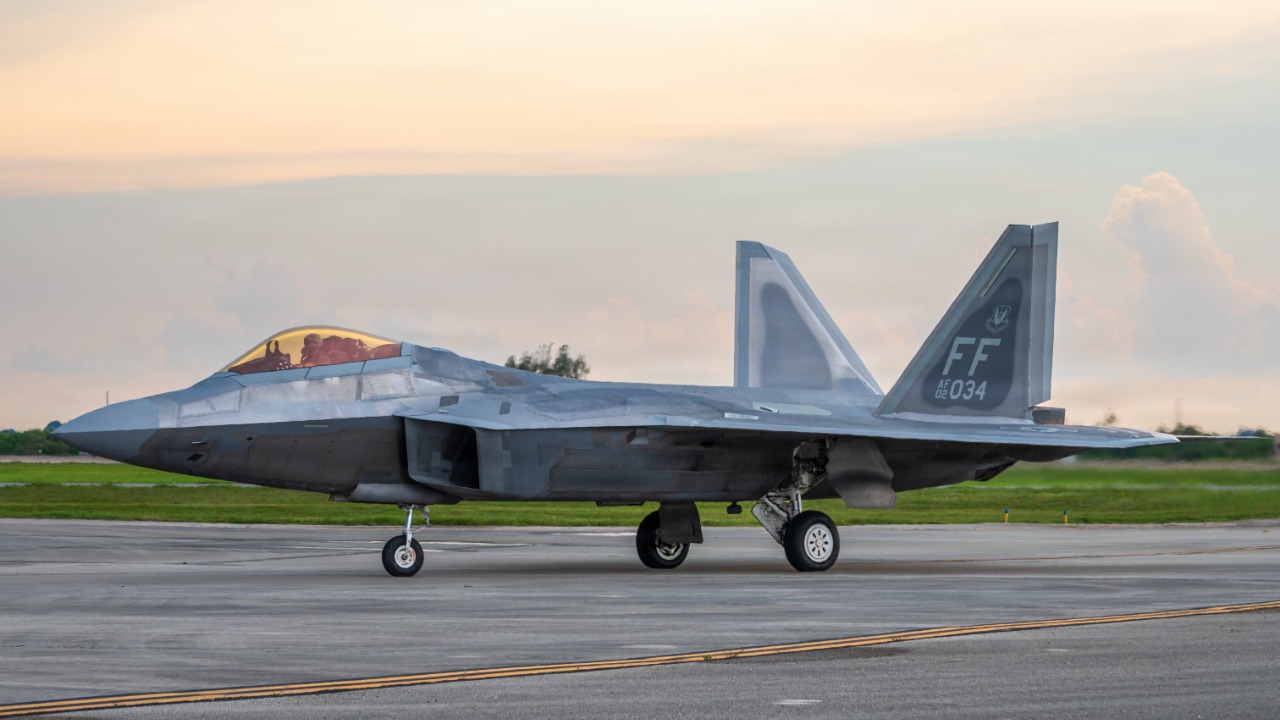
The United States is quietly turning its first fifth generation fighter into something closer to a sixth generation spearhead. The F-22 Raptor that once defined stealth air superiority is being reshaped into a “super” variant meant to dominate into the 2060s, even as new designs sit on drawing boards. The result is a jet that looks familiar from the outside yet is being rewired inside to act as a sensor hub, drone commander, and survivable killer in the most contested airspace on earth.
I see the stakes in simple terms. If the Air Force gets this transition right, the upgraded Raptor will bridge the gap between today’s fleet and the Next Generation Air Dominance family without ceding the skies to rivals. If it stumbles, the service risks flying a legend that has lost its edge just as competitors field their own stealth fighters and advanced air defenses.
The original Raptor and why it still matters
To understand why the “super” push matters, I start with the baseline aircraft. The F-22A Raptor was built from the start as an air dominance machine, with low observable shaping, internal weapons bays, and supercruise that lets it fly at supersonic speed without afterburner. According to program data, it combines advanced sensors, integrated avionics, and thrust vectoring engines that give it extreme agility in close combat. Those traits made the jet the benchmark for air superiority, and they still do, but the environment around it has changed.
Adversaries have not stood still, and that is why the Raptor still matters so much. The US Air Force fields it as a premier air-superiority fighter, yet it now faces Chinese systems like the J-20 and new quantum radars that aim to erode stealth advantages. Reporting on how US Air Force plans to keep the Raptor competitive makes clear that the service is not treating it as a museum piece. Instead, leaders see it as the sharp end of the spear for at least another decade, and that conviction underpins the decision to invest in a sweeping upgrade package rather than retire the jet early.
From legacy stealth to “Super Raptor”
The political signal has been just as striking as the technical one. In a set of Key Points, President Trump announced plans for a “beautiful” and extensive “super” upgrade for the F-22 Raptor, reversing earlier assumptions that the aircraft would wind down as new fighters arrived. That decision folds into an “F-22 Viability” program that treats the jet as a core part of the force for decades to come, not a sunset platform. I read that as a bet that the airframe still has growth margin and that software, sensors, and weapons can do the rest.
Analysts who have seen early details describe a “new” Air Force F-22 “Super” that will be one dangerous fighter jet, with added “fangs” in the form of expanded weapons options, stealth refinements, and electronic warfare upgrades. One assessment of the Super package highlights how these changes are meant to sharpen both survivability and lethality so the aircraft can compete for the same dollars as newer programs. In my view, that framing matters, because it shows the Raptor is not just being patched, it is being positioned as a rival to future designs for mission priority and budget share.
Sensors, fuel, and the drone “wolfpack”
The most transformative changes sit in the avionics and mission systems. Budget documents tied to the Pentagon Budget for Fiscal year 2026 describe new F-22 sensor and drop tank details, including an infrared search and track system under the “F-22 Viability” programme. That kind of passive sensor lets the jet detect and track targets without emitting radar energy, which is vital against stealthy aircraft and advanced surface to air missiles. The same documents point to new external tanks that extend range while preserving options for stealthy operations once the tanks are jettisoned.
At the same time, the Air Force is preparing its F-22 Raptor stealth jets to lead drone operations as part of manned unmanned teaming. A social media post from Jul notes that While the sixth generation fighter is still years away, the Air Force plans to upgrade the F-22s so they can control Collaborative Combat Aircraft in drone warfare. That vision aligns with reporting that, as part of the service’s Next Generation Air Dominance (NGAD) effort, highly autonomous unmanned aerial vehicles will fly alongside crewed fighters. I see the Raptor in that construct as a quarterback, using its upgraded sensors and data links to direct a wolfpack of cheaper, more expendable drones that can scout, jam, or strike.
How long “Mr. Unstoppable” can really last
The scale of the upgrade plan is striking in its own right. One detailed assessment notes that the Raptor Fighter Is 2060, with Kris Osborn describing how the aircraft has proven to be continually upgradeable. A related analysis on how the Raptor Stealth Fighter that date underscores why Pentagon officials argue that retaining the jet is essential while threats like China’s J-20 grow and NGAD takes time to arrive in sufficient numbers. In my judgment, that timeline is ambitious but plausible if structural life, engines, and mission systems all receive sustained investment.
There is also a hard edged rationale behind the “Super Raptor” branding. A detailed argument on Why We Need Super Raptor stresses that the F-22 remains the Air Force air-superiority fighter, but the service wants to ensure its lethality is dramatically increased. Another report on how US Air Force is moving to keep the F-22 Raptor dominant before the F-47 arrives notes that the Fiscal Year 2026 strategy is shaped by threats like China’s new quantum radars. I see those radars, and the broader spread of integrated air defenses, as the real test of whether the upgraded jet will live up to its “unstoppable” billing. The Raptor will not be invincible, but with the right mix of sensors, drones, and tactics, it can remain the aircraft that other air forces plan around rather than the one they dismiss as yesterday’s news.