
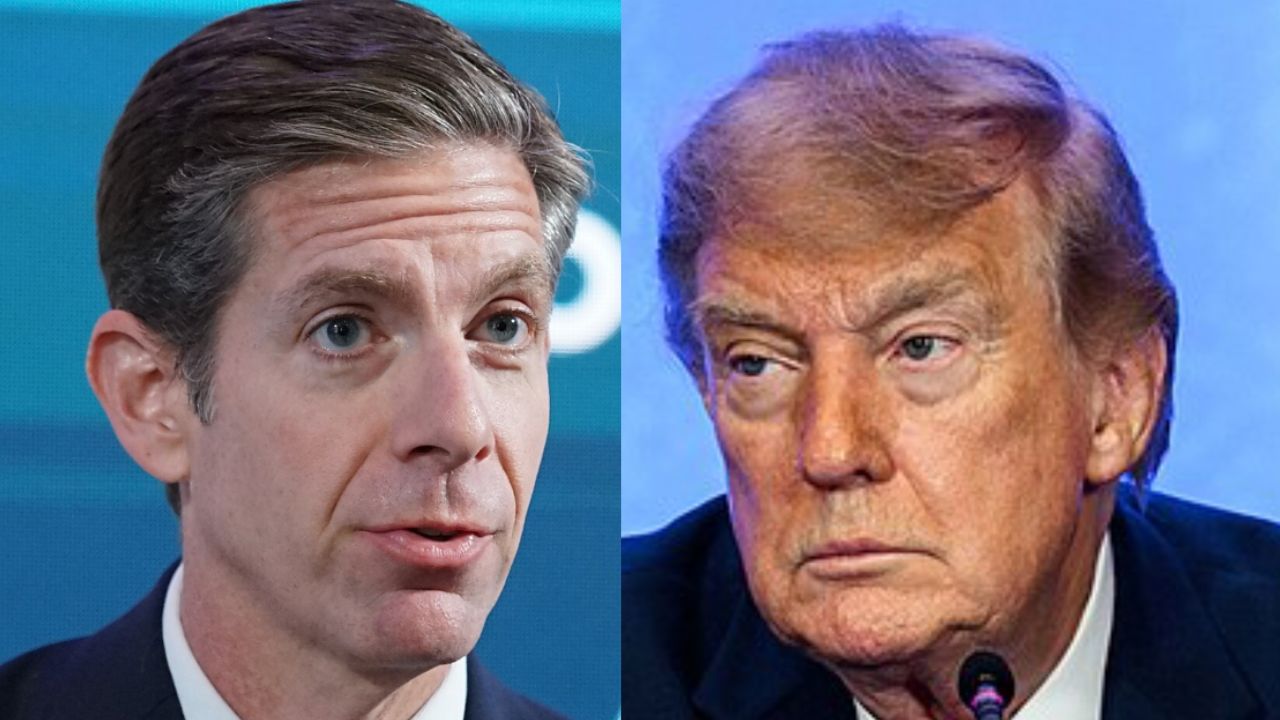
Rep. Mike Levin is challenging President Donald Trump’s confidence that Russian President Vladimir Putin genuinely wants to end the war in Ukraine, arguing that Russia’s continued military assault provides a clearer indication of its intentions than statements made during diplomatic discussions. The California Democrat directed his criticism at Trump in a November 28 statement, questioning the basis for the president’s belief that Putin is prepared to reach a peace agreement while Russian attacks against Ukraine continue.
Levin’s statement follows a November 19 report from Axios titled “Trump tells skeptical Europeans: ‘Putin wants to end the war,'” which detailed Trump’s latest diplomatic efforts following his meeting with Putin in China. The report described the president’s conversations with European leaders and Ukrainian President Volodymyr Zelensky, as well as his efforts to encourage direct negotiations involving Russia and European governments.
Levin published the following statement on X on November 28:
Mr. President, what makes you believe that Vladimir Putin is genuinely interested in ending his war against Ukraine?
We all want this war to end, but Putin’s continued assault on Ukraine tells us far more about his intentions than anything he says. Taking him at his word is not a strategy for peace. It’s wishful thinking.
The supplied X post does not explicitly identify or attach the Axios article in its text. The article nevertheless provides the immediate diplomatic context for Levin’s question. Trump had told European leaders that Putin wanted to end the conflict, saying, “Putin wants to end the war, he wants the deal done, he is getting tired of this,” according to people present at the meeting described in the report.
The report detailed how Trump called into a Berlin meeting involving his envoys Steve Witkoff and Jared Kushner, Zelensky and several European leaders while returning from China. Trump had met Putin on the sidelines of the summit in Shenzhen and sought to use the meeting to advance negotiations over Ukraine. He also encouraged German Chancellor Friedrich Merz to communicate directly with the Russian president, suggesting that European engagement could help secure an agreement.
The discussions included efforts to involve European governments directly in negotiations and explore a broader European-Russian security arrangement. However, the report also described skepticism among European officials about whether Russia would genuinely accept a meaningful European role in the negotiations. Putin publicly expressed openness to European participation, while the next steps remained subject to further diplomatic discussions.
Levin’s central argument is that diplomatic statements should be evaluated against Russia’s military actions. His reference to Putin’s continued assault on Ukraine challenges the assumption that expressions of interest in negotiations necessarily demonstrate a willingness to end the invasion. He also distinguishes between the shared objective of ending the war and accepting Putin’s statements as evidence that an agreement is within reach.
Levin’s record on supporting Ukraine and opposing Russian aggression
Levin has previously supported substantial American military and financial assistance to Ukraine. On April 20, 2024, he voted in favor of the Ukraine Security Supplemental Appropriations Act, H.R. 8035, which provided emergency funding in response to Russia’s invasion. The House approved the legislation 311-112, with Levin among the members voting in favor.
Following the vote, Levin issued a statement arguing that assistance to Ukraine was necessary to counter authoritarian governments and defend international stability. He specifically identified Russia as a threat to the sovereignty of American allies and partners, stating that the United States’ commitment to its allies should not waver. He also urged the Senate to approve the package quickly so assistance could reach Ukraine.
His support continued in 2026. On June 4, Levin voted for H.R. 2913, the Ukraine Support Act, which passed the House 226-195. The legislation addressed the war through additional assistance to Ukraine and penalties targeting Russia and certain foreign individuals and entities. Its provisions included support for Ukraine’s reconstruction, expanded security assistance and intelligence support for Ukrainian forces, and renewed presidential authority to provide defense articles through fiscal year 2028.
The June vote provides a more recent example of Levin’s position on both supporting Ukraine and imposing consequences on Russia. The official House voting record lists Levin among the members who voted in favor of the legislation. His vote came as Congress considered additional measures addressing the military and economic dimensions of Russia’s invasion.
Levin’s April 2024 statement also established that his support for Ukraine was connected to a broader position on defending democratic governments against aggression. He argued that Russia, Iran and China continued to threaten the sovereignty of American partners and said the United States needed to stand against those threats. His remarks emphasized the importance of maintaining commitments to allies rather than allowing disagreements in Congress to delay assistance.
The November 28 statement builds on that documented record while addressing a different question: whether Trump’s current diplomatic approach accurately reflects Putin’s intentions. Levin does not argue against negotiations or the goal of ending the conflict. Instead, he questions the president’s confidence in the Russian leader and warns that Putin’s continued military operations must remain central to any assessment of his willingness to reach peace.
Levin’s latest criticism therefore connects his established support for Ukraine with his skepticism toward Trump’s characterization of Putin’s intentions. His congressional record includes votes for major Ukraine assistance packages in both 2024 and 2026, while his November statement directly challenges the president to explain why he believes the Russian leader is genuinely prepared to end the war.