
Wartime heroism can be hard to preserve at scale. Units rotate, memories compress, and individual names fade unless something keeps the story in circulation. For Medal of Honor recipient Pvt. Rodger Wilton Young, that “something” wasn’t only an official citation—it was a wartime ballad that helped carry the essentials of his action beyond the battlefield on New Georgia.
Telling Young’s story well requires resisting a familiar shortcut: turning it into a generic “one man destroyed a bunker” legend. The Congressional Medal of Honor Society’s recipient page offers a clearer spine that’s both specific and cautious: a limited withdrawal on 31 July 1943; a Japanese pillbox/machine-gun position; and Young deliberately closing with that position to draw its fire so his platoon could disengage. That distinction matters, because the mechanics of what he did—giving up his own chance to withdraw to increase the platoon’s chance—are the point.
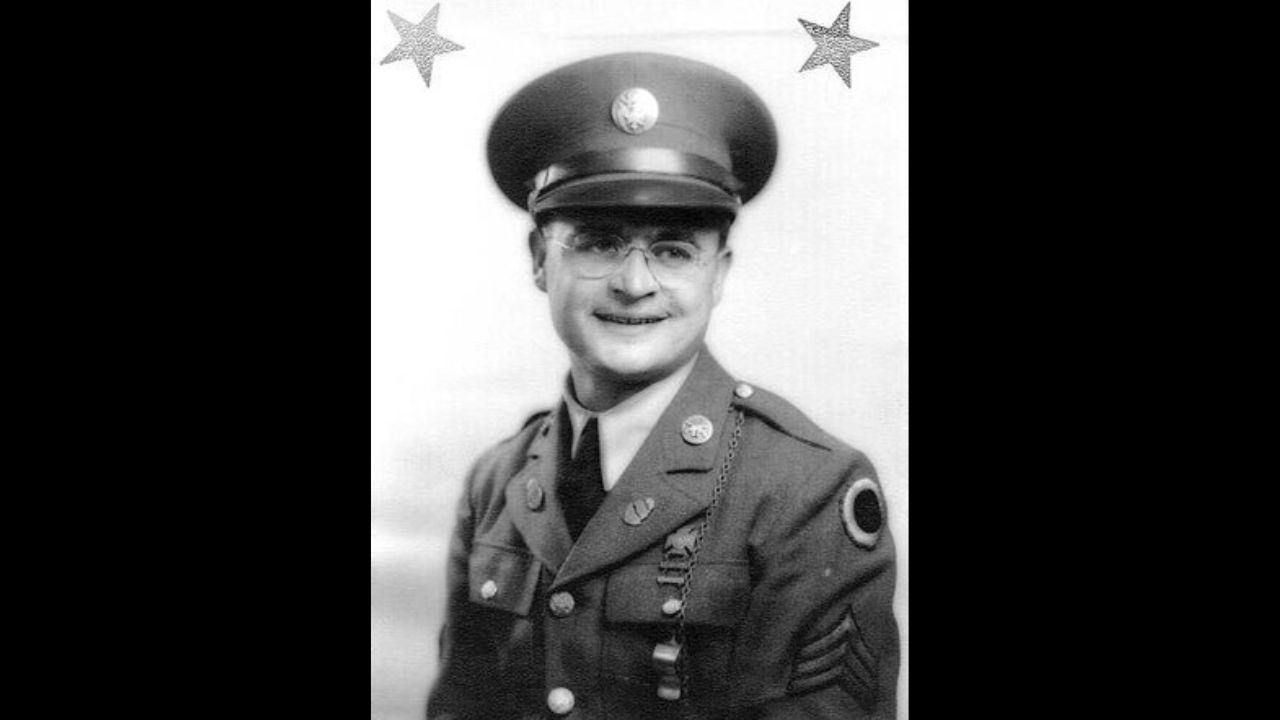
Pvt. Rodger Wilton Young (U.S. Army), Medal of Honor recipient
Young served in Company B, 148th Infantry Regiment, 37th Infantry Division, and his Medal of Honor action is tied to fighting on New Georgia in the Solomon Islands. According to the Congressional Medal of Honor Society (CMOHS), on 31 July 1943 his unit was ordered to make a limited withdrawal under fire. In that moment, Young “closed with” a Japanese position to divert its fire, allowing his platoon to disengage “without loss,” and he was mortally wounded.
That phrase—“without loss”—is easy to skim past, but it’s the operational result the citation emphasizes. The action is framed as a tactical intervention during a withdrawal, not a self-contained feat performed for its own sake. In plain terms, the citation describes Young choosing to expose himself to the pillbox’s fire long enough for others to move, a decision consistent with what the Medal of Honor is meant to recognize when conduct is “above and beyond.”
The Japanese “pillbox” / machine-gun nest (often paraphrased as a bunker)
The official wording centers on a “pillbox” and a machine-gun position—terms that explain both the threat and why a withdrawal could stall under sustained fire. In the CMOHS citation language as presented on its recipient page, the key action is Young moving toward that position to divert its fire onto himself. That shift in where the gun was aimed is what created the opening for the platoon to break contact.
Later summaries often compress the episode into “alone destroyed a bunker,” but Combat Rated readers should note the difference the CMOHS text preserves. “Bunker” may appear as a common synonym, yet the sourceable detail here is a pillbox/machine-gun nest and the purpose of Young’s movement: drawing fire during a limited withdrawal. Even with the citation noting “several enemy casualties,” the core isn’t a cinematic demolition; it’s a tactical effect achieved at lethal cost.
148th Infantry Regiment / 37th Infantry Division on New Georgia
Young’s story also reads differently when it stays connected to unit and campaign context. He was in Company B, 148th Infantry, part of the 37th Infantry Division, a formation often referred to as the “Buckeye Division.” An Ohio National Guard historical sketch for the 148th Infantry (PDF) reproduces the Medal of Honor context for “Private Rodger W. Young,” including the date and the unit identification that tie the action to the regiment’s wartime record.
This anchoring is more than trivia. New Georgia in the Solomons was a defined campaign with hard ground fighting, and the 148th’s identification keeps Young’s action from floating free of the war it came from. It also explains why the story could become part of institutional memory—something associated not only with an individual, but with a regiment and division that could carry it forward.
“The Ballad of Rodger Young” (war song)
If the Medal of Honor citation is the official record, “The Ballad of Rodger Young” is a way that record became portable. Wikipedia’s entry on the song describes it as being written by songwriter Frank Loesser and based largely on Young’s Medal of Honor citation, with wartime timing that placed it in circulation during World War II (with March 1945 noted for its first performance). Wikipedia’s biography entry for Young likewise links his remembrance to the ballad, underscoring how closely the song became tied to his legacy.
The significance is not just that a soldier was memorialized in music, but that an infantry private’s name became the title line. Songs can travel casually, stick through repetition, and keep a narrative coherent even when listeners don’t know the geography of New Georgia or the details of a “limited withdrawal.” That same portability can simplify, which makes it important to keep returning to what the citation actually says when describing what the ballad is pointing to.
LIFE magazine feature + Army-created Combat Infantry Band
Wikipedia’s song entry also points to how the ballad moved beyond a single composer’s work and into wider wartime media. It notes that LIFE magazine, in its March 5, 1945 issue, devoted multiple pages to Young and the ballad and reproduced the sheet music. Whatever a reader’s familiarity with the campaign, that kind of placement suggests the story was intentionally positioned to reach a broad audience.
The same Wikipedia entry adds another amplifier: the Army reportedly created a “Combat Infantry Band” specifically to play the ballad. Presented that way, the song looks less like a tune that simply spread on its own and more like a piece of commemoration and morale messaging with institutional support. For Combat Rated’s purposes, the takeaway is straightforward: major media and the military can function as memory infrastructure, selecting certain narratives and giving them extra reach.
Frank Loesser’s wartime role (why he wrote it)
Loesser’s involvement helps explain why the ballad reads like a crafted narrative rather than a fragment of rumor. Wikipedia’s biography of Frank Loesser notes he wrote songs “at the request of the armed forces,” and it lists “The Ballad of Rodger Young” among those works. That supports the idea that Young’s story was not only commemorated but also adapted into a form designed to be easily learned, repeated, and shared.
It’s also where careful phrasing matters. Wikipedia is a useful pointer for linking the ballad to wartime performance and to specific claims about amplification (LIFE’s March 5, 1945 issue and the Combat Infantry Band). What can be said, grounded in the provided context, is that the song was positioned to be known: it is described as written by a major songwriter connected to armed-forces requests, circulated via a major magazine with sheet music, and reportedly played by an Army-created band.
Young’s legacy, then, becomes a case study in how an individual battlefield decision turns into public history. The CMOHS citation captures the tactical truth: closing with a Japanese pillbox to divert fire so a platoon could disengage without loss on New Georgia on 31 July 1943. The ballad—and the wartime machinery said to have promoted it—shows how that truth was packaged to outlast the moment when the fighting moved on.