
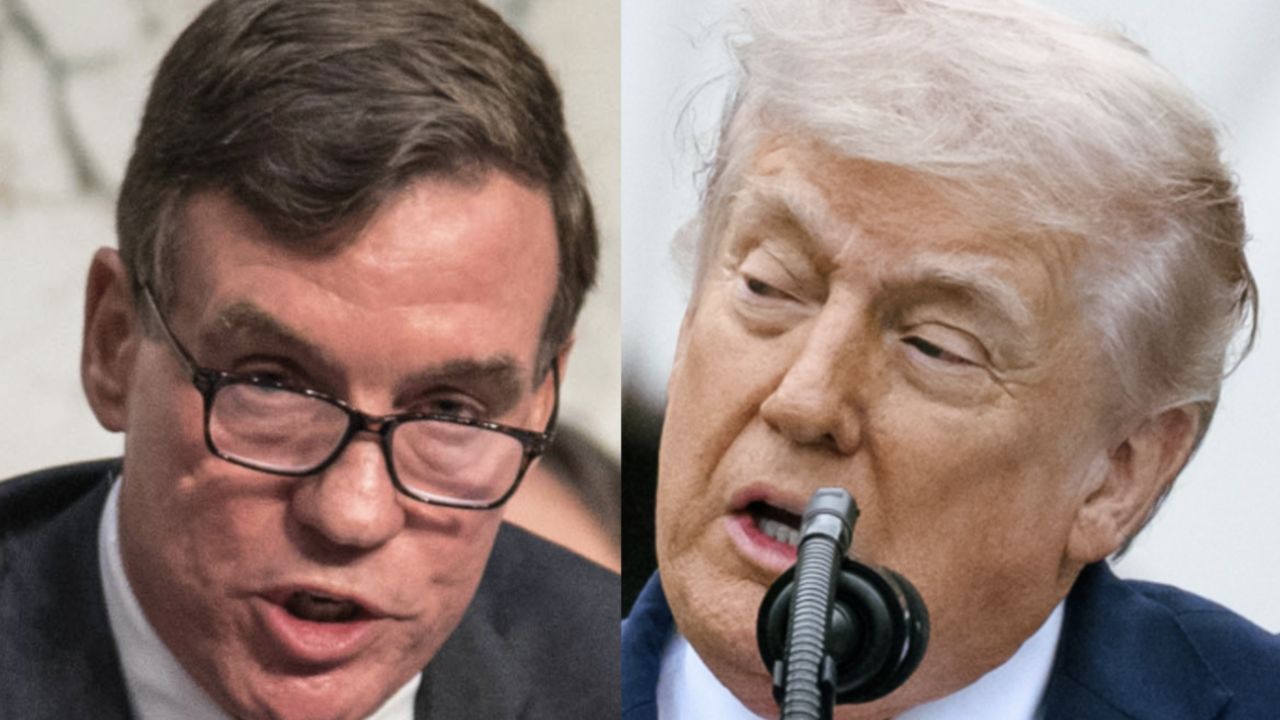
U.S. Sen. Mark R. Warner (D-VA) accused President Donald Trump of deliberately escalating a trade conflict with Canada on Monday, arguing that the administration’s latest round of tariffs amounts to a new tax on American consumers rather than the cost relief the president has promised. The senator’s remarks, posted to X on the morning of August 24, 2026, came hours after Trump used his own Truth Social account to announce that tariffs on Canadian automobiles, auto parts, and steel would rise to 50 percent beginning January 1, 2027.
“Trump is doing everything he can to drag us into a trade war with Canada,” Warner wrote. “The courts already struck down his sweeping tariffs on one of our closest allies, but Trump won’t stop. He’s back with a new tax on everything from cars to clothes to agriculture products. Americans need lower costs, not another Trump tax.”
Trump’s Truth Social Announcement
Warner’s post followed a lengthy statement Trump published on Truth Social earlier Monday morning, in which the president defended the planned tariff increase as overdue retaliation for what he described as decades of unfair treatment by Canada.
“Canada has been ripping off the United States of America for years,” Trump wrote. “Their ridiculously high tariffs on our Farmers and farm products has made life impossible for these great American Patriots, and has long created a 60 Billion Dollar Deficit between our two Countries. Not sustainable, and NOT ANYMORE! On January First, 2027, Tariffs on all Cars, Trucks, both large and small, Automotive Parts, and Steel, will be increased to 50%. Build in the U.S. and there are ZERO TARIFFS. Canada will be treated like a State no longer! On Trade, and in other ways, also, they are among the worst Nations in the World to deal with. They feel entitled, and yet, WE DON’T NEED CANADA, THEY NEED US! They do 95% of their business with the U.S., with us, the exact opposite! Thank you for your attention to this matter! President DONALD J. TRUMP”
Background: The Court Ruling Warner Referenced
Warner’s post referred to a U.S. Supreme Court decision handed down on February 20, 2026, in which the justices ruled 6-3 in Learning Resources, Inc. v. Trump that the International Emergency Economic Powers Act (IEEPA) does not grant the president authority to impose tariffs. The ruling invalidated the sweeping tariffs Trump had imposed on Canada and dozens of other trading partners since taking office, including the “Liberation Day” tariffs announced in April 2025.
Warner issued a statement at the time applauding the decision as a member of the Senate Finance Committee, one of several occasions on which he has publicly weighed in on the administration’s use of emergency powers to justify tariffs.
Rather than abandoning the tariff strategy after the ruling, the administration pivoted to alternative legal authorities. Trump signed a proclamation the same week imposing a 10 percent global import surcharge under Section 122 of the Trade Act of 1974, with goods compliant with the U.S.-Mexico-Canada Agreement (USMCA) largely exempted.
From 10 Percent to 50 Percent: The Escalation Timeline
The trade relationship between Washington and Ottawa deteriorated further over the summer. In late July, Trump told reporters that his new tariffs were “doing the same thing” as the ones the Supreme Court had struck down, and said he would rather see the United States exit the USMCA entirely than renegotiate it.
“Here’s the thing: Mexico and Canada need us. We don’t need them. The deal is important for them. It’s not important for us,” Trump said.
By mid-August, the administration had turned to a different legal mechanism — a 1930 trade law allowing tariffs of up to 50 percent against countries found to discriminate against American goods — to threaten a sweeping new round of duties on Canadian imports covering roughly $20 billion in goods, including cars, hockey sticks, building materials, liquor, and clothing.
Talks Collapse, Tariffs Take Effect
Negotiations between the two governments broke down late on the night of Friday, August 21, just before a midnight deadline. The 50 percent tariffs took effect shortly after. Canadian Prime Minister Mark Carney characterized the U.S. terms as “uneconomic, unfair, and undermined the net benefits for Canada, and called into question the reliability of any deal.”
Speaking to reporters the following day, Carney went further, describing the tariffs in terms of open conflict. “You’re at war when you get attacked. We got attacked,” he said, adding that Canada would respond with retaliatory tariffs matching the U.S. duties “dollar for dollar” beginning September 8.
Warner’s Broader Record on Tariff Policy
Monday’s post was the latest in a string of statements Warner has made opposing the administration’s tariff approach toward Canada. In October 2025, the senator joined Sens. Tim Kaine, Rand Paul, Amy Klobuchar, and then-Minority Leader Chuck Schumer in passing bipartisan legislation through the Senate, by a vote of 50-46, to challenge Trump’s IEEPA-based tariffs on Canada. At the time, Warner said the vote came as inflation data showed consumer prices rising at their fastest pace in eight months.
“President Trump’s tariffs are driving up prices for families, raising costs for small businesses, and creating completely unnecessary uncertainty for our economy,” Warner said in a statement following that vote. “Today’s bipartisan vote sends a clear message: Congress must act to end Trump’s reckless trade war and protect American jobs and consumers.”
Warner and Kaine also introduced legislation in February 2026 seeking to require full refunds of tariffs collected under the authority the Supreme Court found unlawful, and issued a joint statement in March after the U.S. Court of International Trade ordered full IEEPA tariff refunds for all affected importers.
Economic Stakes for Warner’s Home State
Virginia’s trade relationship with Canada has featured prominently in Warner’s public objections to the tariffs. In earlier legislation introduced with Kaine, the senators cited Canada as one of Virginia’s largest trading partners and warned that agricultural producers and foresters in the state had been hit hard by tariff disputes during Trump’s first term.
A Joint Economic Committee report highlighted by Warner and Kaine in August 2025 projected that the administration’s broader tariff regime could result in $490 billion in manufacturing losses nationally by 2029.
Administration’s Position
The White House and its allies have defended the escalating tariffs as necessary leverage against what they characterize as longstanding unfair trade practices by Canada. Responding to Carney’s “at war” comments, the Office of the U.S. Trade Representative said the administration had offered Canada favorable terms during negotiations.
“We offered them the best access to the United States of any country in the world,” the U.S. Trade Representative’s office said in a statement posted to social media. “I don’t know if it was political for them. It certainly doesn’t make economic sense… but they came in and they wanted more, and we weren’t prepared to do that.”
What Comes Next
Under the terms Trump outlined in his Monday Truth Social post, tariffs on Canadian-made vehicles, trucks, automotive parts, and steel are set to rise to 50 percent on January 1, 2027, layered on top of the 50 percent duties that already took effect on a separate slate of Canadian goods on August 22. Canada’s retaliatory tariffs, announced by Carney, are scheduled to begin September 8, setting up months of continued economic friction between the two countries before the new automotive tariffs are due to take effect.
Warner has not indicated whether he or his colleagues plan additional legislative action in response to the January tariff increase, though his post Monday signaled continued opposition to the administration’s approach as the dispute enters its next phase.