
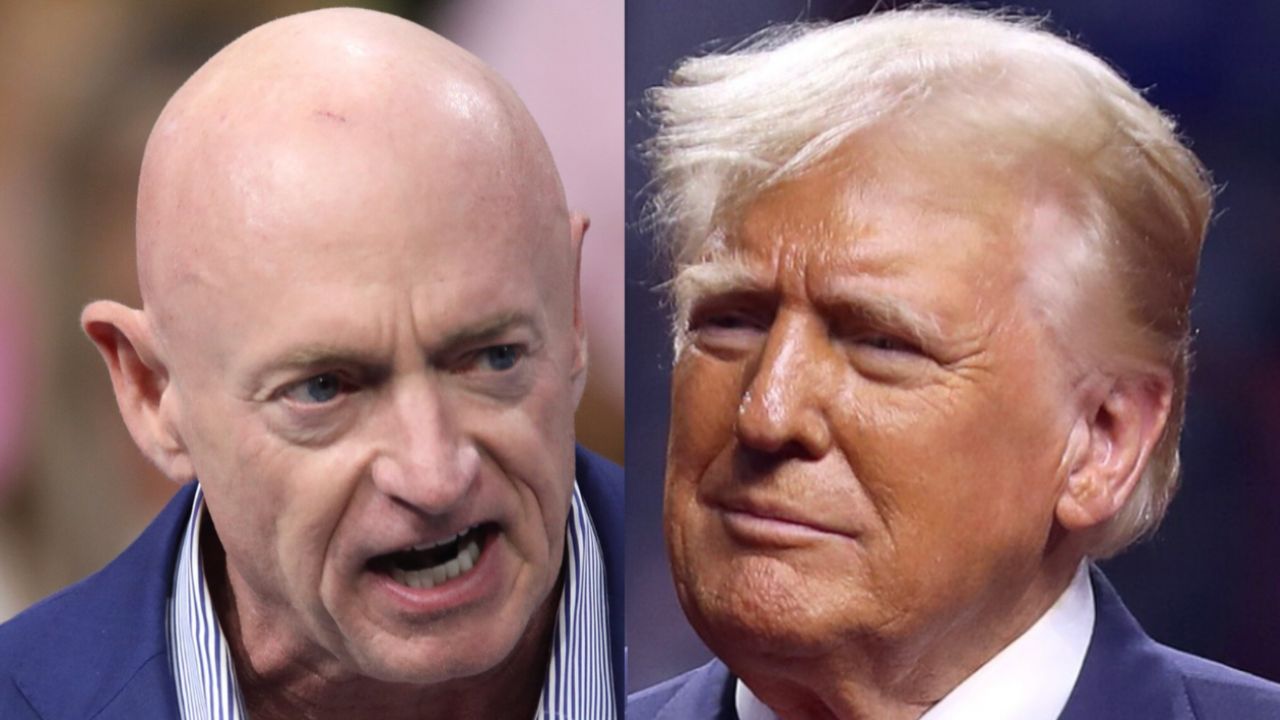
Sen. Mark Kelly, the Arizona Democrat, retired Navy captain and Senate Armed Services Committee member, marked seven months of the U.S.-Iran war on Thursday with a short post on X. The post accuses President Donald Trump of waging a “reckless war” while delivering higher fuel and travel costs, the opposite of what Kelly says Trump promised voters. The post, published at 1:34 PM on October 1, 2026, came as diesel prices sit at record levels and the war’s cost to taxpayers continues to grow.
Kelly’s Post, Word for Word
Kelly’s full post reads:
“We’re 7 months into Trump’s reckless war with Iran. Gas is up. Diesel has hit a record high. Airfares are at the highest prices in a decade.
Trump ran on lowering costs and ending wars, but he’s given us the opposite.”
The post was published at 1:34 PM on October 1, 2026.
How the War Reached Month Seven
The war began on February 28, 2026, when the United States and Israel started joint strikes on Iran, nearly 900 of them in the first 12 hours of what Washington called Operation Epic Fury. Trump said when he launched the war that he expected it to last only a few weeks. A mid-June memorandum between Tehran and Washington on ending hostilities was followed by renewed exchanges of strikes, and the conflict remains unresolved. Iran effectively shut the Strait of Hormuz after the fighting began, and roughly 20 percent of the world’s oil is exported through that waterway.
Gas, Diesel and Airfares
Kelly’s three price claims are borne out by recent figures. AAA put the national average for gasoline at $4.48 a gallon on Sunday, against a $3.14 average last year. Oil analyst Andy Lipow said earlier this month that gasoline prices in the United States were the highest ever recorded for this time of year.
Diesel, the fuel that moves freight, farm equipment and construction machinery, has climbed faster. The national average hit $6.53 a gallon on September 22, the highest on record, according to AAA and nearly 77 percent above the same point last year. The previous record, set in June 2022, was $5.78 a gallon, and it was surpassed on September 4. NPR reported that the surge is driven mainly by the closure of the Strait of Hormuz and other oil routes, along with high refining costs.
Air travel is also more expensive. U.S. airfares in August were 23 percent higher than a year earlier, according to the Labor Department, and travel-booking company Hopper reported that holiday travelers are facing the highest fares in a decade. Federal data show the average fare rose from $405 in the last three months of 2025 to $436 in the April-to-June period, and jet fuel reached $4.53 a gallon on September 17.
Seven Months of Kelly’s Statements
Kelly’s post is the latest in a running line of criticism that began on the first day. In a statement as the operation began, he said Trump had promised to keep America out of war and focus on lowering costs for families, and he asked, “what’s the plan for what comes next?” He cited his own first combat mission during Operation Desert Storm and said the mission, the end goal and the public’s understanding were clear then.
In March, as fuel prices climbed, Kelly joined Sen. Richard Blumenthal and Rep. Chris Pappas in introducing the Gas Prices Relief Act, which would suspend the 18.4-cent federal gas tax through October 1, 2026, the date of Thursday’s post. The bill has not advanced. In April, Kelly joined a group of senators filing a new wave of War Powers resolutions to force Senate votes, saying six weeks in that the war had killed 13 U.S. servicemembers and sent energy prices soaring.
When Trump announced a deal with Iran in June, Kelly told MS NOW the arrangement “emboldens” Iran and gives it resources to build more ballistic missiles. On July 27, he told NBC’s “Meet the Press” the war had been a disaster for people already struggling to afford their lives, citing $4.50 gas in Arizona, 18 killed servicemembers, and pushing back on a $1.5 trillion defense budget request. In early August, five months in, he told CBS’s “Face the Nation” the administration was “flailing” and that Trump should replace his negotiating team with experienced diplomats.
September brought the sharpest focus on cost. In a post that month, Kelly said Arizonans were paying more than 20 cents per gallon above the national average because Trump started a war without a plan or exit strategy. He and Sen. Elissa Slotkin led Democratic colleagues in demanding a full accounting of the war’s costs from Defense Secretary Pete Hegseth, writing that taxpayers had already paid an extra $100 billion for gas and diesel and at least $60 billion more for groceries, mortgages and plane tickets. On ABC’s “This Week” on Sunday, he said Trump is “stuck” and that the war’s cost could top $40 billion with no end in sight. He also said the president’s goal appears to be getting back to where things stood before the war, with the Strait open and more than 20 service members dead and 800 injured.
The War’s Price Tag and the National Debt
The Congressional Budget Office estimated the war’s direct costs at about $38 billion through August 1, and projected another $2 billion to $3 billion for each month it continues. The CBO projects the war will add roughly 0.5 percentage points to inflation in the first quarter of 2027, largely because of Strait of Hormuz and Red Sea disruptions. The Defense Department has told Congress the total is at least $43.6 billion through September 3. The CBO also estimated that replenishing depleted munitions could take five years, and the figures do not include the cost of borrowing to finance the war.
The spending lands on an already strained balance sheet. The nation’s total public debt surpassed $40 trillion in August. The CBO figure excludes debt service, meaning additional interest the government could pay over time.
What Trump Promised
Kelly’s post leans on Trump’s own campaign messaging. In 2024, Trump repeatedly cast opponents as warmongers and described himself as a president who started “no new wars.” Sen. Elizabeth Warren said in March that Trump had promised to lower costs “on day one.” Asked about the Iran war on NBC in June, Trump said, “I didn’t promise anything,” adding that this was not an endless war.
Trump has also said relief is coming. In a Truth Social post this month, he wrote that oil prices would drop “precipitously” when the U.S. wins, saying gas would fall to $3 a gallon and ultimately below $2. Aboard Air Force One, he said prices would be “tumbling down” right after the election. He has also said he expects the war to end immediately after the election.
The Midterm Backdrop
The election is on November 3, and prediction markets see the war’s costs reshaping the contest. Polymarket currently gives the Democratic Party a 93 percent chance of winning the House. Market odds are not forecasts or votes, but they reflect trader sentiment. Several Republican candidates have distanced themselves from Trump’s approach to the war and called for operations to end. A CBS News poll found the war is unpopular, though respondents split almost evenly, 32 percent to 30 percent, between Republicans and Democrats on who has the better Iran approach.
Kelly’s gas tax bill would have expired on the day he posted. A new push to extend the suspension has since been introduced, with Kelly saying that suspending fuel taxes would put money back in people’s pockets. Whether that bill, or any end to the war, arrives before voters go to the polls remains unresolved.