
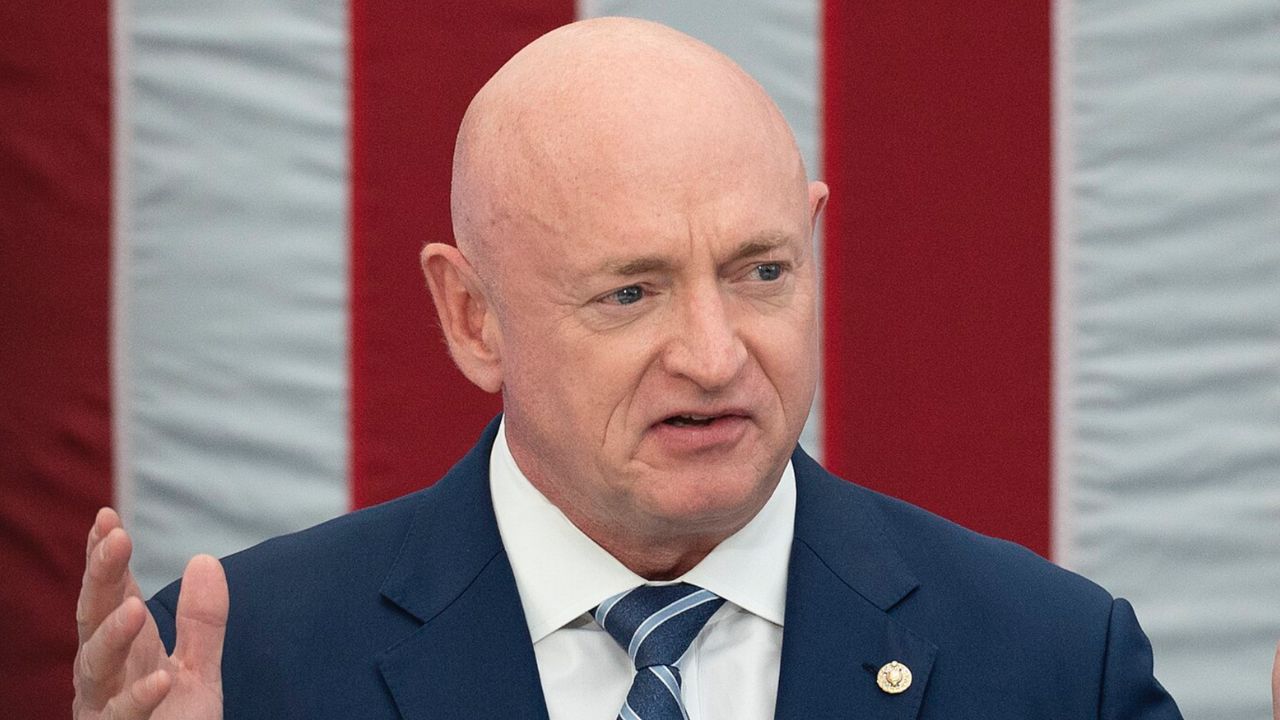
Sen. Mark Kelly of Arizona marked Veterans Day on Wednesday by recounting a life-threatening combat mission during Operation Desert Storm and emphasizing what he described as the country’s obligation to provide veterans with the care and support they earned through military service. The retired Navy captain, who flew 39 combat missions before becoming a NASA astronaut and later a U.S. senator, also highlighted his legislative work on toxic exposure-related health care, cancer research involving military aviators and the development of a veterans center in rural Arizona.
Kelly’s Veterans Day message, published on X on Nov. 11, 2026, was first published in The Ripon Forum, according to the senator’s accompanying post. The essay centers on a lesson Kelly said he learned during his first combat mission: military service depends on teamwork, with pilots, aircrew, maintenance personnel, landing signal officers and families all contributing to a shared mission.
In the essay, Kelly recalled speaking with a group of Arizona students who visited his Senate office. One student asked which of his military medals meant the most to him. Kelly responded by mentioning a medal one of his daughters had given him for being a good father before explaining that military service was about accomplishing a mission together rather than receiving recognition.
“A few years ago, I had a group of students from Arizona visiting me in my Senate office, and one of them asked me which of my military medals meant the most to me. It’s a funny question to get from a kid. I joked that one of my daughters once gave me a medal for being a good dad, and that one meant a lot to me. And then I went on to tell them that military service isn’t usually about the medals, it’s about accomplishing a mission, together. In the military, you have a job to do. You train for it, and you count on the people around you to do their jobs too.”
Kelly connected that lesson to his first combat mission flying an A-6E Intruder with bombardier navigator Paul Fujimura. He described how the two aircrew members had separate responsibilities during the mission, with Kelly piloting the aircraft and Fujimura navigating, identifying the target and operating the weapons system.
“That clicked for me on my first combat mission. I was flying an A-6E Intruder with my bombardier navigator Paul Fujimura. One of my primary jobs as the pilot was to fly the plane and get us safely over the target. The bombardier navigator’s job was to navigate us to the target, identify it and track it with the weapons system.”
Kelly then recounted encountering anti-aircraft fire and a surface-to-air missile during the mission. He said Fujimura continued tracking the target despite Kelly repeatedly warning him about the incoming missile. Kelly described rolling the aircraft upside down, applying full power and pulling the control stick into his lap to evade the missile before returning to the target and completing the bombing mission.
“We started taking anti-aircraft fire and I saw a surface-to-air missile coming right at us. I told Paul about the missile, and his response was simple: “Roger, I’m tracking the target.” I told him again and again, and got the same response each time. That’s when I realized that to accomplish the mission, Paul had to do his job and I had to do mine. I rolled the airplane upside down, added full power, and pulled the stick into my lap. The missile went over us and exploded. I got the airplane upright, checked that the engines and hydraulics were still working, and turned back toward the target. We dropped our bombs and accomplished the mission. The guys who maintained our jet did their job too, so it performed as we needed it to. And so did the Landing Signal Officers who helped us land safely when we got back.”
Kelly’s broader account of military service extended beyond his own role in combat. He emphasized that the families of deployed servicemembers also made sacrifices, describing military service as a collective effort that continued beyond the battlefield. He wrote that Veterans Day brought to mind those he served alongside, active-duty personnel and generations of Americans who volunteered to risk their lives for the country.
“I flew 39 combat missions, but I never flew any of them alone. And supporting all of us were families back home making sacrifices of their own. When I think about Veterans Day, I think about those people I served with, the men and women serving today, and the generations of patriotic Americans who have signed up to risk their lives for our country. In return, our country makes a promise that after their service, they will receive the care and support they earned.”
The senator’s emphasis on veterans’ health care reflects a central part of his legislative record. Kelly helped advance the Honoring Our PACT Act of 2022, which expanded Department of Veterans Affairs health care eligibility for veterans exposed to burn pits and other toxic substances during military service. The legislation broadened access to VA health care, added presumptive conditions associated with toxic exposure and strengthened federal efforts to address exposure-related illnesses.
Kelly also pointed to his work on the Aviator Cancers Examination Study Act, known as the ACES Act. Introduced with Republican Sen. Tom Cotton of Arkansas in April 2024 and signed into law in August 2025, the bipartisan measure directs research into cancer prevalence and mortality among current and former military aircrew. The legislation reflects Kelly’s stated interest in identifying long-term occupational health risks affecting military aviators and improving protections for future servicemembers.
Kelly’s Veterans Day essay also highlighted legislation to establish a veterans retreat and community center in Gila County, Arizona. The project has been pursued alongside Sen. Ruben Gallego and is intended to serve approximately 5,500 veterans in the county. The legislation provides for the transfer of 232.9 acres of federal land near Young, Arizona, to Gila County, where the site is planned to host veterans and their families, community events and a mobile VA clinic.
The Gila County initiative has been a longstanding effort for Kelly. He first introduced legislation to facilitate the land transfer with then-Sen. Kyrsten Sinema and Rep. Paul Gosar in 2021. Kelly and Gallego reintroduced the proposal in February 2025, with the measure ultimately becoming law in October 2026. Its planned mobile clinic component is particularly relevant to veterans in rural Arizona who may face difficulties accessing VA medical facilities.
Kelly’s position on veterans’ care has also appeared in his previous Veterans Day statements. In November 2022, he said he remained committed to serving veterans and holding the federal government accountable for providing benefits and care they had earned. That year’s statement also highlighted his support for the PACT Act, placing the 2026 essay within a longer record of public advocacy on veterans’ health care.
In 2025, Kelly publicly opposed proposed reductions in the Department of Veterans Affairs workforce, warning that staffing cuts could result in longer wait times, fewer health care providers and delays in accessing benefits. He also joined veterans and advocates at a Capitol Hill press conference opposing the administration’s proposed VA cuts. Those statements reflected his argument that the government’s obligations to veterans continue long after their military service ends.
Kelly’s military background is central to the Veterans Day message. According to his Senate biography, he served 25 years in the Navy, made multiple deployments aboard the USS Midway and flew 39 combat missions during Operation Desert Storm. He later became a NASA astronaut, completing four space shuttle missions before retiring from the Navy with the rank of captain. His essay connects those experiences to his continued service in the Senate, where he said he swore the same oath to the Constitution he first took at age 22.
The senator closed his Veterans Day essay by returning to the idea of shared responsibility, arguing that military service members should be recognized for their commitment to their country and fellow servicemembers rather than for medals or public recognition. His message emphasized that the obligation to support veterans is a continuing responsibility for the nation, and that public service in Congress requires the same commitment to a larger mission.
“When I was 22 years old, I swore an oath to protect and defend the Constitution. That oath stayed with me through 39 combat missions and four trips to space. This Veterans Day and every day, I’m proud to stand alongside the millions of Americans who have answered the call to serve. Like I told those students, when you talk with a veteran, know that they didn’t do it for the medals or the recognition. They did it for their country and their fellow service members. And now serving as a U.S. Senator, swearing the same oath to the Constitution again, I remember the same lesson from that first combat mission. We all have a job to do, our piece to accomplish the larger mission for our neighbor and our country.”