
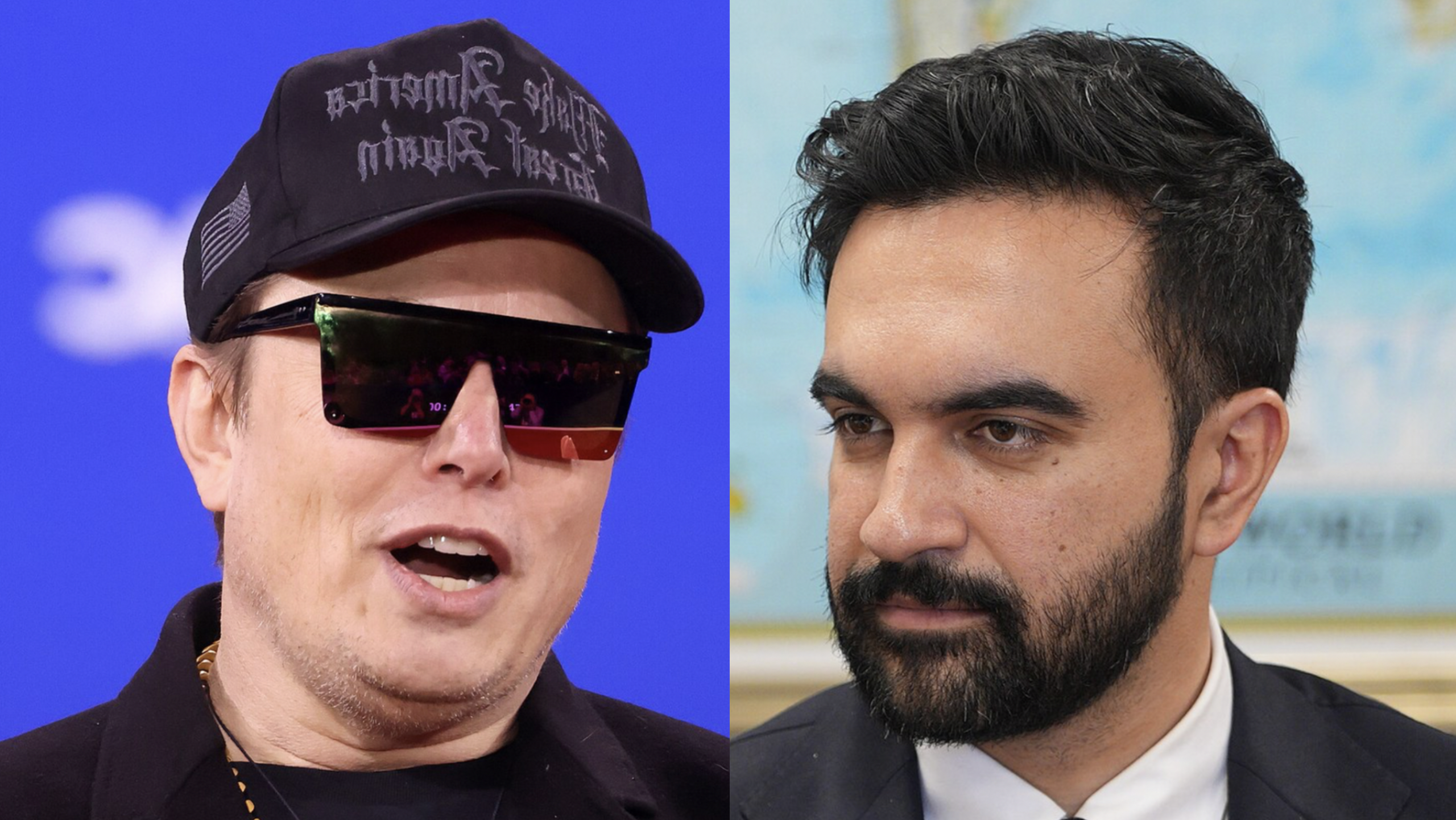
Elon Musk, the world’s first trillionaire, delivered a sharp two-sentence response on Friday to New York City Mayor Zohran Mamdani after the mayor used a high-profile 250th anniversary of American independence address to single Musk out by name — casting the tech and defense mogul as a symbol of concentrated wealth and unchecked power in modern America. The exchange, which unfolded publicly on the platform X, quickly became one of the sharpest political flashpoints of the Independence Day holiday.
Mamdani’s Address: A Direct Shot at the World’s Wealthiest Man
Speaking to mark the 250th anniversary of the United States, Mayor Mamdani delivered a sweeping address that blended patriotic themes with pointed criticism of what he described as an America defined by exclusion, inequality, and oligarchic control. The speech did not leave Musk’s identity ambiguous — directly invoking his status as the world’s first trillionaire as evidence of a nation that has allowed vast wealth to concentrate in a small number of hands.
“We see the wealthiest country in the history of the world — one where children go to sleep hungry while the world’s first trillionaire hungers for more,” Mamdani said in the address. “We see monopolies that dominate every industry and oligarchs who buy elections. We see masked agents terrorizing our streets, eating food cooked by our undocumented neighbors before spiriting them away in unmarked vans. We see a nation whose immense wealth has been built by those with calloused, dirt-streaked hands — those who toil on factory floors and chisel into stone — and we see a nation that has allowed so much of that wealth to be held instead in the soft hands of a precious few.”
A Sweeping Critique of Power and Division
Mamdani’s speech framed the current political moment as a continuation of a long American struggle between forces of inclusion and forces of division — and placed today’s wealthiest and most powerful figures squarely in the latter camp. The mayor argued that those in power have long exploited division as a political tool, and that the present era was no different.
“The powerful have always known their answer,” Mamdani said. “America, in their view, is an arena of supremacy, where only a select few are allowed freedom, where not all are created equal. America, if you ask them, becomes less the more people it welcomes. America, they will tell you, belongs only to those with the right accent or the right shade of skin. The rest of us, they insist, should be grateful for merely being allowed to visit.”
The mayor went on to describe those forces as historically weak and ultimately destined to lose. “How small they are, how weak, how unoriginal,” Mamdani said. “At every moment in our past, those who led through exclusion and isolation have tried to win power and enrich themselves by turning us against one another. Division is the oldest trick in politics, and the cheapest. But time and again — including 250 years ago — those forces of division have been vanquished by the forces of progress.”
Mamdani also took aim at the current immigration enforcement environment, describing a nation that had abandoned its founding promise of offering refuge to the persecuted. “Today, too many of our leaders do not believe in a vision of this nation as an asylum for the persecuted — but rather as one that persecutes those seeking asylum,” he said.
Musk’s Response: Ten Words
At 4:33 PM Eastern Time on Friday, July 3rd, 2026, Musk posted his reply on X — the social media platform he owns — in a response that was notable for its bluntness and brevity.
“Mamdani has built nothing,” Musk wrote. “He is a taker, never a maker.”
The post contained no additional context, no elaboration, and no concession to the broader arguments Mamdani had made. In ten words, Musk reframed the entire exchange — shifting it away from Mamdani’s themes of wealth inequality and political power and toward a binary question of productivity and contribution.
The “Maker vs. Taker” Frame
The language Musk chose carries significant ideological weight, particularly within defense, technology, and entrepreneurial circles where Musk’s companies — including SpaceX and its extensive contracts with the United States military and defense establishment — are viewed as foundational to American strategic power. The “maker vs. taker” framework has long been used in political and economic debate to distinguish those who generate wealth, innovation, and capability from those who, critics argue, redistribute or consume it.
For Musk, whose aerospace company SpaceX has become one of the most consequential defense and national security contractors in the United States — launching military satellites, supporting NASA missions, and developing next-generation capabilities — the framing positions him as a builder of tangible American strength. His critics, including Mamdani, counter that the accumulation of that kind of power in private hands is itself the problem.
A Holiday Collision of Two Visions of America
The back-and-forth between Musk and Mamdani on the 250th anniversary of American independence laid bare a widening divide over what the United States represents and who it belongs to. Mamdani’s address invoked the labor of workers with “calloused, dirt-streaked hands” and condemned what he described as systems designed to keep wealth in the grip of an insulated elite. Musk’s response reduced the argument to a single, unadorned verdict on Mamdani himself.
The exchange came at a moment when debates over immigration enforcement, concentrated wealth, and the role of powerful private actors in American public life have moved from the fringes of political discourse to its center. Mamdani, a democratic socialist who has positioned himself as a voice for working-class New Yorkers and immigrant communities, has made Musk and figures like him a recurring target of his political messaging.
The Broader Stakes
For followers of U.S. defense, national security, and the political forces shaping American military and economic power, the Musk-Mamdani clash represents more than a social media spat. It reflects a deepening tension between two competing visions: one in which private builders and defense innovators like Musk are central to American strength and sovereignty, and another in which the unchecked concentration of wealth and influence in those same figures poses a fundamental threat to democratic governance.