
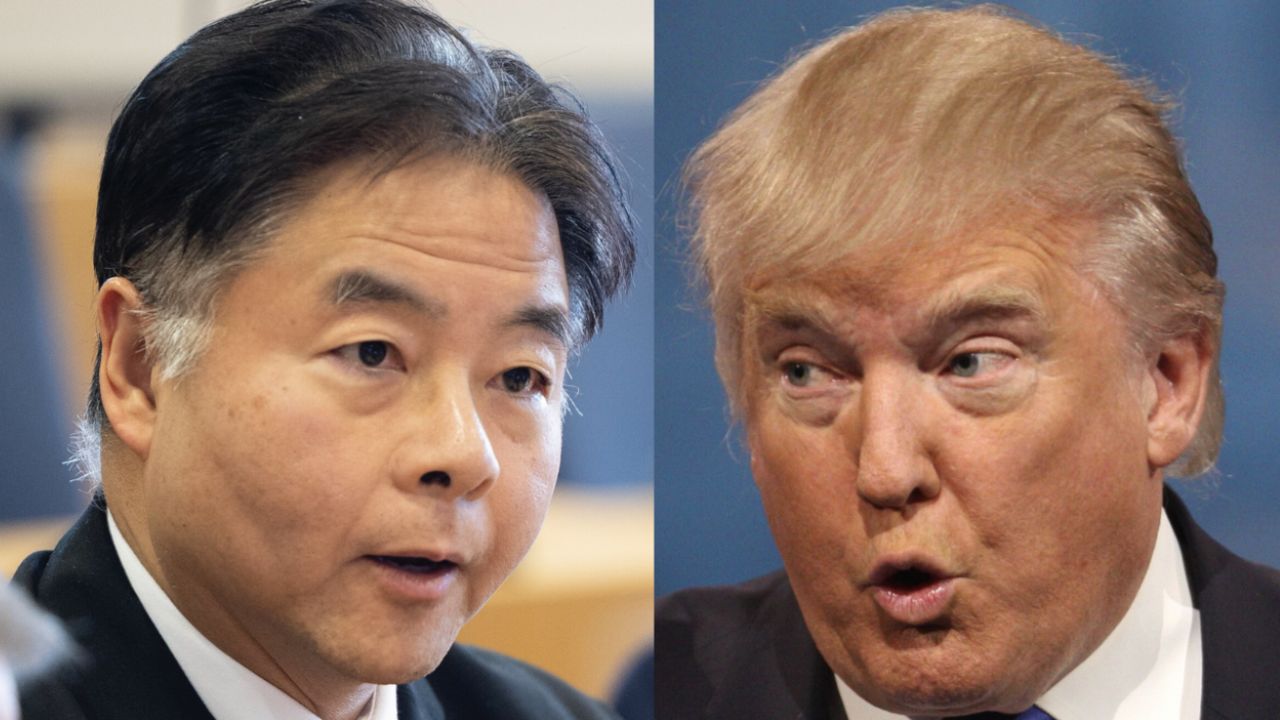
Rep. Ted Lieu, a California Democrat, said Thursday that any American company providing “aid and comfort to Russia” will be “written about by the press and made known to Congress,” discouraging U.S. firms from buying Russian diesel that the Treasury Department licensed for import this month, after The Washington Sun reported that Trump aides are privately pressing companies to accept cargoes already crossing the Atlantic.
In a post on X, Lieu wrote: “Any American company providing aid and comfort to Russia will be written about by the press and made known to Congress. Many of us in Congress will make it a point to highlight any company that buys the potentially illegal blood diesel from Russia. Proceed at your own risk.” He quoted a Washington Sun post by Jeff Stein summarizing the paper’s reporting with Anna Kramer. Lieu did not name any company.
The Washington Sun report, by Anna Kramer, Jeff Stein and Joe Gould and published Thursday morning, said Trump administration officials “are privately encouraging U.S. firms to accept Russian diesel currently crossing the Atlantic, industry groups familiar with the conversations said, despite warnings that doing so could place them in significant legal and reputational jeopardy.” The paper attributed the account to industry groups and energy analysts and did not name the aides. A Treasury official told The Sun that OFAC’s “general license is consistent with actions the agency has taken in the past. We are complying with applicable laws and regulations.” The White House referred The Sun to Treasury. Rapidan Energy Group told clients that “Moscow and Washington are still scrambling to find takers, but we wouldn’t be surprised if the cargoes ultimately head to Brazil.” One analyst told The Sun firms were being “very strongly encouraged by both Moscow and Washington to take these cargoes, including with steep discounts, but they’re encountering a wall of resistance based on reputation and legal risks.”
The commercial trail began after President Donald Trump wrote on Truth Social on Oct. 9 that Russia would supply hundreds of thousands of tons of diesel after his discussion with Vladimir Putin, promising prices would be “COMING DOWN, IN RECORD NUMBERS, AND FAST!” The same day, the Office of Foreign Assets Control issued General License 135, authorizing through April 7, 2027, transactions related to “the sale, delivery, offloading, or importation, including importation into the United States, of diesel fuel of Russian Federation origin,” while barring debits to U.S. accounts of Russia’s central bank, National Wealth Fund or Finance Ministry. OFAC’s official notice records the action. The Treasury said on X it acted “at President Trump’s direction.” A week later Trump signed an executive order waiving duties and most sanctions in the Lindsey O. Graham Sanctioning Russia and Iran Act of 2026; that order is separate from GL 135, which is the diesel-importation authorization. Although The Washington Sun linked the tankers to the Oct. 16 order, it is the Oct. 9 OFAC license that expressly authorizes U.S. imports of Russian-origin diesel.
Democrats argue GL 135 cannot override the Ending Importation of Russian Oil Act, Public Law 117-109, enacted April 8, 2022. Section 2 bans importation of Russian Federation products under chapter 27 of the Harmonized Tariff Schedule — covering petroleum fuels including diesel — consistent with President Joe Biden’s March 2022 Executive Order 14066. Section 3 lets the president terminate that ban only by certifying to Congress that Russia has agreed to withdraw forces and end hostilities on terms accepted by Ukraine, poses no immediate military threat to NATO members, and recognizes Ukrainians’ right to choose their government, with a 90-day congressional review. The administration has not announced a Section 3 certification. House Judiciary ranking member Jamie Raskin made that argument in an Oct. 26 letter to the American Petroleum Institute, American Fuel & Petrochemical Manufacturers and the U.S. Chamber of Commerce, warning importers of civil and criminal exposure under the International Emergency Economic Powers Act despite GL 135.
Sen. Richard Blumenthal of Connecticut told The Washington Sun: “Any company or individual thinking about purchasing Russian diesel should be aware that they’re committing a crime and that Congress is watching. Also, they may be held accountable by a future administration even if this one looks the other way.” Blumenthal has sent letters to the owners of the Malta-flagged Agioi Fanendes and the PVT Azura demanding they reverse course. New Jersey Gov. Mikie Sherrill told The Sun she is “evaluating options to stop it from arriving at a port in New Jersey,” calling Trump’s deal “corrupt and illegal.” Maryan Zablotskyy, a member of Ukraine’s parliament, told The Sun: “Of course, this would be blood money that would end up buying something to kill Ukrainians or fund other evil Russian operations around the world. If you can live with this, go ahead and pay them.” Oleg Ustenko, a former economic adviser to President Volodymyr Zelenskyy, said Ukrainians feel “absolutely abused” and hoped for a boycott by U.S. ports.
Ukrainian President Volodymyr Zelenskyy rejected the arrangement. “This ‘Diesel Deal’ will never be enough to offset the impact of the Strait of Hormuz on global markets. But it will put more money straight into Putin’s pocket to fund this war,” he said in an Oct. 16 address, according to a post on his X account.
The administration disputes the illegality framing. Energy Secretary Chris Wright told CNN’s “State of the Union” on Oct. 18 that “if Russia can bring additional diesel to the market and export it, it would benefit American consumers,” according to CNN’s transcript, and cast the move as “an incentive to end the war.” Treasury Secretary Scott Bessent told NBC’s “Meet the Press” the same day that “the only thing that has been lifted is the diesel embargo,” per the NBC transcript. A Wall Street trader told The Sun that “Everyone is trying to run as far away from this as fast as they can,” citing fear of the next Congress’s investigations. James Noel-Beswick of Sparta Commodities told The Sun the core problem is that “the import is permitted by executive order, but the sanctions sit with Congress, so every counterparty is asking what happens if the politics shift after the cargo lands.”
Ship tracking has left discharge ports unresolved. Reuters first reported on Oct. 23 that a Malta-flagged tanker had left Primorsk with Russian diesel. S&P Global Energy, citing Commodities at Sea, said the Agioi Fanendes left Primorsk on Oct. 22 with about 40,000 metric tons and an expected New York arrival around Nov. 6–7; its AIS destination later changed to “for orders.” The Russian embassy in South Africa posted Oct. 27 that three diesel tankers were en route to the United States, The Sun reported.
Lieu’s warning is a pledge of publicity and congressional scrutiny; as a member of the House minority, he cannot open a committee investigation on his own. His description of the fuel as “potentially illegal” reflects the unresolved dispute over whether GL 135 can stand alongside the 2022 import ban, while Blumenthal goes further in saying buyers would be “committing a crime,” a view Treasury rejects in saying it is “complying with applicable laws and regulations.” The Washington Sun’s account of aides privately encouraging firms to take the cargoes is attributed to unnamed industry groups and analysts, and the White House referred questions to Treasury.