
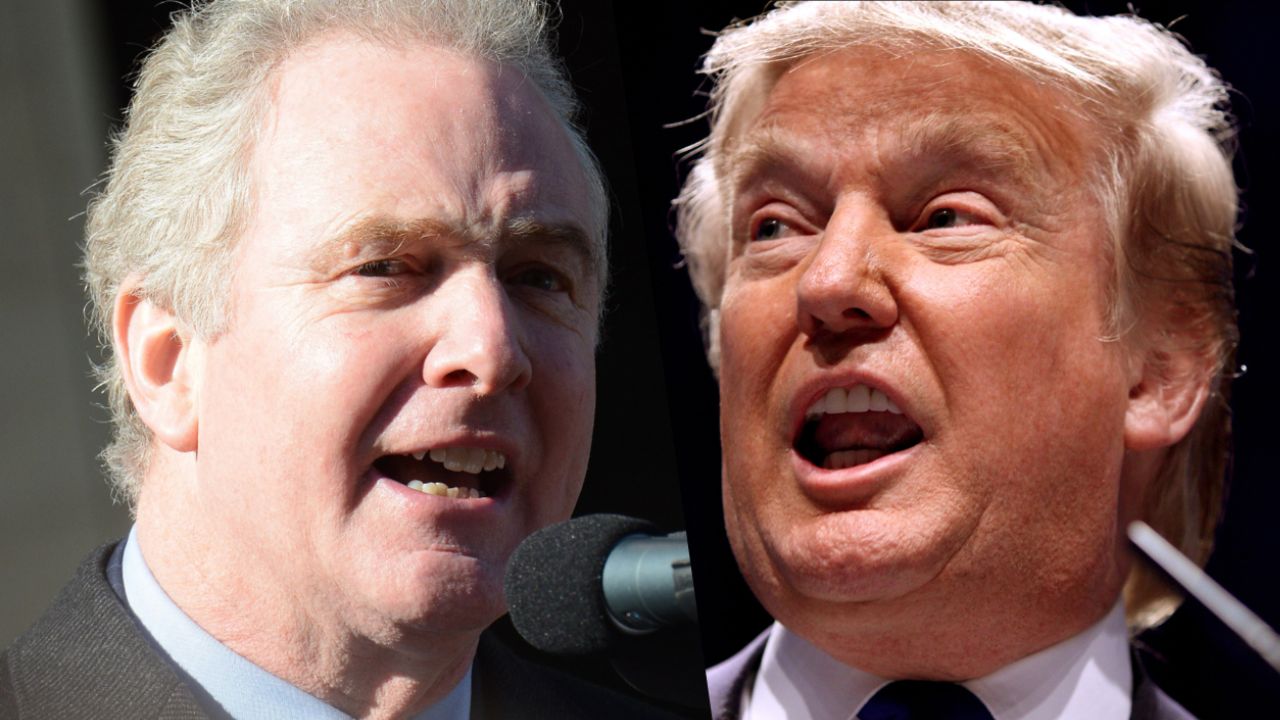
Sen. Chris Van Hollen, a Maryland Democrat, said on Oct. 30 that the Iran war has delivered $130 billion in profit to the U.S. oil industry while households paid more for fuel. He called for the war to end.
Van Hollen’s post was published at 3:05 p.m. on Oct. 30 and attached a newspaper article on oil industry earnings. His full post reads:
“Since Trump started this illegal & senseless war in Iran, his buddies in Big Oil have made $130 BILLION in profit while American households have paid over $1,100 in extra fuel costs.
Literally profiting off working people’s pain.
To save lives & lower costs, this war must end.”
The attached article, headlined “U.S. Oil Industry Earned Over $130 Billion in Profit During Iran War,” was published the same day. It estimates that more than 50 large U.S. oil and gas companies, mostly producers and refiners, earned over $130 billion in the six months from April through September.
What the Article Found
The article describes the $130 billion as a conservative estimate. It excludes March, the first month of the war, and October. The same companies collectively earned less than $47 billion in the same period of 2025, making this year’s profits almost three times higher.
The article also cites a Brown University Climate Solutions Lab analysis. As of this week, Americans had spent an extra $147 billion on gasoline and diesel since the U.S. and Israel began striking Iran on Feb. 28. That works out to more than $1,100 per household, the second figure in Van Hollen’s post.
Company Earnings
U.S. refiners have done especially well because refineries in the Middle East and Russia have been damaged, tightening global supply. Valero reported $6.83 billion in third-quarter profit and Phillips 66 reported $5.62 billion. Exxon Mobil reported $15.41 billion and Chevron $9.92 billion. Exxon’s third-quarter profit more than doubled and Chevron’s almost tripled.
The article also notes that U.S. profits generally remain below 2022 levels, when Russia’s invasion of Ukraine drove prices higher. U.S. oil averaged around $90 a barrel from April through September, compared with roughly $100 in the same period of 2022.
What Executives Said
Exxon’s chief financial officer acknowledged that higher fuel prices put pressure on families and businesses, but said the company cannot “invest its way out” of conditions overnight. Chevron’s chief financial officer said the cash is going on the balance sheet. Valero’s CFO said excess cash would ultimately be directed toward its owners, usually through dividends or buybacks.
Van Hollen’s post refers to “his buddies in Big Oil.” The article identifies one executive, John Catsimatidis of privately held United Refining, as a longtime Trump ally. He said the windfall may go to paying down debt or a new corporate plane.
Van Hollen’s War Record
Van Hollen has opposed the war consistently. In April, when Senate Democrats introduced nearly a dozen war powers resolutions, he said: “No, I’m against the war in Iran.” He later filed his own resolution and said ending the war was his top priority.
On July 23, the Senate voted 47-49 against discharging Van Hollen’s S.J. Res. 180 from committee. Van Hollen’s floor remarks before the vote called the war “a strategic blunder on a massive scale.” Sen. Susan Collins of Maine was the lone Republican to vote with him.
His office has also released a statement on U.S. strikes on Iran, saying they were “not making us safer” and that the Senate must vote on the War Powers Resolution.
The Senate passed a war powers resolution 50-48, following House passage. Van Hollen said in response: “Congress finally passed a war powers resolution to stop Trump’s illegal war in Iran.”
Related Action in the Senate
Separately, Sens. Elizabeth Warren and Sheldon Whitehouse issued a June 15 statement saying oil and gas companies had earned more than $40 billion in profit in the first quarter amid higher gas prices. They projected industry windfall profits could reach $234 billion by the end of 2026 at $100-a-barrel oil.
Exxon and Chevron reported their third-quarter results on Friday, Oct. 30, the same day as Van Hollen’s post. Dozens of other U.S. oil companies are due to report in the coming weeks.