

Across more than a century of conflict, a handful of rifle cartridges have earned reputations that refuse to fade. These calibers, born in the crucible of world wars and Cold War proxy fights, still shape how modern militaries, police units, and armed citizens think about firepower, range, and reliability. Their continued use today is less about nostalgia and more about hard proof that certain ballistic formulas still win fights.
From intermediate rounds that defined the assault rifle to heavy machine gun and sniper cartridges that dominate long-range engagements, the most enduring calibers combine battlefield pedigree with modern adaptability. They anchor current debates over stopping power versus capacity, recoil versus reach, and old-school “full power” cartridges versus lighter, faster options.
The assault rifle era: 5.56 NATO, 7.62 NATO and the AK legacy
The modern idea of a “fighting rifle” is built around intermediate cartridges that balance controllable recoil with enough energy to matter at combat distances. The two most influential assault rifle families, the AK-47 and the M16, sit at the center of that story and still dominate global arsenals. The AK-47’s 7.62×39 mm round and the M16’s 5.56×45 mm NATO cartridge represent two different answers to the same problem: how to give infantry rapid, accurate fire without the punishing recoil of older full-size rifle rounds, a tradeoff that continues to drive caliber choices in current conflicts.
The M16’s 5.56 lineage traces back to .223 Remington, with James “Jim” Sullivan and Robert Fremont working with Remington on the case design that would eventually become standard for the United States and many NATO partners. That small, high-velocity cartridge proved its worth from the hill fights in Vietnam to today’s patrol rifles, where its lighter weight lets soldiers and police carry more ammunition without sacrificing accuracy at typical engagement ranges, a history detailed in reporting on the M16’s evolution from early jungle combat to current service rifles that still rely on the same basic 5.56 case designed by James “Jim” Sullivan and Robert Fremont with Remington.
Full-power workhorses: 7.62×51 NATO, .308 and the sniper rifle revival
Even as intermediate rounds dominate standard infantry rifles, full-power cartridges remain indispensable wherever range, barrier penetration, and terminal performance at distance are non-negotiable. The 7.62×51 mm NATO round, closely tied to the civilian 308 Winchester, continues to anchor battle rifles, general-purpose machine guns, and designated marksman rifles in militaries that need a harder-hitting option alongside 5.56. In the precision world, that same ballistic profile has become a default choice for police and military sniper rifles, where its balance of recoil, barrel life, and accuracy keeps it competitive against newer boutique calibers.
On the civilian side, the 308 Winchester’s performance advantage over older hunting rounds underscores why this family of cartridges still matters in serious applications. A typical 150-grain bullet in 308 Winchester generates substantially higher muzzle velocity and significantly more muzzle energy than a comparable 30-30 Winchester load, giving hunters and tactical shooters more reach and authority on target, a gap quantified in comparisons that highlight the 308 and its 150-grain bullet as a clear step up in both speed and energy over the 30-30 Winchester. That same ballistic edge explains why 308 appears again in lists of top sniper cartridges, where it sits alongside 300 Winchester Magnum and 6.5 Creedmoor as one of the most widely used precision rounds, with 300, 6.5 and 308 all cited among the Popular Ammo Brands, Winchester Magnum, Win Mag, Best Overall, Creedmoor options for long-range work.
Heavy hitters: .50 caliber machine guns and magnum sniper rounds
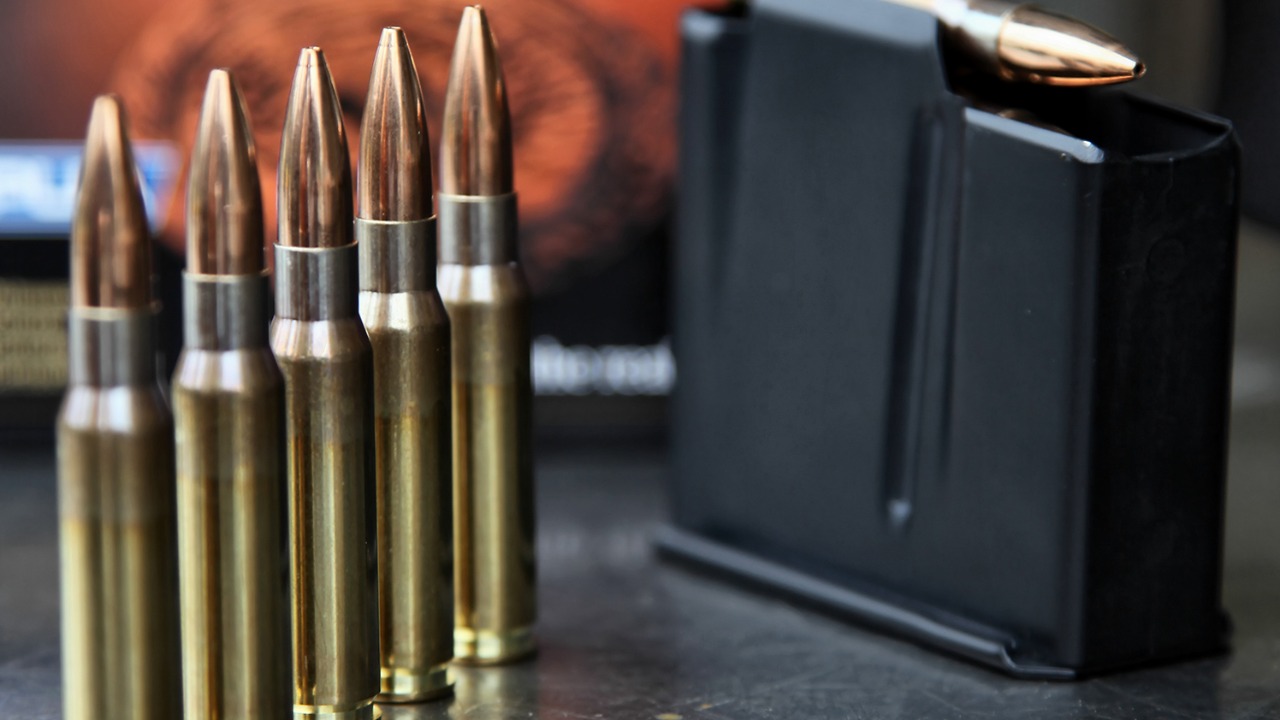
At the far end of the power spectrum, heavy machine gun and magnum sniper calibers continue to shape battlefields by dominating vehicles, fortifications, and long-range targets. The Browning M2, chambered in a 50 caliber cartridge, emerged in the closing days of WWI when John Browning tested a 50 caliber heavy machine gun in Colt’s pasture, and that basic design still rides on armored vehicles, helicopters, and fixed emplacements around the world. Its ability to deliver sustained, accurate fire at extended ranges against both personnel and light armor has made it a fixture in modern conflicts, with the original 50 caliber concept, first proven in Colt’s pasture near the end of WWI, still defining what a heavy machine gun can do.
For precision shooters who need similar reach in a more portable package, magnum rifle calibers have become the tool of choice. The 300 Winchester Magnum, often shortened to 300 Win Mag, is regularly singled out as a best overall sniper cartridge thanks to its combination of flat trajectory, high retained energy, and compatibility with existing rifle platforms. Alongside 6.5 Creedmoor and 308, it appears in rankings of top sniper rounds, with 300, 6.5 and 308 all highlighted as leading choices for long-range engagements where first-round hits and wind resistance matter, a status reflected in lists that name 300 Winchester Magnum (300 Win Mag) as Best Overall among modern precision calibers.
Old warhorses that refuse to retire: 7.62x54R, .30-06 and classic hunting rounds
Not every legendary caliber dominating today’s fights was born in the age of assault rifles. Some of the most enduring rounds predate the First World War yet still see front-line use in machine guns and sniper rifles. The 7.62×54 mmR, a rimmed cartridge originally associated with the Mosin-Nagant rifle, remains in service in weapons like the PKM machine gun and various designated marksman and sniper platforms, where its combination of range and power keeps it relevant despite its 19th century origins. Its continued presence in modern arsenals illustrates how a well-designed cartridge can outlast multiple generations of rifle technology while still delivering the performance commanders expect from a general-purpose machine gun round.
Similarly, the .30-06 Springfield, once the standard U.S. service cartridge and famous for powering the M1 Garand, has largely been replaced in military roles by 7.62×51 mm NATO but remains a staple in civilian hunting and long-range shooting. Its ability to handle a wide range of bullet weights and game types keeps it in regular use among hunters who value versatility and proven terminal performance, a role that mirrors how 7.62×51 and 308 Winchester now bridge the gap between military and civilian needs. In hunting circles, comparisons between 30-30 and 308 Winchester, which emphasize the 308’s higher velocity and energy with a 150-grain bullet, also reinforce why full-power .30 caliber cartridges like .30-06 and 308 continue to be trusted choices when a single shot must count, as detailed in analyses that contrast 30-30 with the more capable 308 Winchester.
Caliber debates today: 5.56 vs 7.62 and the rise of 6.5-class rounds
Even with a century of data, the argument over the “best” fighting caliber is far from settled, and current debates often revolve around the tradeoffs between 5.56 and 7.62 NATO. On one side, 5.56×45 mm NATO offers lighter recoil and higher ammunition capacity, which can translate into faster follow-up shots and more rounds carried per soldier. On the other, 7.62×51 mm NATO delivers greater energy on target and better performance through cover, making it attractive for designated marksman roles and situations where engagement distances stretch beyond what 5.56 handles comfortably, a contrast explored in modern breakdowns of 5.56 vs 7.62 NATO that unpack myths, science, and real-world gunfight outcomes in detail.