
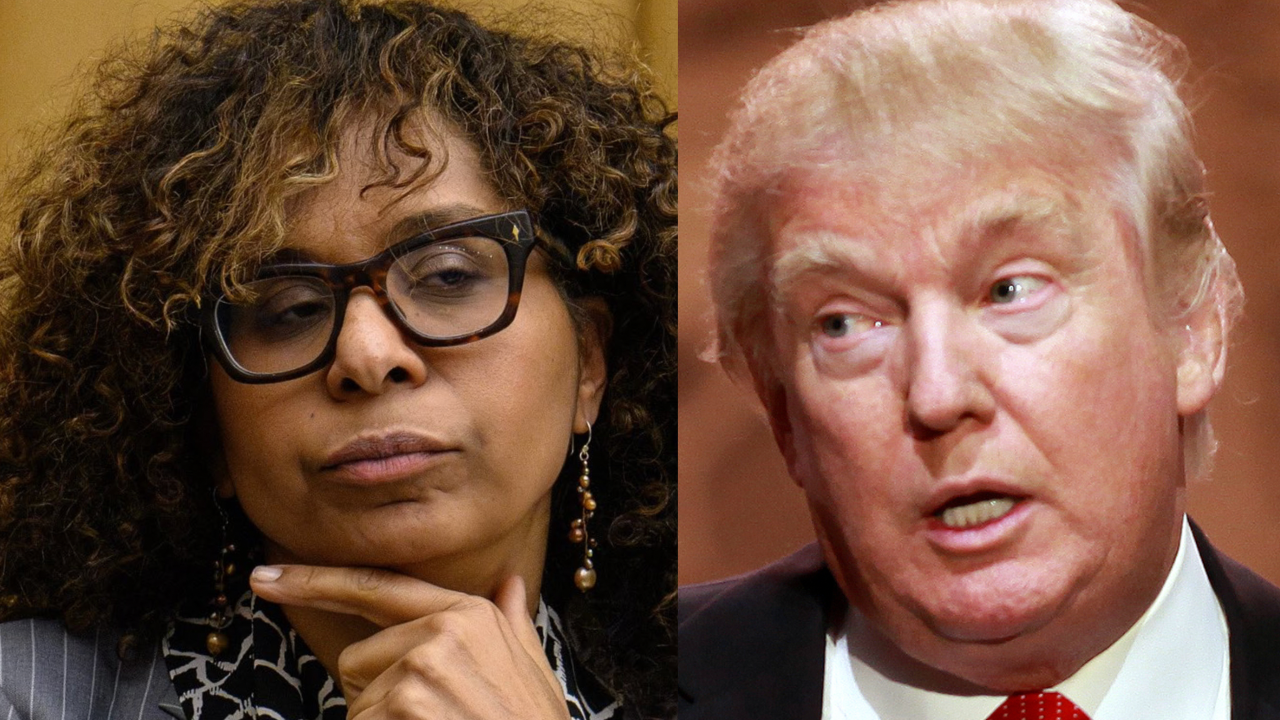
Rep. Sydney Kamlager-Dove accused President Trump of treason on Monday over comments he made blaming Minnesota, rather than Iran, for a cyberattack that struck water utilities in more than 30 of the state’s communities. “This is treasonous,” Kamlager-Dove wrote on X, sharing a clip of Trump’s remarks. “Trump is blaming an American state for a cyberattack instead of the country he literally started a war with?? Donald Trump can wrap himself in the flag and word ‘patriot’ all he wants, but he hates America.”
What Trump Actually Said
Kamlager-Dove’s post responded to remarks Trump made July 31 during a televised Cabinet meeting at Camp David, captured in the official White House video of the meeting. Asked by a reporter whether he could rule out Iranian involvement in the water-system cyberattacks, Trump responded: “Iran? I don’t… No, I think that Minnesota is behind it. You know who’s behind it? Minnesota, because they’re grossly incompetent. I think the governor’s behind it. I don’t think there was an Iranian cyberattack.” He went on to call Minnesota “one of the worst-run states” and said Vice President JD Vance had “found tremendous corruption in Minnesota,” adding that “massive, massive future things having to do with corruption in Minnesota are happening right now.”
What Federal Cybersecurity Agencies Have Actually Said
Trump’s comments directly contradicted the working assessment of the federal government’s own cybersecurity apparatus. In a joint advisory updated July 22, the Cybersecurity and Infrastructure Security Agency, FBI, NSA, EPA, and Department of Energy warned that “Iranian-affiliated cyber actors” were actively exploiting programmable logic controllers — the industrial control components used to manage water treatment and pressure systems — across U.S. critical infrastructure. A separate joint statement from the EPA stated plainly that “U.S. organizations are experiencing exploitation and, in some cases, disruption of commonly used operational technology at drinking water and wastewater systems” as a result of “an urgent and ongoing Iranian-affiliated cybersecurity threat.”
Acting CISA Director Nick Anderson confirmed days after Trump’s remarks that the agency was “currently observing a significant increase in cyber threat actors targeting programmable logic controllers at water utilities” and urged operators to remove exposed equipment from the internet immediately. The FBI separately confirmed that water and wastewater utility companies in at least seven states had reported incidents, with some activity degrading water operations.
The Attribution Evidence, Precisely Stated
The federal assessment linking the attacks to Iran was not, as of Trump’s comments, a formal, conclusive public attribution — a distinction worth stating precisely. A memo from the Water Information Sharing and Analysis Center, citing findings from the Minnesota Fusion Center, described the water-system attacks as “aligned” with the characteristics of the Iran-linked campaign detailed in CISA’s April advisory, but the memo stopped short of presenting direct evidence tying the specific Minnesota incidents to Iran. Investigators’ suspicion of Iranian involvement was first reported by the New York Times, citing U.S. and state officials describing it as the likely explanation under investigation.
Walz’s Response
Minnesota Gov. Tim Walz rejected Trump’s claim directly. “Trump knows exactly who is responsible for this attack, and knows that other states were hit too,” Walz wrote in a social media post. “This is what modern warfare looks like, and it further illustrates there’s no plan to win a war with Iran.” Walz also argued that federal budget cuts had weakened the government’s ability to respond, saying the Department of Government Efficiency “took an axe to CISA” and left the agency less equipped to defend against exactly this kind of attack.
The Broader Trump-Walz History
Trump’s attack on Walz did not emerge in isolation. He has repeatedly criticized Walz — the Democratic Party’s 2024 vice presidential nominee — over a widespread fraud scandal in Minnesota’s state-administered social service programs, a scandal that contributed to Walz’s decision in January to abandon his bid for a third term as governor. Walz himself has not been accused of participating in the fraud. At the same Cabinet meeting, Trump extended that pattern, calling Walz “corrupt” and tying the cyberattack accusation to his broader case against the state’s governance.
The Attacks Themselves
The underlying incident began July 26–27, when Minnesota IT Services disclosed that a coordinated cyberattack had targeted operational technology at more than 30 community water systems statewide, forcing some facilities to switch to manual operations. The activity subsequently spread: by early August, water and wastewater utilities in at least seven states, including Michigan and Georgia, had reported similar incidents to the FBI. No contamination or public-health impacts were reported, though some utilities issued precautionary boil-water notices.
Part of a Larger Pattern
Federal officials have tied the water-utility intrusions to a broader campaign. CISA’s advisory traces the underlying technique — exploitation of Rockwell Automation and other manufacturers’ programmable logic controllers — to an Iran-linked group first documented by the agency in April, with the July update expanding the known scope to Schneider Electric and Siemens equipment as well. Separately, cybersecurity researchers have documented a retaliatory claim from Handala, a threat group linked to Iran’s Ministry of Intelligence and Security, which said it breached water utility systems in several California cities the day after U.S. strikes destroyed a water facility near the Strait of Hormuz — evidence, researchers say, that Iranian and Iran-aligned cyber activity against U.S. water infrastructure has tracked closely with the broader military conflict rather than existing as an isolated domestic incident.
What Kamlager-Dove’s Charge Rests On
Kamlager-Dove’s specific accusation — that Trump is “blaming an American state for a cyberattack instead of the country he literally started a war with” — depends on the underlying premise that Iran, not Minnesota, bears responsibility for the attacks. That premise is supported by the federal government’s own cybersecurity agencies, whose joint advisories describe the activity as Iranian-affiliated, even though a final, conclusive public attribution specifically naming Iran as responsible for the Minnesota incidents had not been issued as of early August.
Who’s Making the Accusation
Kamlager-Dove sits on the House Judiciary Committee and has previously focused on federal law enforcement and national-security oversight during her time in Congress, giving her a specific vantage point for the treason accusation beyond ordinary partisan criticism. Her characterization of Trump’s remarks as “treasonous” is a serious legal and political charge that goes beyond most Democratic criticism of the episode, which has generally focused on questioning Trump’s factual accuracy and motives rather than invoking treason specifically — a term with a narrow constitutional definition centered on giving aid and comfort to an enemy during wartime, rather than simply misattributing blame for an attack.
Where It Stands
As of Kamlager-Dove’s Monday post, no U.S. government agency had walked back the joint CISA-FBI-EPA-NSA assessment describing the underlying campaign as Iranian-affiliated, and Trump had not offered public evidence supporting his alternative claim that Minnesota itself, or Gov. Walz specifically, bore responsibility for the attack on the state’s own water infrastructure.